According to
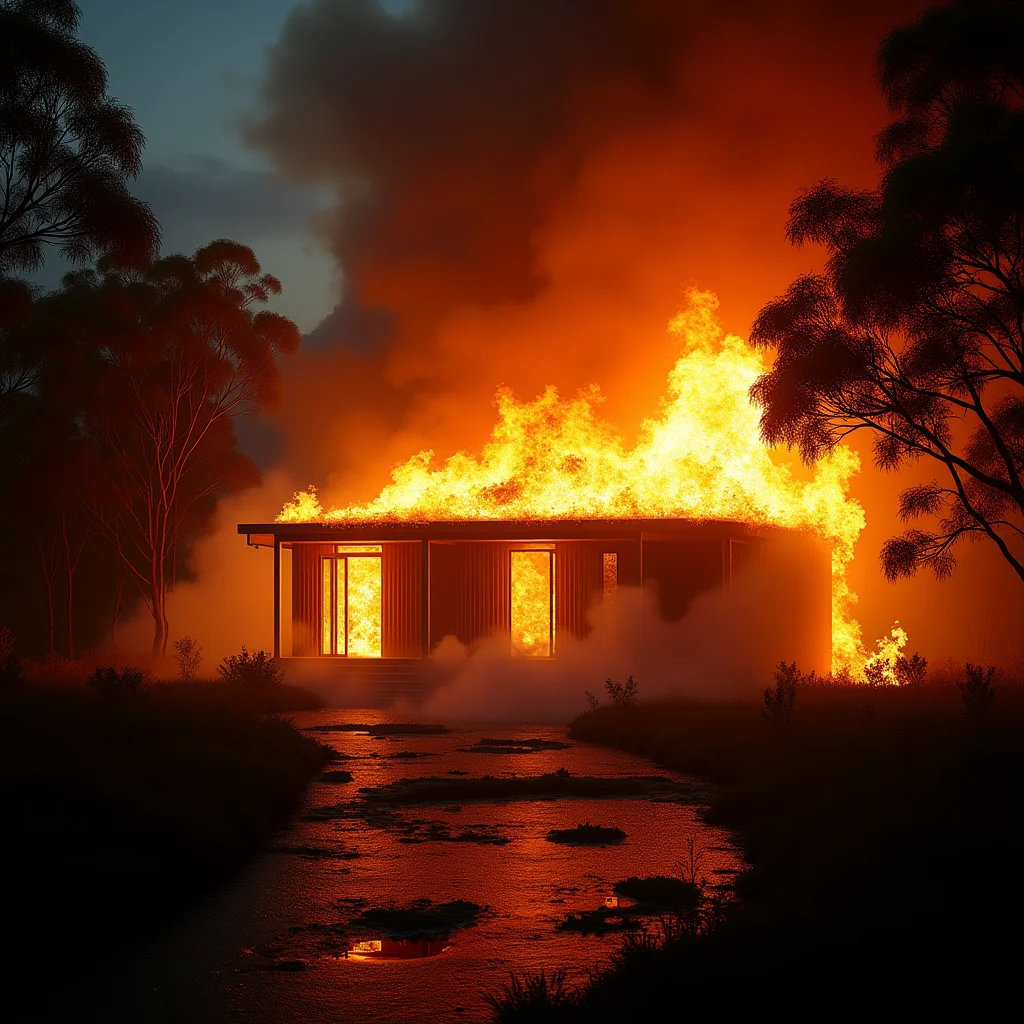
realestate.com.au, The source confirms a second fire occurred after renovation completion but does not provide an exact number of days between completion and the second fire property for fire damage when the home was deliberately set alight again within days, leaving him facing a second insurance claim on the same property in quick succession.
What Happened to the Rental Property
The landlord's account, reported by realestate.com.au, describes a rental home that had been repaired after a fire only to be torched again shortly after the renovation was completed. The property owner described the aftermath as devastating, having only just returned the home to a liveable standard before the second blaze caused fresh destruction. The case has drawn attention because it is not a single unfortunate incident but a repeat event on the same title within a short window.
Malicious damage of this kind sits in a different risk category to accidental fire. Landlord insurance policies in Australia typically cover fire damage caused by tenants, trespassers or unknown third parties, but insurers scrutinise repeat claims far more closely than first-time events. A second fire loss at the same address, even where the landlord is entirely blameless, can trigger a claims investigation, a request for evidence of security upgrades, or a review of whether the property was adequately secured between the first repair and the second incident.
For the landlord in this case, the practical consequence is a second round of assessments, excess payments and rebuilding timelines stacked on top of the first. Anyone who has just completed a fire repair and is renewing tenancy arrangements should treat the days immediately after reoccupation as a heightened risk window, particularly for properties that have already attracted vandalism or arson once.
Why Repeat Claims Change the Insurance Equation
Insurers price landlord policies partly on claims history attached to the property itself, not just the policyholder. A property that has already lodged one fire claim is flagged in underwriting systems, and a second claim within a short period can lead to premium loading at renewal, a higher voluntary excess being imposed, or in some cases non-renewal of cover altogether. This is standard practice across the Australian general insurance market and is not unique to any single insurer.
The bigger issue is vacancy. Most landlord insurance policies contain a vacancy clause that limits or excludes cover if a property sits unoccupied beyond a specified number of consecutive days, commonly 60 to 90 days depending on the insurer. A property mid-renovation after a fire, waiting for a new tenant, can easily breach that threshold without the landlord realising it. If the second fire occurred while the home was between tenancies, the vacancy clause becomes central to whether the claim is honoured in full.
A single malicious damage event is a claims-history problem for the policyholder. A second event on the same address in quick succession becomes an underwriting problem for the insurer, and that shift in framing is what drives premium loading, excess increases and, in the harder cases, non-renewal.
Landlords sitting on properties with any history of fire or vandalism should read their policy's vacancy definition line by line rather than assume standard cover applies. Renovation periods, in particular, often fall into a grey zone where the property is neither tenanted nor formally vacant in the insurer's sense, and this is precisely where disputes arise.
Where Strata and Building Rules Intersect
For landlords who own a unit within a strata scheme, a fire event also raises questions about where landlord insurance ends and body corporate building insurance begins. Building insurance held by the owners corporation typically covers the structure, common property and shared services, while the individual landlord's policy covers fixtures, contents and loss of rent. A malicious fire that damages both the unit interior and shared walls or services can trigger claims against two separate policies simultaneously, and the interaction between them is not always straightforward.
Understanding how these two layers of cover fit together is essential for any investor holding property under strata title. Our Body Corporate and Strata in Australia — A Complete Guide for Owners and Investors explains how building sum-insured figures are set, how special levies can be raised after major damage, and what owners are entitled to know about the scheme's claims history before and after they buy. Investors weighing strata versus freestanding property should also review the distinction covered in our Strata Title vs Torrens Title Explained guide, since insurance obligations differ materially between the two ownership structures.
Landlords assessing whether their current cover is fit for purpose should also compare how different insurers structure premiums against risk profile, something explored in detail on REAStats, which tracks property market data relevant to landlord decision-making across regions.
Practical Steps for Landlords After a Fire Claim
The first practical step after any fire event, malicious or accidental, is to notify the insurer immediately and request written confirmation of the vacancy period allowance during repairs. Landlords should not assume verbal reassurance from a broker or call centre is sufficient; written confirmation of the vacancy timeline protects the claim if a second incident occurs before a new tenant moves in. Photographic documentation of security measures installed after the first fire, such as lighting, cameras or boarded access points, also strengthens any subsequent claim.
Second, landlords should request an updated sum-insured assessment before reoccupying a repaired property. Rebuild costs can shift materially between the original policy setup and a post-fire repair, particularly given recent construction cost inflation, and an outdated sum insured can leave a landlord underinsured on the very property that has just been rebuilt. This is a straightforward conversation to have with the insurer or broker at the point repairs are completed, before the policy renews.
Third, landlords with any history of vandalism or arson at a property should factor a shorter turnaround time between tenancies into their risk planning. Extended vacancy between the end of repairs and the start of a new lease is exactly the period during which a second incident is most likely to fall foul of a policy's vacancy clause. Engaging a property manager to expedite re-letting, or arranging interim security monitoring, can materially reduce this exposure.
For landlords reviewing their overall cover strategy in light of cases like this one, our Property Insurance Guide provides a comprehensive overview of landlord insurance structures, exclusions and how to compare policies across the Australian market. Getting these details right before a second incident occurs is far cheaper than disputing a claim after the fact.
This article was produced with AI assistance and reviewed for accuracy. Content is for informational purposes only and does not constitute financial or property investment advice.