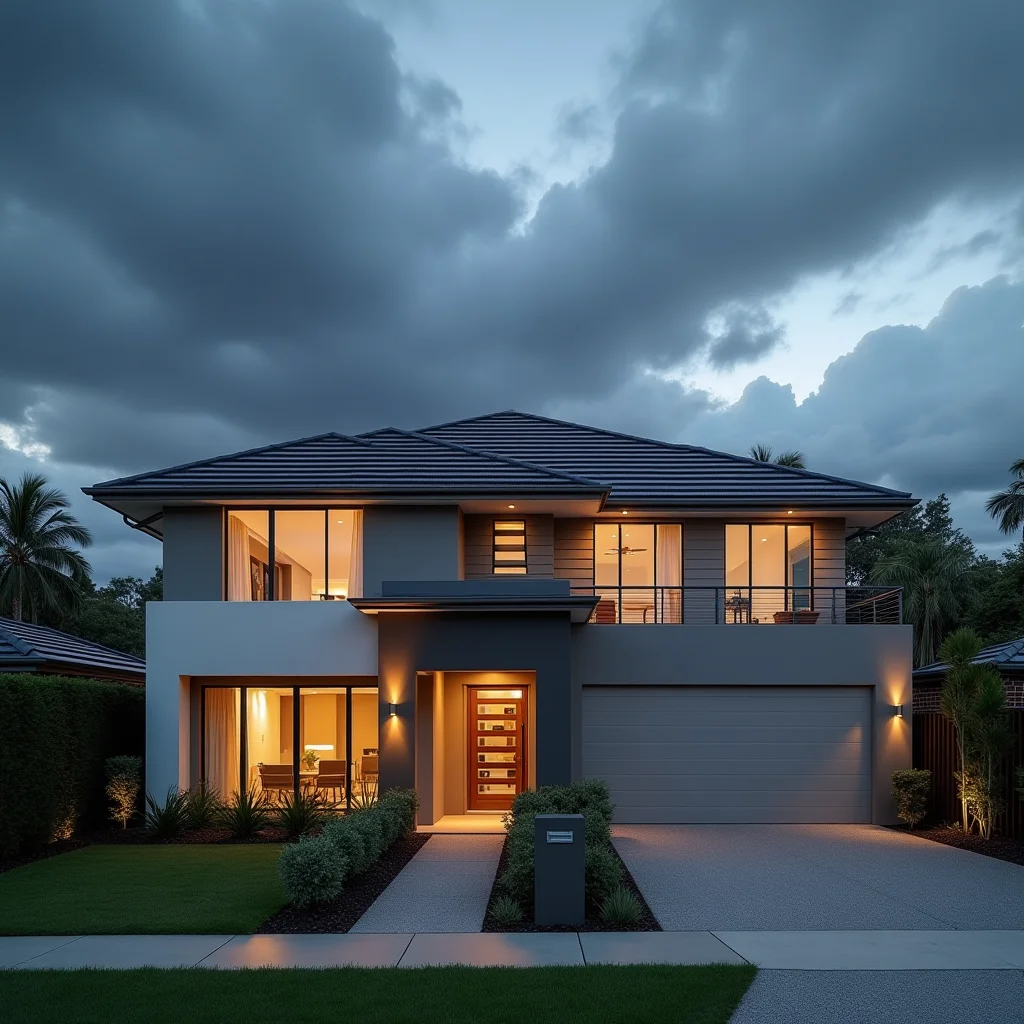
According to realestate.com.au, a premium Queensland family home designed by one of the state's most well-known architects has been listed for sale, following what the publication describes as an expensive facelift. The property represents exactly the kind of high-value, design-led dwelling that sits in a specific and often poorly understood risk category for building insurance — one that catches buyers off guard at precisely the wrong moment.
Why Architect-Designed Homes Present a Distinct Insurance Challenge
Most standard home and building insurance policies are priced against a relatively homogenous pool of residential construction — brick veneer, conventional rooflines, standard-grade fixtures. Architect-designed homes depart from this baseline in ways that matter enormously to insurers. Custom structural elements, imported or bespoke finishes, unconventional roof profiles, and non-standard materials all drive up rebuild costs well beyond what a square-metre rate formula will capture. When a home has also recently undergone an expensive facelift, the gap between the insured sum and the true replacement cost widens further.
For additional market context, see REAStats property market data.
The core problem is sum-insured accuracy. Most Australian homeowners — including buyers of prestige properties — set their building sum insured at purchase price or thereabouts, then leave it unchanged for years. For a bespoke architect-designed home, this is financially dangerous. The cost to demolish, redesign with equivalent architectural intent, source matching or substitute materials, and rebuild to current code can exceed the original construction cost by a substantial margin. A property that recently underwent major renovation compounds this risk: new finishes, structural changes, or bespoke additions may not be reflected in the original policy at all unless the owner has formally notified the insurer and had the sum insured reviewed.
Buyers approaching settlement on a home of this character should commission an independent building replacement cost assessment — not a market valuation, but a quantity surveyor's estimate of full demolition and reconstruction. This figure, not the purchase price, should anchor the sum insured. Lenders will require building insurance to be in place from settlement date; the buyer controls what level of cover is nominated. Getting that figure wrong at this stage is a mistake that can persist for the life of the loan.
Renovation History and Its Effect on Insurance Liability
The fact that this property went through a major renovation immediately before listing raises a question that every prospective buyer should put directly to their insurer: does the policy cover the building as it now stands, including all recent works? This is not a trivial distinction. Building works carried out without proper council approval, or by unlicensed trades, can create gaps in insurance coverage that the standard policy document does not make obvious. In Queensland, the Queensland Building and Construction Commission (QBCC) licencing framework means that any structural or specialist trade work should have been performed by a QBCC-licensed contractor — and buyers are entitled to verify this before settlement.
Even where works were fully permitted and professionally executed, a post-renovation property creates a specific underinsurance risk during the period between completion and the next formal policy review. If the renovation added significant value but the insurer was not notified, the policy may revert to covering the pre-renovation structure. This is not a hypothetical edge case. It is a recurring source of dispute in Australian insurance claims, particularly after weather events when the gap between the claimed rebuild cost and the insured sum becomes visible.
Buyers should request from the vendor a full schedule of renovation works, the building approvals obtained, and any correspondence with the existing insurer. This documentation serves two purposes: it supports the buyer's own insurance application with accurate information, and it helps a conveyancer identify any outstanding defects liability or QBCC warranty periods that transfer with the property. For a comprehensive overview of building insurance obligations at purchase, see our Property Insurance Guide.
Title Type, Common Property, and What Insurance Covers
Understanding the title structure of a prestige home matters for insurance, particularly in Queensland where some high-value properties in master-planned estates or multi-lot developments sit under strata or community title frameworks rather than straightforward Torrens freehold. Under Torrens title, the individual owner bears full responsibility for building insurance — there is no body corporate to share the obligation or the premium. Under strata title, the body corporate holds the building policy, but the individual owner must still insure contents and may face exclusions around renovations to their lot. For a clear breakdown of how these frameworks differ, see Strata Title vs Torrens Title Explained.
For a freehold Torrens title home — the most common structure for a detached architect-designed family home — the buyer inherits sole responsibility for building insurance from settlement day. There is no pooled risk, no body corporate policy, and no fallback. A gap in coverage between exchange and settlement, or an underinsured sum nominated at settlement, sits entirely with the new owner. Queensland conveyancing practice does provide some buyer protection during the settlement period, but this is not a substitute for a correctly structured insurance policy effective from settlement.
Practical Steps for Buyers of High-Value Custom Homes
Buyers considering a prestige architect-designed home — in Queensland or elsewhere — should treat building insurance as a due diligence item, not an administrative afterthought. The checklist is specific. First, commission a quantity surveyor's replacement cost assessment before or immediately after exchange. Second, confirm with the insurer that the home's non-standard construction, including any architect-specified materials or structural features, is fully disclosed and accepted under the policy. Third, verify that the recent renovation works are covered under the policy as the home currently stands. Fourth, review the policy's definition of "agreed value" versus "sum insured" — agreed value policies pay the nominated amount without depreciation; sum insured policies may pay less if the insurer assesses the rebuild cost differently at the time of a claim.
Architect-designed and recently renovated homes carry a compound insurance risk: non-standard construction drives up true rebuild costs, while recent works may not be reflected in the current policy unless the insurer has been formally notified. Buyers who anchor their sum insured to the purchase price rather than a rebuild assessment are the most
This article was produced with AI assistance and reviewed for accuracy. Content is for informational purposes only and does not constitute financial or property investment advice.