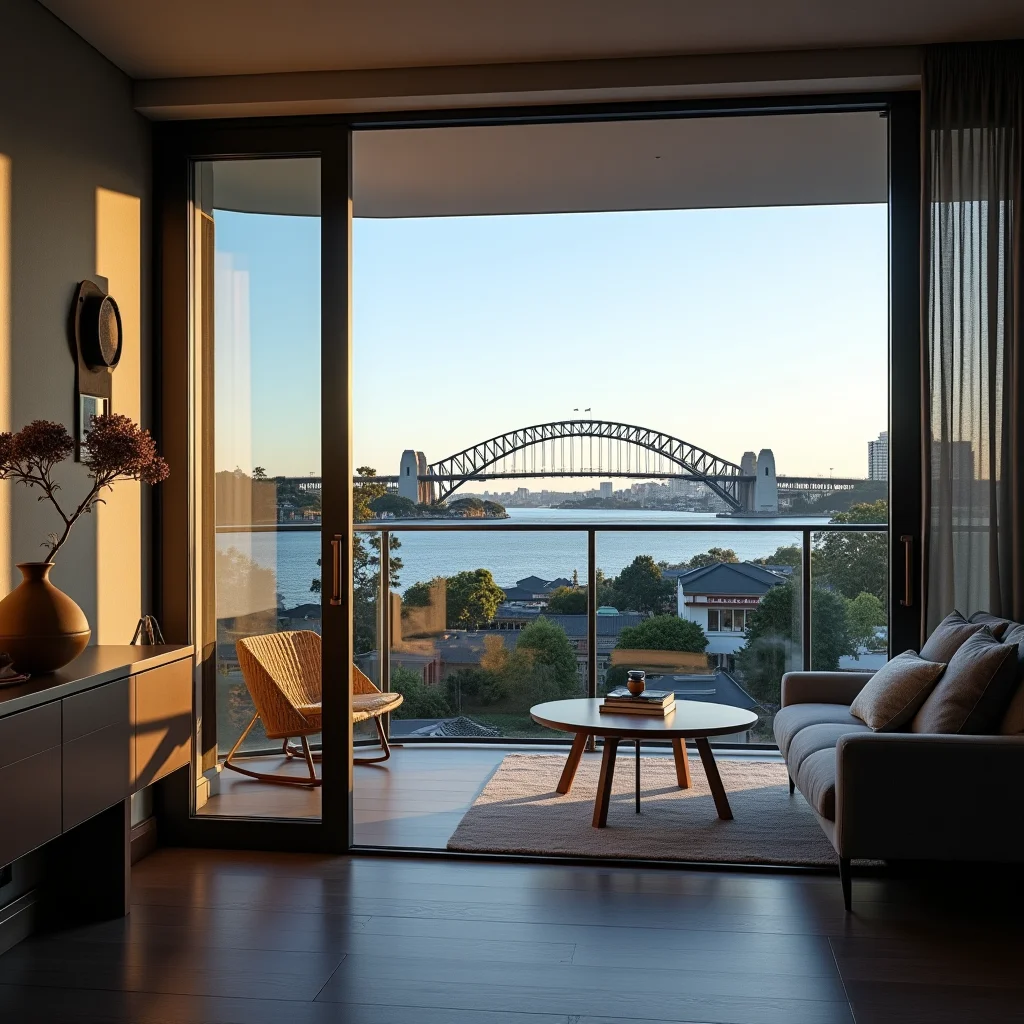
According to the Sydney Morning Herald, a first home buyer secured a Croydon brick house sold by an investor for $1.83 million, with 10 parties registered — a result that stood out from other homes for sale that day where no one put their hand up. At a time when REAStats is recording sub-50% clearance rates in Sydney, this result captures two colliding forces reshaping Sydney property: investors exiting the market and owner-occupiers — including first home buyers — stepping into the gaps left behind.
The Sale That Stands Out in a Subdued Sydney Market
The fact that the seller was an investor is not incidental. realestate.com.au has reported that Sydney property investors are abandoning the market in response to tax changes, and this Croydon listing reflects that trend in microcosm. When investors sell, they typically offload to other investors or to owner-occupiers. In this case, a first home buyer absorbed the stock — a pattern that has direct policy implications for housing supply and tenure mix in Sydney's inner-west and near-western suburbs.
For buyers watching this space, the Croydon result shows that well-presented, properly priced stock in established brick homes still commands competitive interest even in a hesitant market. The lesson is about selectivity: buyers are not uniformly absent — they are bypassing overpriced or poorly presented campaigns and concentrating firepower on properties that offer clear value and location fundamentals. The 10-registered-party figure, in a market where comparable properties attracted no registered bidders at all, signals a meaningful depth of interest rather than a single motivated buyer.
Why Investors Are Selling — And What It Means for Prices
The investor selling the Croydon property is part of a broader withdrawal from the Sydney market. Tax changes — including adjustments affecting land tax thresholds and investment property structuring — have eroded the after-tax returns that previously made Sydney residential property compelling for investors carrying high LVRs at elevated interest rates. With the RBA cash rate at 4.35%, an investor holding a $1.5 million property with an 80% LVR faces an annual interest bill that, when combined with land tax, property management fees, and strata or maintenance costs, produces negative cash flow that tax concessions alone can no longer adequately offset for many holders.
The result is a supply dynamic that is simultaneously bad news and good news depending on your position. For prospective owner-occupiers and first home buyers, investor sell-downs release stock that might otherwise have remained locked in rental portfolios for years. For renters, the same sell-down reduces the available rental pool — investors who exit take their rental properties with them, and when those homes transfer to owner-occupiers, rental supply contracts. This is a structural tension in the Sydney housing system that tax-driven investor exits reliably produce: more homes for sale, fewer homes to rent.
For investors still holding Sydney property and weighing whether to sell, the Croydon result offers a calibration point. According to REAStats, fear of overpaying is gripping Sydney buyers broadly — yet the Croydon property attracted 10 registered parties. Properties in established suburbs with genuine owner-occupier appeal — brick construction, family-sized layouts, proximity to transport and schools — are achieving competitive results even in a soft clearance-rate environment. The properties struggling to attract bids tend to be investor-grade stock where the presentation signals decades of investment-property neglect. Differentiation within the market has rarely been sharper.
First Home Buyers, LVR, and the Finance Reality at $1.83 Million
A $1.83 million purchase price poses a significant financing challenge for a first home buyer. Understanding LVR and LMI is critical at this price point: a standard 80% LVR would require a $366,000 deposit to avoid Lenders Mortgage Insurance, while a 90% LVR reduces the deposit requirement to $183,000 but adds an LMI premium, and at 95% LVR — the maximum most lenders will extend — the deposit drops to $91,500, but LMI costs escalate further and lender choice narrows considerably. The First Home Buyer Complete Guide covers the full suite of deposit assistance schemes, but at $1.83 million, most federal scheme price caps are exceeded for Sydney, meaning the buyer likely funded this purchase through a combination of savings, family assistance, or an existing equity position in another asset.
This matters analytically because a first home buyer competing at $1.83 million in Croydon is not the archetypal scheme-dependent first home buyer — this is a buyer with substantial financial resources, likely older than the median first home buyer cohort, and potentially entering the market after years of saving or after realising gains on a prior asset sale or inheritance. The profile reframes the narrative: first home buyers are not a monolithic group of cash-poor renters. A growing segment is financially capable of competing at price points that would have been considered investment territory just a cycle ago, and they are stepping in precisely as traditional investors step back. For macro analysis of how the RBA's current rate settings are fracturing demand along these price-point lines,
This article was produced with AI assistance and reviewed for accuracy. Content is for informational purposes only and does not constitute financial or property investment advice.