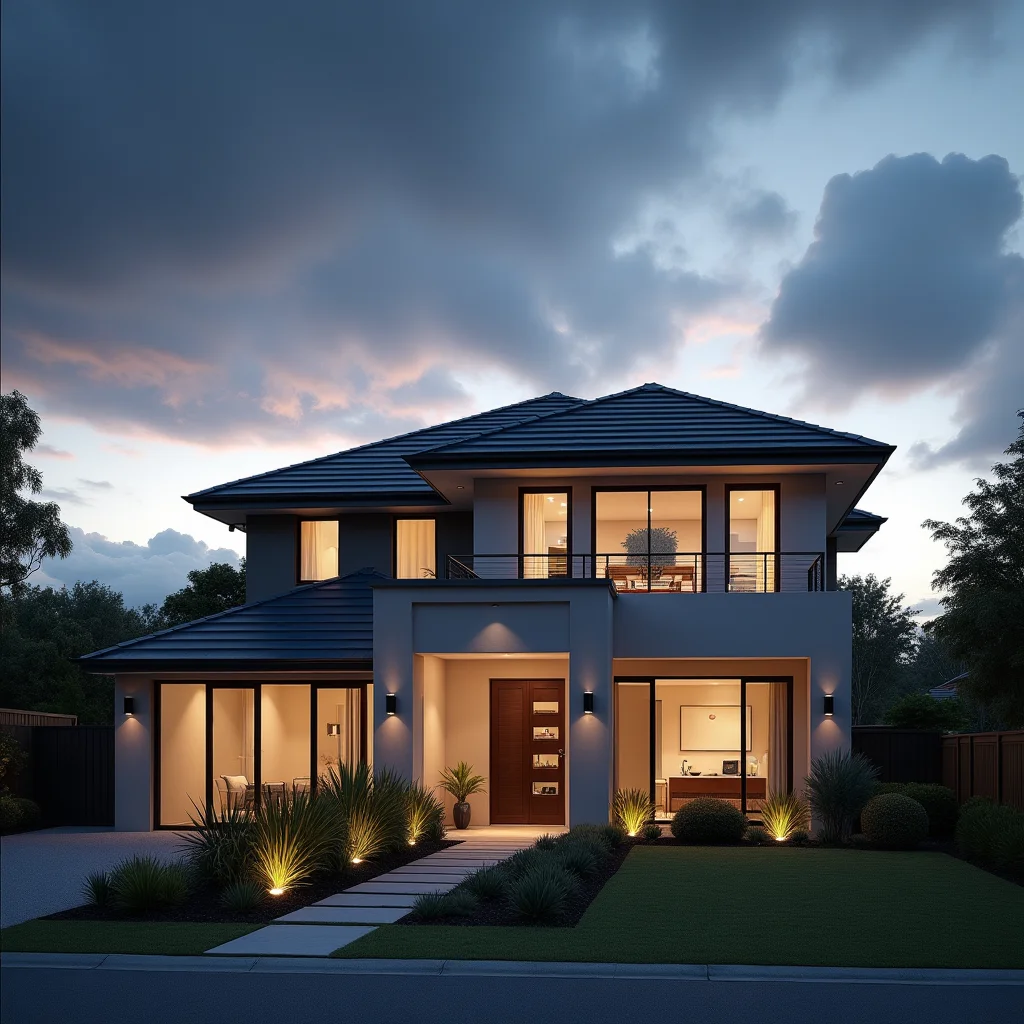
According to
realestate.com.au, television judge Judith Sheindlin and her husband demolished their original Greenwich, Connecticut home after buying it for $US13.2 million ($A18.8 million) in 2007, rebuilding a nine-bedroom residence that has since hosted a family wedding and multi-level stone patios. The story is American, but the underlying insurance problem it raises — how to properly cover a rebuilt, architecturally bespoke, high-value property — is one that a growing number of Australian owners are getting badly wrong.
A Rebuild Changes Everything About a Policy
The Sheindlin case is instructive precisely because the couple did not simply buy an existing home — they tore it down and rebuilt from scratch in 2008, creating a nine-bedroom estate with custom stonework and landscaped grounds substantial enough to host a 150-guest wedding. Any insurer valuing that property today would need to account for a structure, and surrounding improvements, that bear no resemblance to whatever existed when the land was first purchased. A standard sum-insured figure calculated off an old purchase price or an outdated valuation would leave the owners dangerously exposed.
This matters in Australia because building insurance is priced on rebuild cost, not market value or original purchase price. A home that has been extensively renovated, extended, or rebuilt — particularly one with architect-designed features, imported materials, or elaborate outdoor structures — typically costs far more to reinstate than a standard project home of equivalent floor area. Insurers calculate premiums using sum-insured declarations provided by the policyholder, and if that figure hasn't been updated since a major renovation, the policy may only pay out a fraction of what's needed to rebuild.
For additional market context, see REAStats property market data.
For Australian owners of high-value or heavily customised properties, the practical lesson is simple: any time a home undergoes a significant renovation, demolition and rebuild, or major landscaping investment, the building sum insured needs to be reassessed immediately — not at the next renewal. A quantity surveyor's rebuild estimate, rather than a desktop insurer calculator, is the appropriate tool for properties above the mid-market price point.
Why Standard Policies Fall Short on Premium Properties
Mainstream home and contents insurers in Australia design their default products around typical suburban housing stock: standard brick veneer or weatherboard construction, conventional floor plans, and modest outdoor improvements. Properties like the Sheindlin estate — with extensive stonework, multi-level patios and mature, professionally designed grounds — sit well outside that template. The gap between what a generic policy assumes and what such a property actually requires to rebuild can be substantial, leaving owners significantly underinsured if the sum insured hasn't kept pace with the true cost of reinstatement.
The core insurance risk in high-value and heavily customised homes isn't fire or storm frequency — it's the mismatch between a generic sum-insured calculation and the actual cost of reinstating bespoke construction, landscaping and fixtures to their pre-loss standard.
This is why specialist high-net-worth insurers exist alongside the mainstream market in Australia, offering agreed-value policies rather than sum-insured policies. Under an agreed value arrangement, the insurer and owner settle on a specific rebuild figure upfront, based on a professional valuation, removing the guesswork and the risk of a shortfall after a total loss. For standard policies, underinsurance remains one of the most consistent findings in Australian claims data, with many homeowners discovering their declared sum falls well short of actual rebuild cost only after a fire or flood.
Owners considering this level of cover should also weigh how their financing structure interacts with insurance obligations. Lenders typically require adequate building insurance as a condition of a mortgage, and the choice between interest only vs principal and interest loan structures can affect how much equity exposure a lender tolerates if a property is underinsured. Investors and owner-occupiers alike should treat insurance review as a standing item whenever loan terms or property improvements change.
Background: How Rebuild Valuations Actually Work
Most Australian insurers ask policyholders to estimate their own rebuild cost using online calculators that factor in floor area, construction type, and postcode. These tools are a reasonable starting point for a standard home but become unreliable once a property includes custom architecture, premium finishes, extensive outdoor living areas, or landscaping of the kind described in the Sheindlin story. For a comprehensive overview, see our Property Insurance Guide, which breaks down how sum-insured and agreed-value policies differ and when each is appropriate.
Property structure matters too. Owners in strata schemes face a different set of rules again, since the strata vs Torrens title distinction determines who is responsible for insuring what — a body corporate typically insures common property and building structure under a strata title, while a Torrens title owner carries full individual responsibility for the entire structure.
What Australian Owners Should Do Differently
Owners of renovated, rebuilt, or architecturally significant homes should request a formal rebuild cost assessment rather than relying on an insurer's default calculator, particularly where the property includes non-standard materials, custom stonework, or extensive outdoor infrastructure. This single step is the most common gap identified when high-value claims are disputed or found to be short. A professional quantity surveyor report typically costs a modest fee relative to the potential shortfall it can prevent.
Landscaping and outdoor improvements deserve specific attention in any policy review. Many standard contents and building policies cap landscaping, pools, and outbuildings at a fraction of the main dwelling's sum insured, which can be wholly inadequate for a property with extensive, professionally designed grounds. Reviewing these sub-limits line by line — not just the headline sum insured — is essential for any owner whose garden or outdoor areas represent a meaningful share of the property's overall value.
Finally, owners should revisit their policy every time there is a material change to the property — a renovation, a rebuild, a new pool, or significant landscaping work — rather than waiting for the annual renewal notice. Those building or buying through a buyer's agent on premium properties should ask specifically about insurability and rebuild cost before settlement, since some architecturally unusual or heritage-affected homes can be materially more expensive to insure than their market price suggests.
For investors and owner-occupiers alike, the practical takeaway from a story about a demolished-and-rebuilt mansion half a world away is close to home: insurance is only as good as the valuation behind it, and any property that deviates from a standard build — through renovation, rebuild, or elaborate landscaping — needs a specialist assessment, not a default calculator figure.
This article was produced with AI assistance and reviewed for accuracy. Content is for informational purposes only and does not constitute financial or property investment advice.