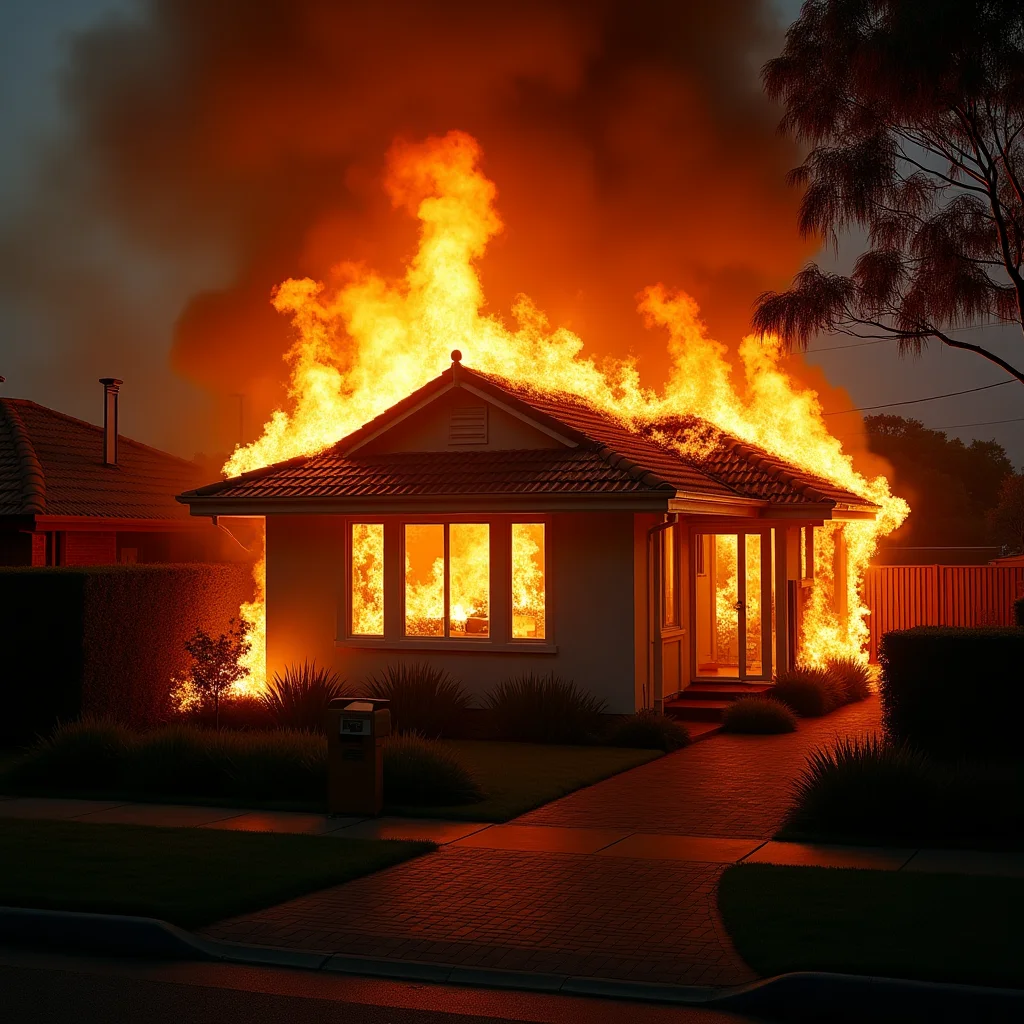
According to the Sydney Morning Herald, a modular home designed by Adriano can be assembled in a single day using sustainable materials and a kit-of-parts system that slots together without specialist labour — and critically, the structure is built to be fire-resistant from the ground up. It is the kind of construction innovation that property insurers in Australia have been waiting for, as bushfire risk continues to push premiums beyond reach for tens of thousands of homeowners in high-exposure areas.
What Fire-Resistant Construction Actually Means for Insurers
Australia's building code classifies properties in bushfire-prone areas using a Bushfire Attack Level (BAL) rating system, ranging from BAL-12.5 at low risk through to BAL-FZ (Flame Zone) at extreme risk. Insurers use these ratings — alongside construction materials, roof type, and proximity to vegetation — to price building insurance policies. A home built with fire-resistant cladding, non-combustible framing, and ember-proof window seals can attract materially lower premiums than a comparable timber-framed structure on the same block of land. The modular home described by the Sydney Morning Herald, built using a spirit of DIY assembly and sustainable materials, exemplifies exactly this approach.
For additional market context, see REAStats property market data.
Why does this matter? Insurers price risk actuarially — they charge more where claims are statistically more likely and more expensive to settle. In designated bushfire zones, the relationship between construction specification and insurance cost is direct: a home that demonstrably reduces its fire-risk profile through its materials and design can reopen a competitive insurance market that might otherwise be closed to it. A home that does not may leave its owner with limited options and significantly elevated holding costs.
For buyers and owners, the practical step is straightforward: obtain a formal BAL assessment from a qualified assessor before selecting building materials for a new build or major renovation. Share that assessment with your insurer alongside a specification sheet for the materials used. Some insurers offer documented discounts for non-combustible construction; others will simply provide cover where they otherwise would not. Either outcome represents a tangible financial benefit. For those already in fire-prone areas, retrofitting ember guards, replacing timber decking with composite materials, and installing metal roofing can similarly shift an insurer's risk assessment.
Historically, fire-resistant construction was associated with significantly higher build costs — a premium that made the insurance saving difficult to justify on pure numbers. Modular and prefabricated construction is closing that gap. By standardising components and reducing on-site labour time (as demonstrated by the single-day assembly described in the SMH), these homes can be delivered at a cost that is increasingly competitive with conventional builds, while locking in long-term insurance savings that compound over the life of the property.
The Building Insurance Gap in Bushfire-Prone Australia
Building insurance in Australia is not mandatory under federal law — unlike in some other jurisdictions — but mortgage lenders universally require it as a condition of settlement. For properties in high-BAL areas, this creates a critical problem: if the market will not insure a property, or will only do so at a premium that adds thousands of dollars annually to holding costs, the property becomes both unfinanceable and unleasable. This dynamic has already played out in parts of regional New South Wales and Victoria's alpine fringe, where insurance non-renewal notices have effectively stranded property owners.
The gap between what standard insurers will cover and what owners need is widest in exactly the locations where fire risk is highest. Fire-resistant construction directly addresses this gap by changing the underlying risk profile of the dwelling, not just the financial exposure of the insurer. For property investors holding rental properties in fire-prone areas, the stakes are higher still. A landlord insurance policy layered over a building policy requires both to respond coherently in a total loss event. If the building insurer limits a payout — or disputes liability on the basis of construction defects or non-compliant materials — the landlord insurer may also contest coverage for lost rental income during the rebuild period. Getting the construction specification right from the outset, and documenting it thoroughly, protects all layers of the insurance tower. For a comprehensive overview of landlord insurance obligations, see the APF Property Insurance Guide.
Background: Land, Risk, and the True Cost of Bushfire Exposure
Understanding how fire risk affects insurance also requires understanding how it intersects with land values and holding costs. In many fire-prone regions, land is relatively affordable — one reason buyers are drawn there in the first place. But the true cost of ownership includes insurance, and when that cost is stripped out of purchase-price comparisons, the economics shift considerably. Our guide to Land Tax in Australia — State by State Guide details the state-based tax obligations that already add to holding costs in these regions; combine those with elevated insurance premiums and the picture for investors becomes materially different from what a raw land price suggests.
It is also worth understanding how title structures affect insurance obligations. Owners of Torrens-titled freestanding homes carry the full building insurance obligation themselves — every decision about cover level, insurer selection, and construction specification falls to the individual owner. This is distinct from strata-titled properties, where the body corporate manages building insurance collectively. For a freestanding home in a bushfire zone, that individual responsibility is both a risk and an opportunity: the owner can make targeted decisions to reduce their insurance cost that a strata committee cannot make for individual lot owners.
Practical Steps for Buyers, Builders, and Investors
This article was produced with AI assistance and reviewed for accuracy. Content is for informational purposes only and does not constitute financial or property investment advice.