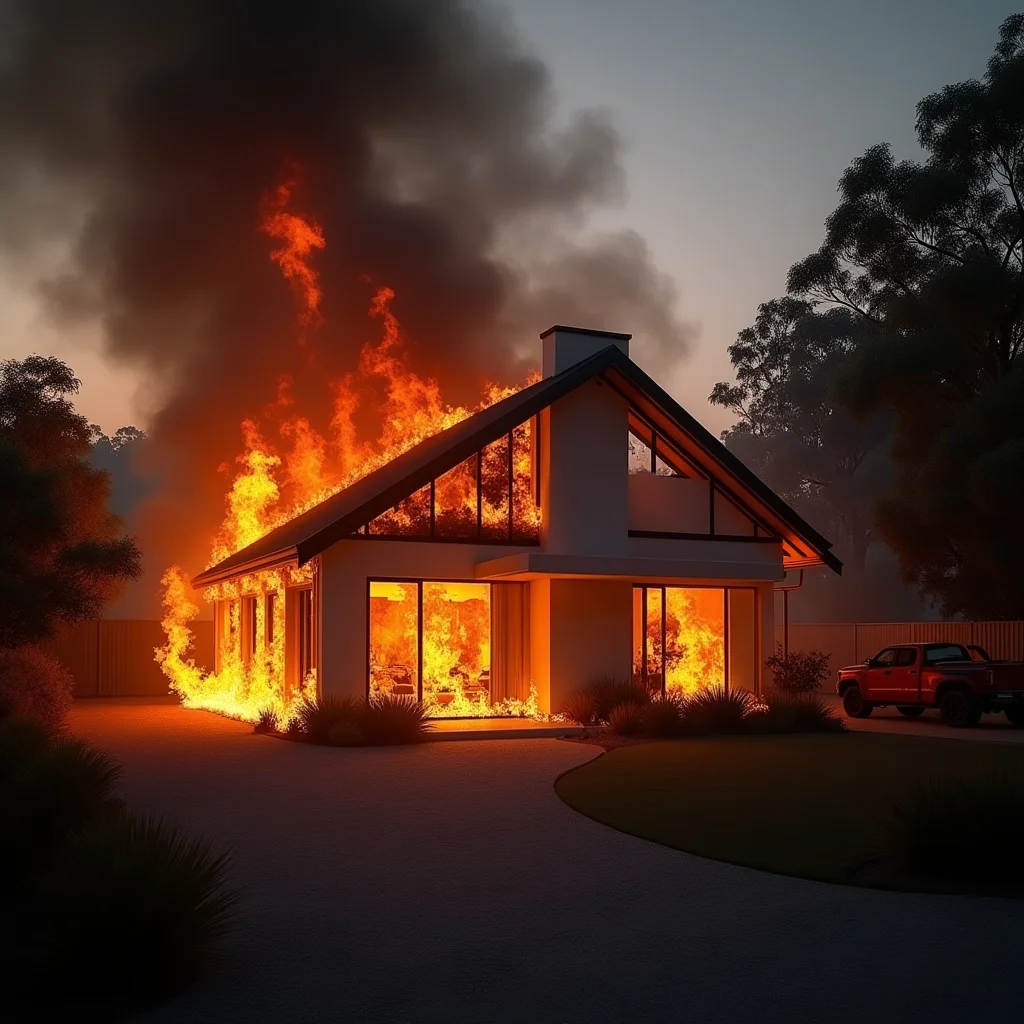
According to realestate.com.au, a historic schoolhouse and fire-damaged home in Victoria's goldfields region has hit the market from as little as $99,000 — with the added lure that the ground beneath it could contain gold. The listing has attracted significant attention, but the headline price masks a far more complex financial reality for any buyer who does not conduct rigorous insurance due diligence before signing a contract.
What Buying a Fire-Damaged Property Actually Involves
The fire damage applies to the former schoolmaster's home, which is mostly demolished with only brick chimneys and a laundry remaining. The historic schoolhouse is a separate structure that has not sustained fire damage but requires extensive renovation, structural work, restumping and new flooring. In Australian property law, the vendor is generally required to disclose known material defects, but buyers remain responsible for assessing the extent of damage through building and pest inspections. The discount relative to an undamaged comparable property may appear compelling. The reality, however, is that the cost of rehabilitation — structural remediation, hazardous material removal, and full rebuilding — can easily exceed the purchase price several times over.
The insurance dimension is where most bargain hunters run into serious problems. Standard building insurers in Australia apply strict underwriting criteria to fire-damaged dwellings. Many will refuse to issue a new policy on a property that has sustained structural fire damage until a licensed builder has certified the structure as safe and habitable. This creates an immediate catch-22: a buyer may settle on a property they legally cannot insure in its current state, leaving them exposed to total financial loss from any further incident — storm, vandalism, or secondary fire — during the remediation period.
For buyers considering this listing — or any fire-affected property — the practical step before making an offer is to contact at least three building insurers and request a preliminary underwriting assessment based on the known damage profile. Insurers will typically ask for a building inspection report, photographs of affected areas, and confirmation of current structural integrity. Without a favourable response from an insurer, no rational purchase should proceed regardless of the headline price or any speculative upside from gold on the land.
It is also worth understanding the distinction between Strata Title vs Torrens Title at the point of purchase. A Torrens title property — which a standalone schoolhouse on a goldfields allotment almost certainly is — places the full building insurance obligation on the individual owner. There is no strata body corporate to share that burden. Every dollar of rebuild cost, and every gap in coverage, sits with the buyer alone.
How Australian Insurers Assess Fire-Affected Properties
Australian building insurers categorise fire damage across a spectrum from cosmetic smoke damage through to total structural loss. The coverage implications differ dramatically across this spectrum. A property with superficial smoke staining to interior walls may obtain a standard policy with a remediation condition attached. A property where the roof structure, load-bearing walls, or subfloor systems have been compromised by fire will generally face far greater scrutiny from standard building insurers. Specialist insurers do provide policies for damaged or derelict structures, though premiums for such cover typically reflect the elevated risk profile of the asset.
The sum insured question is equally critical. Many buyers of distressed properties underinsure on the assumption that the rebuild cost reflects the purchase price. This is incorrect. Rebuild cost is determined by construction costs per square metre — not by the distressed market price at which the property was acquired. A fire-damaged home purchased at a low entry price may carry a total replacement cost that substantially exceeds that figure depending on its footprint, construction type, and local contractor rates.
When a fire-damaged property is purchased below replacement cost, the gap between the purchase price and the actual rebuild figure represents uninsured financial exposure — a risk that cannot be resolved by a low acquisition price alone. Buyers who conflate purchase price with rebuild cost are systematically underinsured from the moment they take title.
For a broader understanding of how building insurance interacts with loan structure — particularly for investors who may be using interest-only financing to keep holding costs low on a distressed asset — the APF guide Interest Only vs Principal and Interest — Which Loan Structure is Right? explains how loan type affects equity accumulation during a rebuild phase. An interest-only borrower holding a fire-damaged property generates no equity through repayments, meaning any period of uninsurability leaves them with debt and no asset growth.
The Regional Victoria Insurance Context
Victoria's goldfields region sits within areas that insurers flag for elevated bushfire risk, which directly affects premium pricing and, in some cases, insurers' willingness to write new policies. A property that has already suffered fire damage in a bushfire-risk zone faces compounded underwriting scrutiny: the prior loss event is assessed alongside the ongoing risk of future fire events in the same location.
Buyers in these markets increasingly need to budget not just for the purchase and remediation but for the ongoing insurance cost as a recurring annual liability. A property with a low entry price but significant ongoing insurance costs — assuming coverage is obtainable at all — carries a very different total cost of ownership than the headline figure implies. For detailed market data on regional property performance relevant to this analysis, REAStats tracks regional Victorian property trends and price movements by postcode.
What Buyers Must Do Before Purchasing a Fire-Damaged Property
Any buyer seriously considering a fire-damaged property at any price point should complete four non-negotiable steps before exchange. First, commission a licensed building inspector with specific experience in fire-affected structures — not a standard pre-purchase inspection but a specialist structural assessment that identifies load-bearing damage, smoke penetration into wall cavities, electrical system integrity, and the presence of asbestos (common in older regional Victoria buildings of the schoolhouse era). Second, obtain a written estimate from a licensed builder for full remediation to a habitable, code-compliant standard
This article was produced with AI assistance and reviewed for accuracy. Content is for informational purposes only and does not constitute financial or property investment advice.