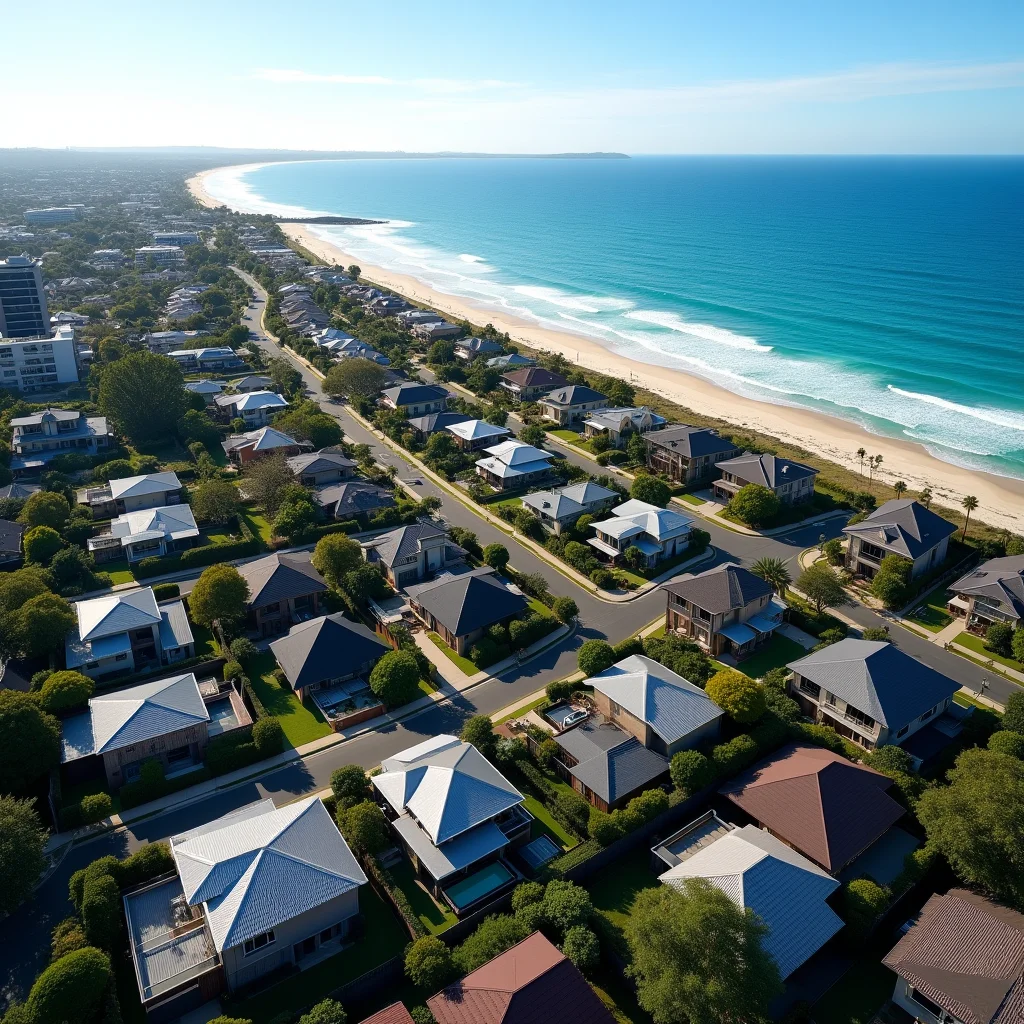
According to realestate.com.au, Brisbane's most popular street for buyer search interest is not in New Farm or Ascot, the city's traditional blue-chip riverside enclaves, but in a suburb further from the CBD where buyers are chasing space and value rather than postcode prestige. The finding upends the assumption that search volume tracks prestige addresses, and it points to a broader recalibration under way across Brisbane's property market as affordability pressure reshapes where demand actually concentrates.
The Search Data Behind the Story
The ranking reflects buyer search interest on realestate.com.au — a measure of how much attention listings on a street receive from people hunting for a home or investment. That the top spot went to a street outside New Farm and Ascot, suburbs long treated as shorthand for Brisbane wealth, signals that raw search interest and premium pricing power have decoupled. Search volume reflects aspiration and curiosity as much as buying capacity, but it is also a leading indicator of where agents and vendors are likely to see fiercer competition for listings in coming months.
For buyers, the practical takeaway is that popularity on search platforms does not equate to overpricing — it often flags suburbs where infrastructure, schools or lifestyle amenity are drawing attention before price growth has fully caught up. Investors watching Brisbane closely should treat elevated search volume as an early signal worth cross-checking against actual sales data and clearance rates rather than a standalone buy signal.
Why Buyers Are Looking Past the Traditional Blue-Chip Suburbs
Brisbane's prestige suburbs have re-rated sharply over the past cycle, and that re-rating has priced out a meaningful share of upgraders and first-time buyers who might once have targeted New Farm's terrace houses or Ascot's Queenslanders. As entry prices in those suburbs climbed, search behaviour naturally migrated to adjacent or more affordable pockets offering similar lifestyle attributes — proximity to the river, established tree cover, cafe strips — without the same price tag. That substitution effect is a familiar pattern in Australian cities where a hot inner-ring market pushes overflow demand into secondary suburbs.
This pattern echoes what has already played out in Sydney and Melbourne, where buyer interest has spread from blue-chip inner suburbs into middle-ring markets as affordability constraints bite. Brisbane is now going through its own version of that shift, several years behind the southern capitals but following a similar logic: buyers chase the best lifestyle proxy they can still afford, and search data captures that migration in real time, often before settlement data does.
Search-driven demand data is increasingly diverging from headline median price rankings, suggesting Brisbane's next wave of price growth may concentrate in suburbs currently overlooked by buyers fixated on legacy blue-chip addresses.
The implication for sellers in traditional prestige suburbs is not that demand has evaporated — New Farm and Ascot remain tightly held, low-turnover markets — but that the marginal buyer, the one deciding where to direct their search effort and their offers, is increasingly looking elsewhere first. That marginal buyer behaviour is exactly what search ranking data captures, and it is a useful early warning system for agents advising vendors on realistic pricing expectations.
Context: How Suburb Popularity Data Fits the Bigger Picture
Search popularity is one input among many that investors should use when assessing a suburb's trajectory, alongside vacancy rates, rental yield and infrastructure spending. Readers weighing whether to buy and renovate in an up-and-coming Brisbane street rather than compete for an already-renovated home in New Farm can find a detailed breakdown of renovation economics, from cosmetic upgrades to structural additions, in APF's Renovation for Profit — How to Add Value to Australian Investment Property guide. That resource is particularly relevant for buyers priced out of finished blue-chip stock who are instead targeting original-condition homes in emerging streets with a plan to add value themselves.
Search rank data also needs to be read alongside affordability modelling elsewhere in the country. Separate realestate.com.au analysis of South Australian postcodes shows how a future rate rise could push entire pockets of the market out of reach for typical buyers, a reminder that borrowing capacity, not just search enthusiasm, ultimately determines which suburbs convert search interest into settled sales.
What This Means for Buyers, Sellers and Investors
For prospective Brisbane buyers, the lesson is to treat a street's search ranking as a prompt for deeper due diligence rather than a reason to bid emotionally. High search volume can precede price growth, but it can equally reflect curiosity from interstate buyers who never convert to an offer. Cross-referencing search interest against actual auction clearance rates and days-on-market data, available through platforms like REAStats, gives a more reliable read on whether a street's popularity is translating into competitive bidding or simply window shopping.
Sellers in the newly popular street have an opportunity to test the market with confidence, particularly if their home offers the character features — Queenslander verandahs, established gardens, walkability — that appear to be driving the search interest away from New Farm and Ascot. Investors should watch for early signs of yield compression in these streets, since rising buyer competition typically pushes prices up faster than rents adjust, which can erode initial rental returns even as capital growth prospects improve.
The broader signal for Brisbane's market is that affordability pressure is doing what it always does in Australian property cycles: redistributing demand from the most expensive suburbs toward their nearest affordable substitutes. Buyers who move early into these emerging streets, before search interest fully converts into price growth, stand to benefit most — but only if they pair the search data with hard numbers on comparable sales, rental yield and finance costs before committing.
This article was produced with AI assistance and reviewed for accuracy. Content is for informational purposes only and does not constitute financial or property investment advice.