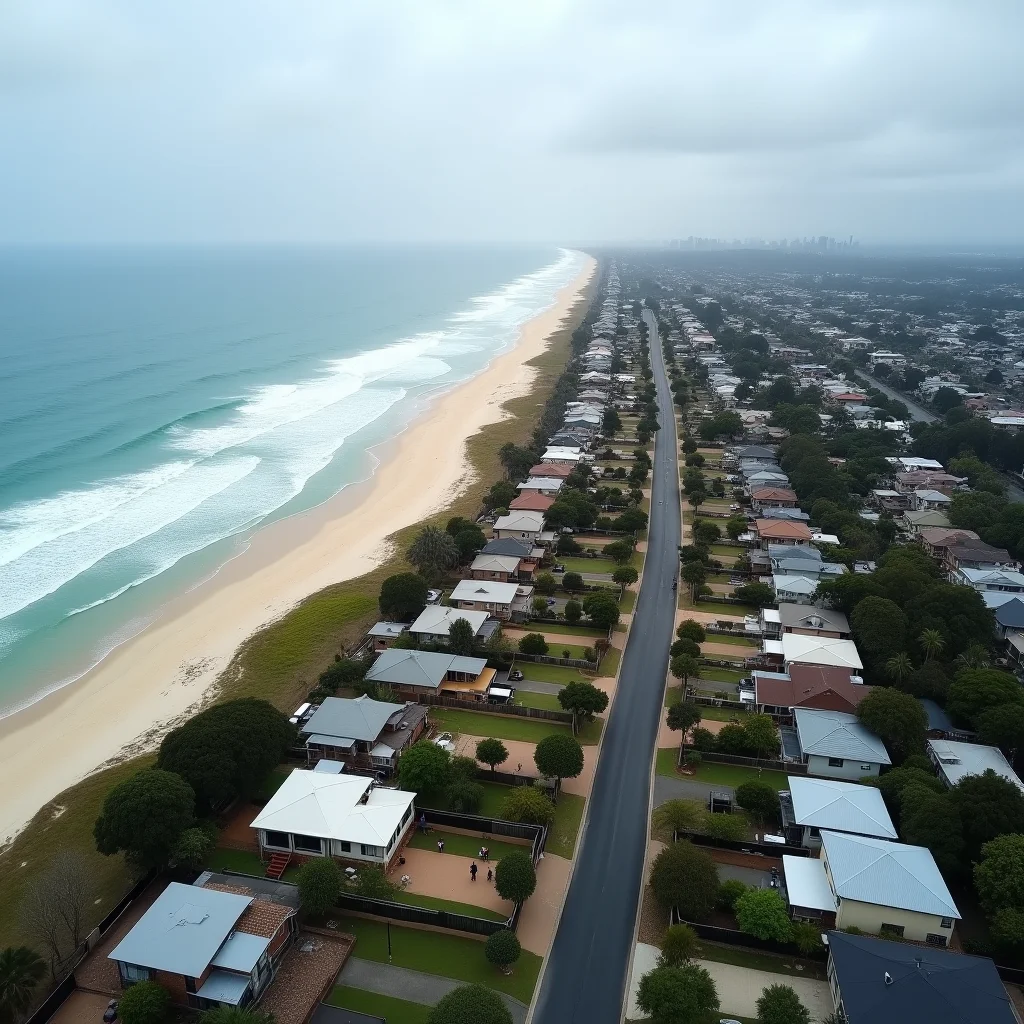
According to realestate.com.au, the housing downturn many Australians were quietly hoping would unlock affordability has instead delivered a far messier reality — one of selective, uneven price falls that are punishing sellers in the wrong suburbs while leaving other markets barely touched. PropTrack data confirms Australia's national median home price fell 0.3% in July 2026 to $894,000, marking four consecutive months of decline. Brisbane's preliminary auction clearance rate has now dropped to its lowest level since the Covid-19 pandemic.
Four Straight Monthly Falls: What the PropTrack Data Actually Shows
The PropTrack Home Price Index, reported by REAStats, shows Australia's national median sitting at $894,000 after a 0.3% decline in July — the fourth straight monthly fall in a row. Capital cities are driving the correction, with the combined weight of elevated mortgage rates and softening demand pulling aggregate values lower. The cumulative decline across four months is modest in percentage terms but meaningful in dollar terms: for a property near the national median, that represents thousands of dollars wiped from paper values since March 2026.
What makes this downturn structurally different from past corrections is the unevenness of the discounting. Not every seller is being forced to cut. Discounts are concentrated in specific price brackets, property types, and locations — meaning headline medians can understate the pain felt by sellers in oversupplied pockets while simultaneously overstating it for tightly held lifestyle or inner-ring markets. This divergence complicates the narrative that falling prices are simply a buyer's windfall. In reality, buyers targeting the most discounted stock are often looking at properties with genuine underlying issues — high strata levies, poor school catchments, or difficult resale profiles.
For prospective buyers watching from the sidelines, the practical implication is significant: the national median number alone is a poor guide to what is actually available at what price. Buyers must interrogate suburb-level data, days-on-market figures, and vendor discount rates in their specific target areas before drawing conclusions about affordability. Falling medians at the national level do not automatically translate to falling prices in the suburb you want to buy in.
Historically, four consecutive months of national price decline is not uncommon at turning points in the Australian property cycle — the 2017–19 correction and the mid-2022 rate shock both produced similar sequences. What differs in 2026 is that the RBA's cash rate remains elevated at 4.35%, leaving little monetary policy buffer to arrest a deeper slide if sentiment deteriorates further. That rate level continues to suppress borrowing capacity for owner-occupiers and compress yields for investors.
Brisbane's Auction Market: A Pandemic-Era Warning Signal
Brisbane's preliminary auction clearance rate has fallen to its lowest level since the Covid-19 pandemic, according to REA Group data reported by REAStats. Clearance rates are one of the most reliable leading indicators of price direction: when buyers stop competing at auction, vendor pricing power erodes and negotiated price reductions follow within weeks. Brisbane had been widely regarded as a post-pandemic structural growth market on the back of interstate migration and the 2032 Olympic development pipeline. A clearance rate collapse to pandemic-era lows signals that even that tailwind is no longer sufficient to absorb current supply at current prices.
The supply side is compounding the problem. Separate reporting from realestate.com.au highlights that Brisbane sellers are flooding the market as homeowners race to beat further price falls — a classic late-cycle dynamic where sellers accelerate listings simultaneously, increasing competition between vendors and handing negotiating power to the shrinking pool of active buyers. This seller rush itself becomes self-defeating: the more stock that hits the market, the longer days-on-market stretch, and the more pressure each individual vendor faces to discount. It is a feedback loop that typically takes months to resolve.
For investors holding Brisbane property purchased at 2023–2025 peak prices, the current clearance rate data warrants close attention. Those approaching loan rollover periods or relying on short-term equity gains to refinance face a narrowing window. The more immediate practical risk is for vendors who have already reduced their asking price: accepting early discounts in a falling clearance-rate environment often still leaves sellers behind the market, because each subsequent week of declining results pulls the goalposts further down.
When auction clearance rates fall to pandemic-era lows in a capital city that absorbed strong post-Covid migration, it signals that the demand shock absorbers have been exhausted — and that price discovery has shifted decisively in favour of buyers who are willing to wait.
Understanding Where Australia Sits in the Property Cycle
The current data pattern — four monthly price declines, a pandemic-low clearance rate in Brisbane, selective vendor discounting in capital cities — maps clearly onto the contraction phase of the Australian property cycle. As the Australian Property Cycle Explained guide details, this phase is characterised by rising supply, declining clearance rates, extended days-on-market, and increasing vendor discounting, typically persisting until interest rates fall, credit conditions ease, or population-driven demand reasserts itself. Australia is currently experiencing the first two pressures without yet seeing meaningful relief on the third.
For context on how Australian conditions compare to global peers, Australian Property Prices vs the World provides a useful framework — Australia's correction, while real, remains modest relative to markets in Canada, Sweden, and New Zealand that experienced sharper post-pandemic unwinds. Macro analysis available through WealthWatchPro tracks how global rate divergence and central bank policy are shaping capital flows into Australian assets, including property.
What Buyers, Sellers, and Investors Should Do Now
For buyers, the current environment creates genuine opportunity — but only for those who have done suburb-level homework rather than acting on national median headlines. The evidence that discounts are selective rather than universal means that well-located, tightly held properties in supply-constrained suburbs are not necessarily getting cheaper in line with the broader index. Buyers should focus on suburbs with low vendor discount rates, short days-on-market, and limited new listing supply. It is also worth examining individual auction results rather than relying on preliminary clearance rates, which can shift significantly once passed-in properties are recorded.
Sellers facing a genuine need to transact should price realistically from day one. In a declining clearance-rate environment, properties that sit on market for more than three to four weeks suffer a stigma discount on top of the prevailing market softness. Vendors who chase the market down by incrementally reducing their asking price typically end up accepting less than if they had priced competitively at launch. Engaging a vendor advocate or experienced selling agent with current local auction data is particularly valuable when the headline market is moving.
Investors need to stress-test their portfolios against a scenario in which the RBA holds at 4.35% for longer than current market pricing implies, and in which Brisbane clearance rates do not recover before year-end. Properties purchased for capital growth on short timelines are the most exposed. Those with strong rental yields — where the income component continues to service debt regardless of short-term value movements — are in a structurally stronger position to hold through the current contraction phase without being forced sellers.
One bright spot from the data: Carindale in south-east Brisbane recorded 9.2% annual growth to a $1,150,000 median with properties selling in 24 days and a 62% clearance rate, demonstrating that even in a weak aggregate market, individual suburbs with strong fundamentals continue to attract committed buyers. The current environment rewards specificity — detailed research at the suburb and street level, rather than broad-brush calls on national or even city-level direction.
This article was produced with AI assistance and reviewed for accuracy. Content is for informational purposes only and does not constitute financial or property investment advice.