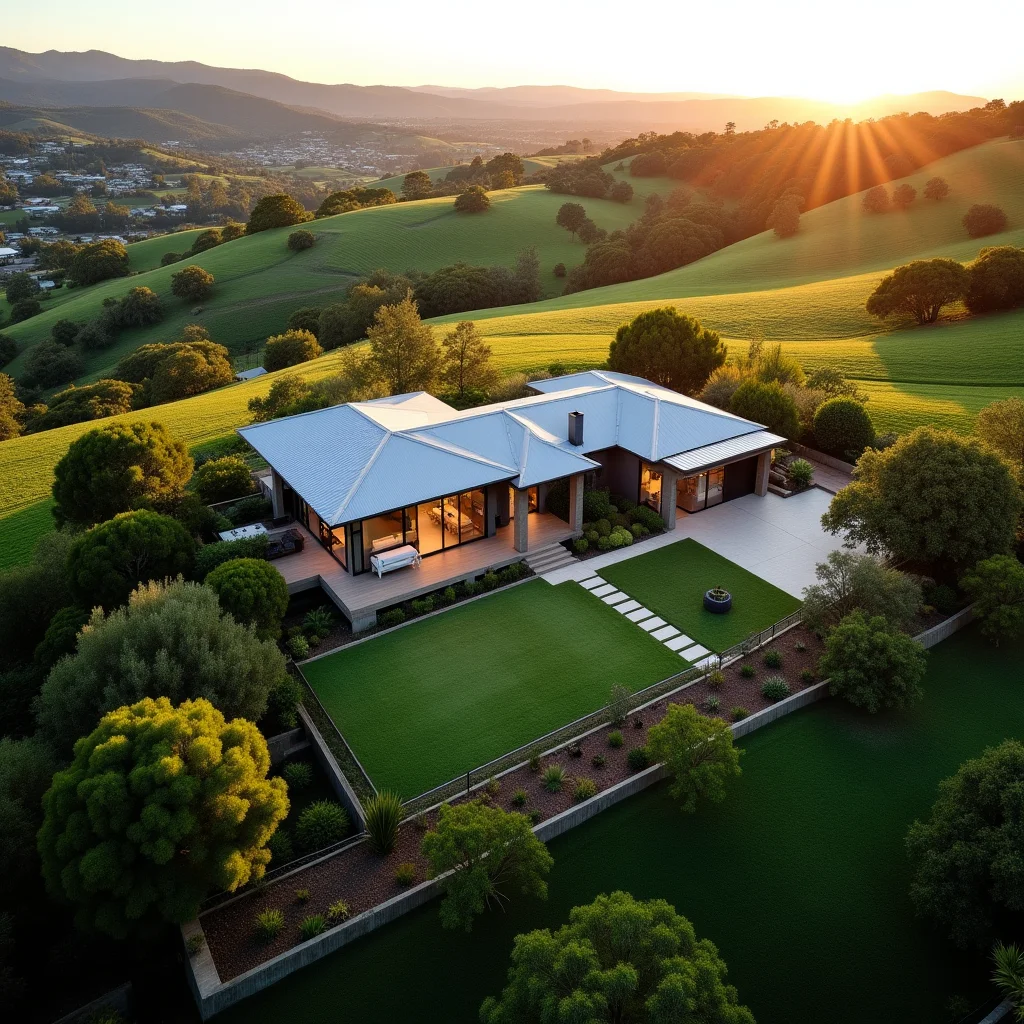
According to realestate.com.au, an iconic 140-year-old mansion — one of just three surviving Witches' Houses in a popular inner-city suburb — has hit the market after a decades-long restoration. That restoration reinstated the home's original gargoyles, stonework, verandahs, stained glass, and tessellated tiles. The listing is one of the most architecturally significant to enter the national market in 2026, and its sale will serve as a live pricing test for irreplaceable heritage stock in an era of tight established-home supply.
A Rare Asset Class Enters the Market
The property's rarity is its dominant commercial attribute. When only three examples of a defined architectural type survive in an entire suburb, each listing functions less like a standard real estate transaction and more like a closed auction between collectors. The decades-long restoration — undertaken to reverse earlier subdivisions and modernisation — has returned the home to a condition that reflects the turrets reminiscent of witches' hats, and the broader detailing, that gave the 'Witches' House' typology its name. That kind of stewardship takes generations and is almost impossible to replicate at any price.
For additional market context, see WealthWatchPro investment market analysis.
Heritage-listed and architecturally unique homes sit in a separate pricing tier from the surrounding suburb median because their supply is structurally fixed. Unlike a standard character home, which can be demolished and replaced, a property with formal heritage protection carries covenants that prevent significant alteration — simultaneously preserving value and limiting buyer pool flexibility. The market for such homes is thin and driven by a small cohort of buyers for whom scarcity itself is the product. In that context, a decades-long restoration that reinstates original fabric actively increases the asset's claim on premium pricing relative to a comparable property with intrusive modern additions.
The timing of this listing also reflects a broader shift in vendor confidence within the prestige and heritage segment. At the RBA's current cash rate of 4.35%, mainstream volume buyers are still constrained by borrowing capacity, but the top end of the market — particularly for irreplaceable assets — draws on equity rather than fresh debt. Prestige buyers are less rate-sensitive than the median, and vendors in this tier have read that dynamic correctly in choosing mid-2026 as their moment to transact.
What Decades of Restoration Actually Signals to Buyers
A restoration described as spanning decades is not a renovation in the conventional sense. It is a sustained capital programme across structural, facade, and interior works. For a buyer, that history means two things simultaneously: the heavy lifting is done, and the documentation burden is significant. Any serious purchaser will need to trace every council approval, heritage permit, and structural report generated during the restoration to confirm the works were completed in compliance with the relevant heritage overlay and that no unapproved alterations were introduced along the way.
Heritage compliance is not a formality. Unapproved works on a heritage-listed or heritage-significant property can trigger enforcement orders requiring costly reinstatement, and in some jurisdictions, penalties attach personally to the registered owner regardless of when the works were performed. A building and pest inspection conducted by an inspector with heritage experience is essential — standard residential inspectors rarely have the depth to assess period materials like lime mortar, original slate, leadlight, or decorative render. The APF guide on house versus apartment investment in Australia highlights that houses deliver stronger long-run capital growth, but that premium is only realised when the asset's structural and legal standing is clean.
Heritage Homes and the Wider Established-Stock Supply Story
This listing lands in a market where established-home supply has been a persistent constraint on transaction volumes. Across the major capitals, the ratio of new listings to total available stock has remained tight through 2026, with buyers competing for a pool of homes that is not growing quickly. Against that backdrop, genuinely unique stock — properties that exist in quantities of three or fewer within a suburb — occupies a different supply curve entirely. The competitive dynamics that have driven results like Gordon's 70% clearance rate and REAStats's documentation of six-way auction battles for dated Melbourne Bayside townhouses reflect a market where established stock consistently attracts depth of demand that new supply cannot replicate.
Heritage properties are the extreme case of that dynamic. They are, by definition, not reproducible by new supply. A developer cannot respond to demand for a 140-year-old gothic-revival mansion by building more of them. This is the precise structural feature that distinguishes heritage prestige from the broader debate — analysed by REAStats — between new apartments entering soft markets and established homes attracting competitive depth. Gordon's $2,100,000 median and 5.1% annual growth, recorded alongside that 70% clearance rate, illustrate how established stock in supply-constrained suburbs commands a durable pricing premium that new development cannot easily erode.
When the surviving examples of an architectural typology can be counted on one hand within a suburb, the market for those assets operates outside normal supply-demand mechanics. Rarity itself becomes the pricing floor — and decades of careful restoration work set the ceiling significantly higher.
The RBA's cash rate of 4.35% continues to constrain mainstream borrowing capacity, but the prestige and heritage tier draws on a buyer cohort less exposed to serviceability pressure. As REAStats has observed in documenting the tension between new supply entering soft markets and established stock attracting competitive demand, the structural inelasticity of heritage assets positions them differently across rate cycles. For buyers who understand that distinction — and have worked through the APF framework
This article was produced with AI assistance and reviewed for accuracy. Content is for informational purposes only and does not constitute financial or property investment advice.