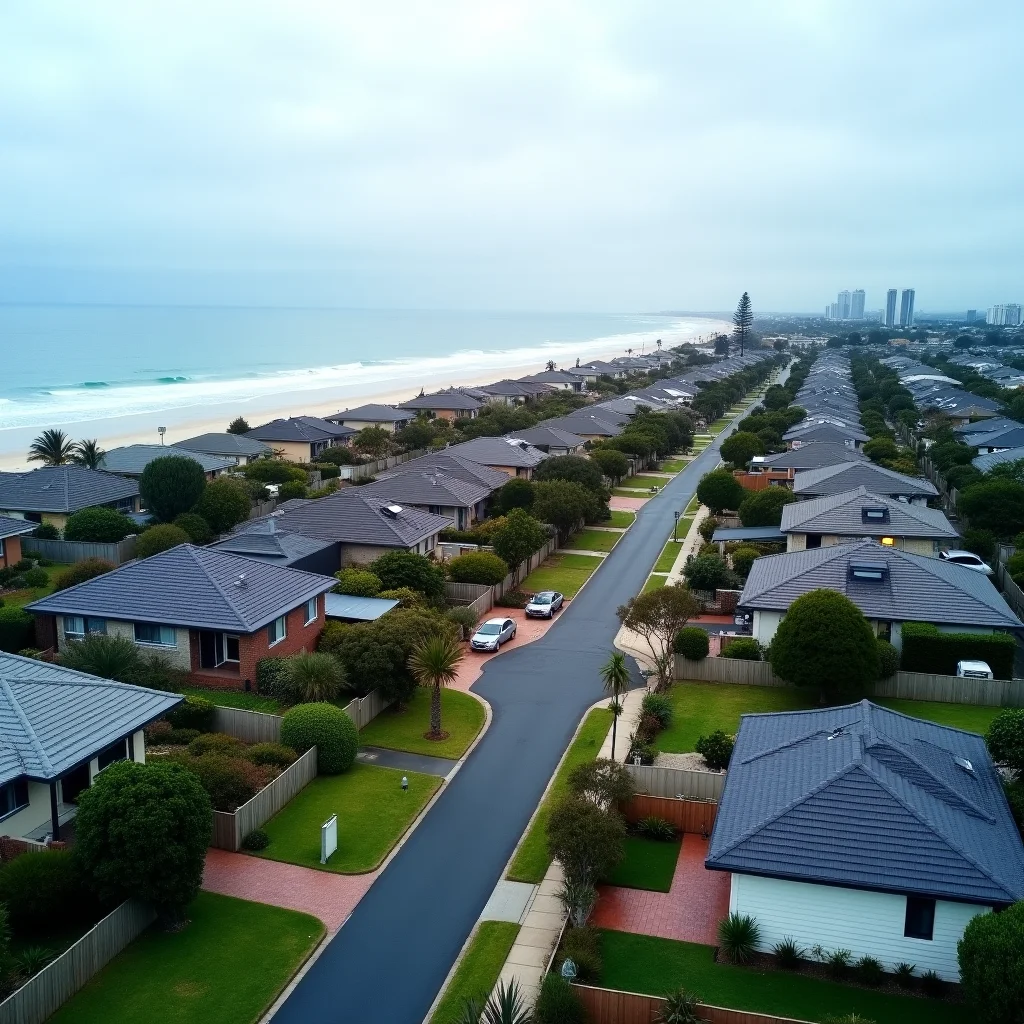
What the Winter Cooldown Looks Like Across Queensland, WA, and SA
For buyers watching these three cities, the winter cooldown creates an opportunity window that did not exist in 2023. Listings that might have attracted multiple competing offers are sitting longer, and vendors in Brisbane, Perth, and Adelaide are showing more willingness to negotiate. Buyers who have pre-approval locked in at current rates should treat cautious vendor sentiment as a genuine pricing lever — particularly for properties in the $600,000 to $900,000 range where mortgage serviceability stress is most acute.
Why Brisbane Remains Structurally Different from the Last Downturn
Despite the current softening, Brisbane carries structural demand drivers that distinguish it from markets that experienced sharper corrections in prior cycles. Population growth from interstate migration — particularly from Sydney and Melbourne residents seeking relative affordability — has continued to underpin demand for detached housing in Brisbane's middle and outer rings. Infrastructure investment ahead of the 2032 Olympics is also creating employment and liveability upgrades in specific corridors, supporting long-run price floors even as short-run sentiment weakens.
The tension in Brisbane right now is between structural long-run demand and cyclical short-run affordability stress. At the RBA's 4.35% cash rate, a household borrowing $700,000 faces repayments that consume a substantially higher share of median household income than at any point between 2010 and 2022. That arithmetic limits the pool of qualified buyers regardless of how strong underlying demand is. The result is not a collapse in prices but a compression of transaction volumes and a modest softening in clearance rates — exactly the pattern emerging across Brisbane's inner and middle rings this winter.
For investors, Brisbane's rental market continues to provide some offset. Vacancy rates across South-East Queensland remain tight, supporting rental income even as capital growth moderates. Investors who entered Brisbane in 2020 or 2021 at significantly lower prices and rates are in a fundamentally different position from those contemplating entry now — a distinction worth making when reading aggregate market commentary. WealthWatchPro tracks broader macro conditions affecting Queensland property returns, including rate expectations and migration data, which investors should monitor alongside local fundamentals.
Winter 2026 marks the first time since 2018 that Brisbane, Perth, and Adelaide have simultaneously entered a seasonal slowdown while also contending with materially elevated borrowing costs — a combination that historically produces 6-to-12 months of subdued transaction volumes before underlying demand reasserts itself.
APRA's Role and the Lending Environment Behind the Slowdown
The cooling conditions across Brisbane, Perth, and Adelaide are not purely a function of the RBA cash rate in isolation — they also reflect the lending environment shaped by APRA's macroprudential settings. APRA's serviceability buffer, which requires lenders to assess borrowers at 3 percentage points above their actual loan rate, has significantly reduced the maximum borrowing capacity for households at current interest rate levels. A borrower seeking a mortgage at a standard variable rate must demonstrate they could service that loan at a rate several percentage points higher — a test that disqualifies a meaningful share of would-be buyers in mid-tier markets. For a detailed explanation of how these restrictions work and their historical impact on Australian property cycles, see APRA Lending Restrictions and Macroprudential Policy Explained.
The practical effect in markets like Brisbane, Perth, and Adelaide is that the buyer pool eligible to transact at current prices is smaller than raw population and migration data would suggest. Strong demand for housing — from migrants, renters wanting to buy, and downsizers — does not automatically translate into purchasing power when credit conditions are tight. This is the key mechanism suppressing volumes across Australia's non-Sydney capitals this winter, and it is unlikely to shift materially until either the RBA moves rates lower or APRA adjusts its serviceability buffer settings.
Practical Implications for Buyers, Sellers, and Investors in Winter 2026
Sellers in Brisbane, Perth, and Adelaide should calibrate pricing expectations to the current buyer pool rather than the peak market of 2023-2024. Properties listed at aspirational prices are sitting longer, and vendor discounting — the gap between initial list price and final sale price — has widened. Agents who set realistic initial price guides are achieving better outcomes than those chasing the market down from an overambitious starting point. Winter is also historically the season when serious buyers are more active relative to casual browsers — meaning genuine offers deserve genuine consideration.
Buyers in these three cities have more negotiating room than at any point in the past two years. The risk of making an offer below list price — and having it accepted — is real, particularly for properties that have been listed for more than three weeks. Conditional offers including building and pest inspection clauses are once again viable in markets where, 18 months ago, vendors routinely refused them. That return of conditional purchasing power is one of the clearest practical signals of the market shift underway.
For investors, the regional yield story remains compelling even as capital growth moderates. Data from REAStats shows that regional Queensland and Western Australian markets are posting annual growth and yield combinations that still clear the RBA's 4.35% cash rate benchmark by a meaningful margin. Investors who understand the difference between yield compression in capital city cores and genuine return generation in regional markets are best placed to act in the current environment. The winter slowdown, combined with reduced competition from overleveraged buyers, may represent the most favourable entry conditions for well-capitalised investors since 2019.
This article was produced with AI assistance and reviewed for accuracy. Content is for informational purposes only and does not constitute financial or property investment advice.