According to
REAStats, an abandoned mansion site in Vaucluse has drawn active buyer interest from Hong Kong and the Middle East at a $55 million asking price, underscoring the divergence between Sydney's harbourside prestige market and softer performers elsewhere in the country.
Offshore Money Circling Sydney's Trophy Land
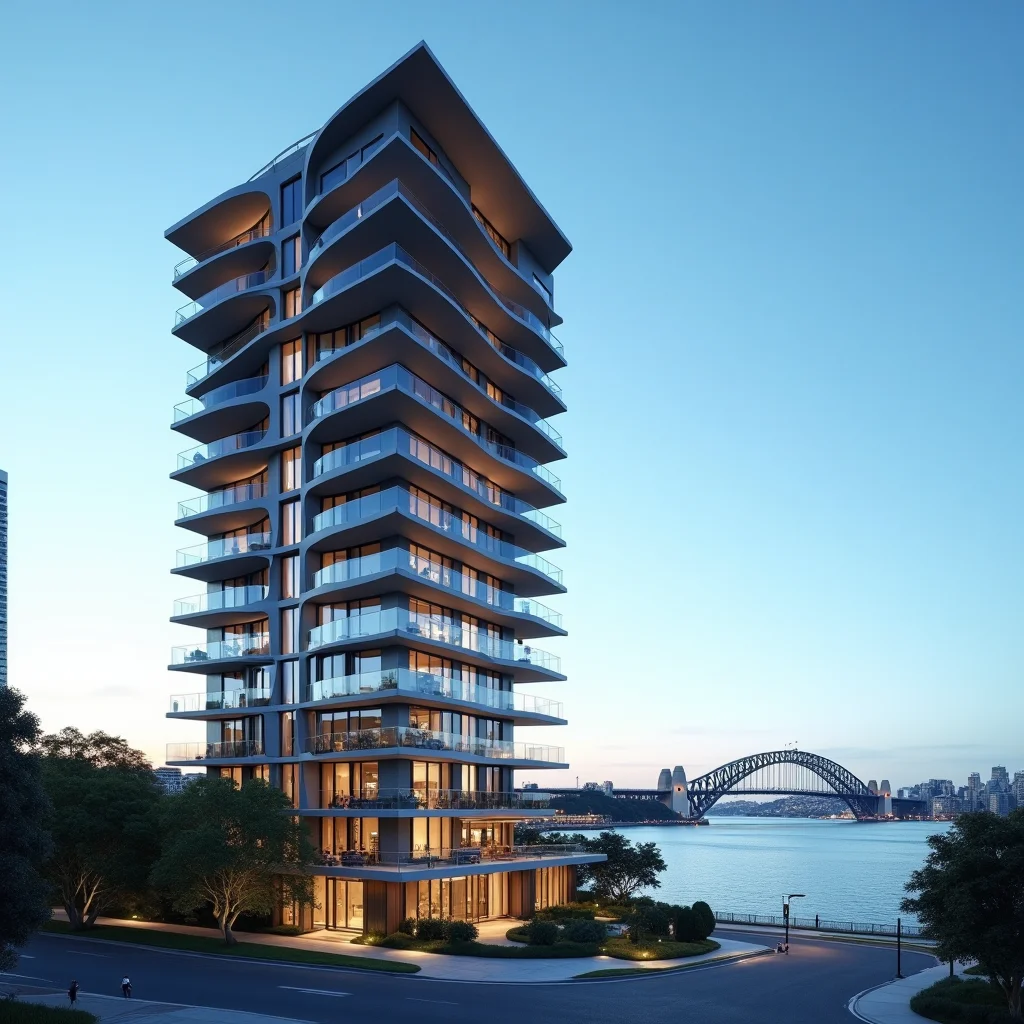
The Vaucluse site, listed as an abandoned mansion parcel rather than a finished home, is being marketed at $55 million and has already attracted interest from buyers in Hong Kong and the Middle East, according to REAStats. That such a derelict site can command interest at this price point speaks to the scarcity of harbourfront land in Sydney's eastern suburbs, where blocks of this size and position rarely change hands.
This matters because it demonstrates that Sydney's ultra-prestige tier operates almost independently of the broader established housing market. Offshore capital chasing trophy land is not typically deterred by domestic mortgage settings or the RBA cash rate sitting at 4.35%, since these buyers are frequently unencumbered by local finance. The land value, rather than any structure on it, is the asset being purchased — a distinction that separates this segment from the volume-driven middle market.
For vendors holding comparable eastern suburbs land, this sale is a signal to test the market through international channels rather than standard local listings. For local buyers priced out of this tier, it is a reminder that Sydney's very top end is now effectively a global, not domestic, auction.
What This Signals for Sydney's Prestige Market
The scale of interest in a single derelict site suggests genuine depth of demand at the very top of Sydney's market, even as broader established-market conditions have been mixed through spring. Agents marketing trophy land increasingly look beyond domestic buyer pools, and a $55 million ask on an unimproved site implies confidence that redevelopment potential alone justifies the price, independent of any existing dwelling's condition.
Sydney's prestige land market is behaving as a distinct asset class from the rest of the established housing stock — scarcity of harbourfront position, not local credit conditions, is setting the price floor.
This bifurcation is not new to Sydney, but the involvement of Hong Kong and Middle East capital specifically points to continued appetite from investors seeking a store of value outside their home jurisdictions. Buyers from these regions have historically gravitated toward Australian trophy real estate as a hedge, and eastern suburbs land with harbour proximity remains among the most defensive assets in that category, given the near-total absence of new supply.
Local agents and vendor advocates should treat this as evidence that even unimproved or derelict sites in tightly held pockets can attract premium pricing, provided marketing extends to genuinely global buyer networks rather than relying solely on domestic databases.
Context: How Sydney's Top Tier Compares Nationally
While Vaucluse commands eight figures for raw land, other Australian markets tell a very different story. REAStats reports Western Australia's premium suburbs are delivering standout capital growth, with South Perth averaging 13.8% annual growth, well ahead of Victoria's Dandenong at 2.3%. This gap illustrates how fragmented Australia's property performance has become by state and price tier, a dynamic explored further in the APF guide to regional versus city property investment in Australia.
Meanwhile, Darwin's Larrakeyah has held a steadier course, recording a $710,000 median price with 1.3% annual growth and a 56% auction clearance rate, positioning it as a stable rather than spectacular performer. These figures, alongside deeper analysis of clearance trends across capital cities, are tracked in detail through REAStats's suburb-level data sets.
Practical Implications for Buyers, Sellers and Investors
For investors weighing where capital works hardest, the spread between Nedlands' double-digit growth and Melbourne's near-flat 2.3% in Dandenong reinforces that geography and price tier now matter more than ever within a single national market. Buyers focused purely on median headline figures risk missing these suburb-level divergences, which is precisely why granular data on sales cycles and clearance rates has become essential rather than optional for serious investors.
Sellers holding prestige-adjacent land, particularly in tightly held eastern Sydney pockets, should take the Vaucluse result as encouragement to seek offshore buyer interest through agents with genuine international networks, rather than assuming local marketing alone will surface top dollar. Vendors in softer markets such as Melbourne's outer suburbs face a different calculus, needing realistic pricing given the slower growth trajectory evident in the current data.
For everyday buyers navigating the established market away from the prestige tier, the message is that national averages obscure enormous variation. A suburb's sales cycle, whether 20 days in Nedlands or 48 in Port Macquarie, can matter as much as headline price growth when assessing liquidity risk on exit. Those considering capital gains exposure on eventual resale should also review the APF's guide to capital gains tax on Australian property before committing to a purchase in any high-growth pocket.
Overall, the Vaucluse listing is a reminder that Australia's property market is not one market but many, stratified by geography, price tier and buyer nationality — and that the top end continues to operate on its own terms regardless of domestic rate settings.
This article was produced with AI assistance and reviewed for accuracy. Content is for informational purposes only and does not constitute financial or property investment advice.