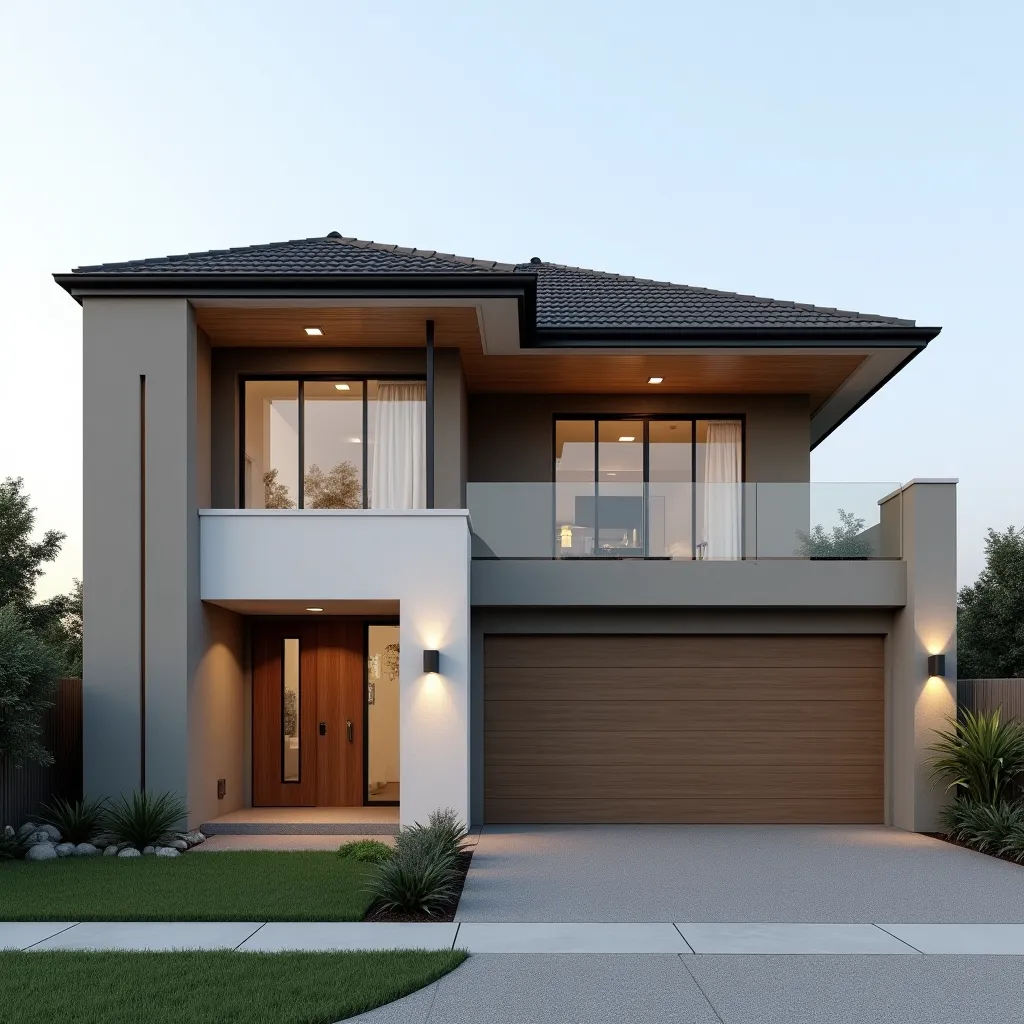
According to realestate.com.au, a Herald Sun analysis of 18 editions of Channel 9's The Block, spanning 2011 to 2025, found the properties fetched a combined $230.3m at auction against almost $383m in land acquisition and assessed construction costs — a $152m gap. BMT Tax Depreciation chief executive Bradley Beer says the shortfall is "actually a little worse" than the headline figure because it excludes demolition and financing costs. For anyone watching renovation television and imagining a similar build-and-flip strategy, the numbers carry a blunt warning.
The source describes this as a comparison of reported acquisitions, assessed eligible construction and asset costs, and completed sales — not an audited loss for Nine. Reserves are also not completed sale prices.
The $152m Gap, Line by Line
Nine spent an estimated $150.8m acquiring the sites used across the 18 editions, according to the Herald Sun analysis cited by realestate.com.au. Specialist assessments of construction, labour, materials and fittings added a further $231.8m in building-related costs. Together, land and build costs reached close to $383m — well above the $230.3m the properties fetched at auction over the same period, including sales to high-profile buyers such as Adrian Portelli and Dave Hughes.
Related reading: WealthWatchPro investment market analysis.
Beer's assessments are the same lifetime depreciation calculations used by investors to claim tax deductions, not independent valuations of resale value. He confirmed the figures broadly reflect what it costs to construct and fit out the buildings, rather than what buyers are willing to pay for them. Crucially, the $152m figure also leaves out demolition and financing costs that a conventional developer would have to carry, meaning the real shortfall against market value could run higher still for anyone replicating the model outside a television budget.
For this year's five newly built Mount Eliza properties, BMT's lifetime deduction estimate sits at $29.4m combined, against $17.2m in combined auction reserves — after contestants Rick and Tayla cut their reserve by $50,000. Courtney and Sev's home at 9 Mackillop Place leads the field with $6,084,433 in projected lifetime deductions and $279,638 in first-year deductions alone, built around a kitchen understood to have cost about $500,000.
Why the Numbers Don't Translate to Market Value
Beer was direct about the mechanism at play: "Developers that use these numbers go bust." The network can absorb a gap of this size because its revenue comes from television ratings and advertising, not purely from house sales — a financial model unavailable to any private builder or renovator attempting the same scale of fit-out. That distinction is the central lesson of the analysis: production economics and property economics are not the same thing, even when the finished product looks identical.
A $152m gap between what was spent building and acquiring 18 editions of luxury show homes and what those homes actually sold for at auction demonstrates that construction cost and market value can diverge sharply — in the luxury properties covered by the report.
Beer also cautioned against conflating depreciation deductions with cash in hand. An eligible owner able to use Courtney and Sev's entire first-year deduction at an effective tax rate of 47 per cent could reduce their tax bill by about $131,400 — a meaningful figure, but one dependent entirely on individual circumstances, not a guaranteed return. "They're worth whatever someone pays for them," Beer said of the finished homes, a reminder that fit-out cost is not a floor under resale price.
Buyer's advocate Nicole Jacobs, Cohen Handler Victoria's managing director, said serious purchasers judge these homes on design, finish and liveability against other luxury stock — not television exposure. MR Advocacy director Madeleine Roberts pointed to a comparable four-bedroom, three-bathroom Mount Eliza home on more than 1000sq m advertised at about $2.3m, roughly $1m below The Block's reserves, and said she would "be very surprised" if all five properties sold under the hammer.
Context: What This Means for Property Investment Strategy
This episode is a useful case study for anyone weighing a renovate-and-sell or spec-build strategy against holding for yield or capital growth, a decision covered in detail in APF's Property Investment Strategies in Australia guide. The gap between construction cost and achievable sale price is exactly the risk that undisciplined renovators underestimate — spending to a standard the local market won't pay for, rather than building to what comparable sales support.
Roberts' comparison of a nearby $2.3m home against The Block's $17.2m combined reserves across five properties illustrates a point that applies well beyond reality television: buyers compare a finished product against everything else available in the same price bracket, regardless of how much was spent creating it.
Practical Implications for Buyers and Renovators
For mum-and-dad renovators tempted to chase a luxury fit-out on the assumption that spending more automatically lifts resale value, The Block's $152m shortfall is a cautionary comparison, not proof that all renovation projects lose money. Beer's warning that "developers that use these numbers go bust" applies directly to anyone without a broadcaster's advertising revenue to absorb a construction bill that outruns the local market. Before committing to a high-spec renovation, it pays to benchmark planned spend against recent comparable sales in the same street or suburb, not against the ambition of the design brief.
Investors drawn to high depreciation estimates should also heed Beer's point that tax deductions are not cash refunds and should never be the primary reason for a purchase — rental returns, capital growth prospects and holding costs matter more over the medium term. Broader guidance on structuring a renovation-for-profit or hold strategy sits within APF's investment and tax resources, including the Australian Property Tax Guide.
This article was produced with AI assistance and reviewed for accuracy. Content is for informational purposes only and does not constitute financial or property investment advice.