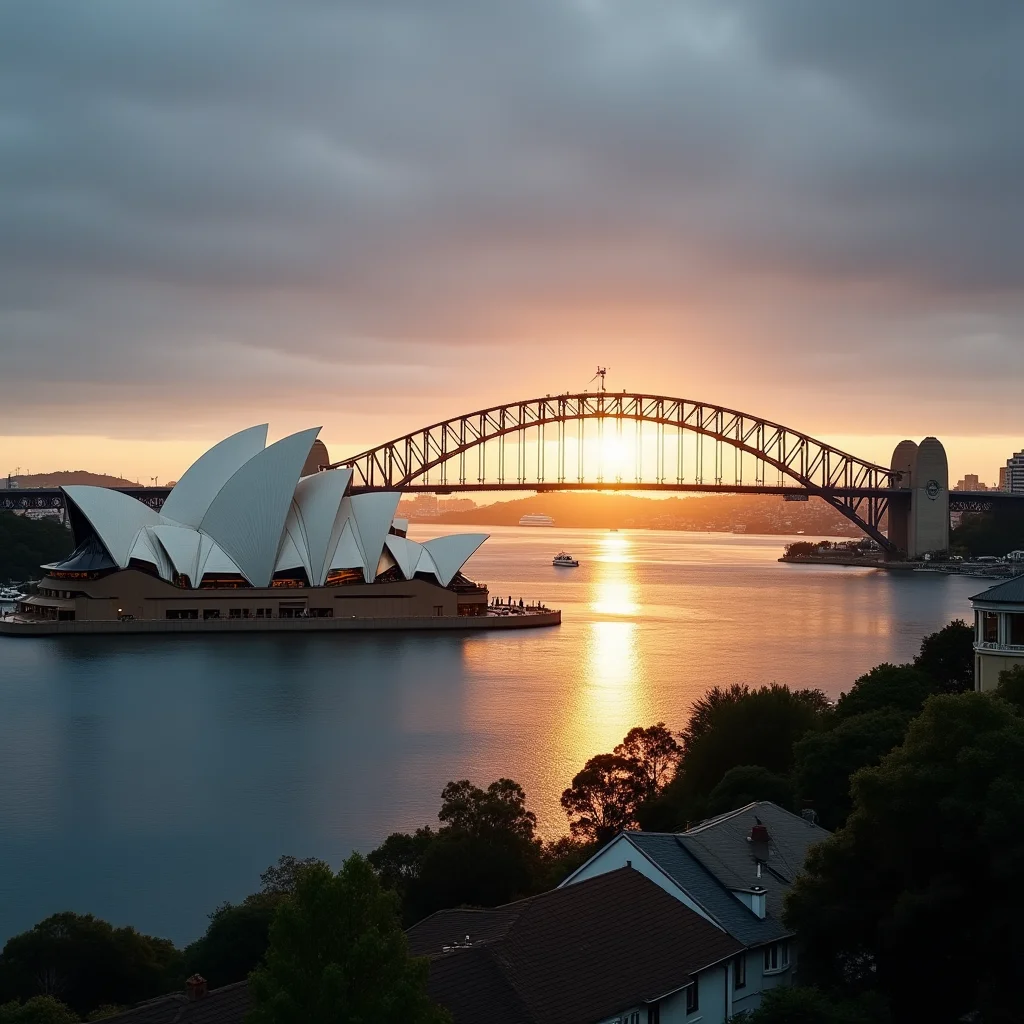
According to
realestate.com.au, the owner of one of Sydney's most unique waterfront homes has dropped his asking price $5 million below what he paid for the property just three years ago.
A $5 Million Reset on Sydney's Waterfront
The waterfront owner's decision to list for $5 million less than his 2023-era purchase price is not a one-off anomaly. It lands in the same week that the Sydney Morning Herald reported the city's median house price has fallen to $1. A waterfront trophy home carrying a multimillion-dollar discount is the kind of signal that tends to show up in headline figures weeks or months later.
What makes this case notable is the scale and speed of the repricing. A $5 million cut on a purchase made only three years ago implies the owner bought near, or above, the peak of the post-pandemic boom and is now recalibrating to what buyers are actually prepared to pay today. That is a materially different situation to a vendor who bought a decade ago and is simply taking a smaller profit. It points to compressed buyer depth at the very top of the market, where fewer purchasers can absorb trophy-asset price tags without hesitation.
For vendors sitting on similarly bought-at-the-peak assets, the lesson is blunt: realistic pricing now beats a long, drawn-out campaign that erodes buyer confidence later. Agents handling prestige waterfront stock are increasingly having to manage seller expectations that were set during a very different rate environment, and the gap between hope and outcome is widening as the broader downturn takes hold.
Sydney's median house price falling to $1.66 million is not happening in isolation from the kind of repricing seen on the waterfront. The Sydney Morning Herald's framing of a "broadened" downturn suggests the softness has moved beyond the outer-ring or lower-tier suburbs that often feel rate pressure first, and is now reaching into higher-value pockets, including waterfront and premium harbourside stock.
This matters because prestige property has historically been seen as somewhat insulated from affordability-driven downturns, given buyers at that level are less reliant on mortgage serviceability stretch. But a $5 million discount on a recent purchase suggests even well-capitalised buyers are factoring in further softness before committing, or are simply unwilling to pay 2023-era prices in a market that has since cooled. Melbourne is showing a parallel pattern, with the Sydney Morning Herald separately reporting the city is set to drop out of the $1 million club as house prices there fall too, pointing to a two-city softening rather than a Sydney-only event.
A multimillion-dollar discount on a three-year-old waterfront purchase, landing in the same week the city median slips to $1.66 million, suggests the Sydney downturn is no longer confined to entry-level stock — it is now visible at the top of the market too.
Household budgets add further context to why buyer appetite has thinned. Separate REAStats reporting shows mortgage repayments have hit a record 50.9% of family income nationally, while investor loans have plunged 44%, a combination that squeezes exactly the kind of upgrader and investor demand that normally supports premium-market pricing.
Background: How Leverage and Lending Shape Prestige Pricing
Even buyers at the waterfront end of the market are not immune to financing dynamics. Loan-to-value ratios and lenders mortgage insurance thresholds, explained in detail in APF's LVR and LMI Explained guide, shape how much borrowing capacity is available even for high-net-worth purchasers who use leverage strategically rather than out of necessity. When debt costs rise and serviceability tightens across the board, it filters through to every price tier, including multimillion-dollar waterfront assets where buyers might otherwise be expected to pay cash.
For those considering how a smaller deposit or guarantor structure compares with traditional LMI, APF's LMI vs Family Guarantee guide is a useful companion reference, particularly relevant as more buyers at every price point weigh up financing structures in a tighter lending environment.
What This Means for Buyers, Sellers and Investors
For buyers eyeing Sydney's prestige and waterfront segment, the $5 million discount is a clear signal that asking prices set during the 2023 boom are no longer the benchmark. Patient buyers with finance pre-approved may find genuine negotiating room on stock that has sat with unrealistic pricing, particularly where vendors are now motivated to transact rather than wait out the cycle.
Sellers across Sydney, not just at the top end, should treat the median's fall to $1.66 million as confirmation that pricing strategy needs to reflect current conditions rather than peak-era comparables. Vendors who anchor to what a near-identical property sold for in 2022 or 2023 risk an extended campaign, reduced buyer engagement, and ultimately a steeper discount than if they had priced realistically from day one. For those weighing vendor advocacy or buyer's agent support to manage this gap between expectation and reality, independent guidance has become more valuable as the market broadens its softness.
Investors watching from the sidelines should note the broader macro backdrop shaping this downturn, with record mortgage-to-income ratios and sharply reduced investor lending activity both playing a role in why demand has thinned even at the prestige end. With the RBA cash rate sitting at 4.35% and household budgets stretched, further price adjustments across Sydney's premium suburbs should not be ruled out in coming months, though the pace and depth of any further falls remains uncertain.
Ultimately, this single waterfront listing is a microcosm of a citywide story. A seller prepared to absorb a $5 million loss against his purchase price is doing what Sydney's median figures are already confirming on paper: the market has moved, and pricing has to move with it.
This article was produced with AI assistance and reviewed for accuracy. Content is for informational purposes only and does not constitute financial or property investment advice.