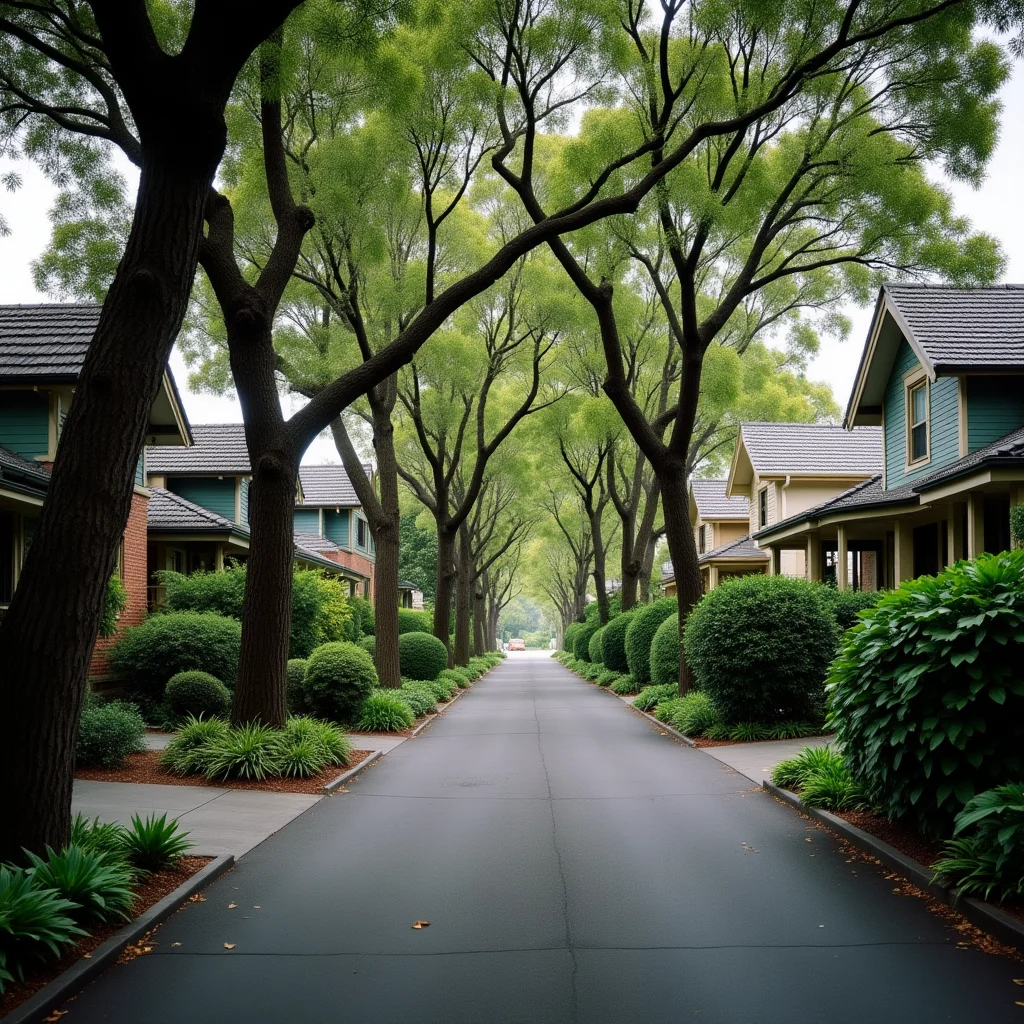
According to realestate.com.au, a popular Sydney north shore suburb known for its leafy streets has become the city's worst-performing housing market, with price falls large enough to wipe out years of accumulated capital gains. The reversal marks a dramatic shift for an area that was, until recently, considered among Sydney's most resilient prestige markets — a place where values seemed to move in only one direction.
A Prestige Market in Retreat
The north shore has long carried a premium in Sydney's property hierarchy. Leafy streets, proximity to elite schools, and easy CBD access have historically insulated these suburbs from the sharper corrections that outer-ring and unit-heavy markets experience. That insulation has now broken down. realestate.com.au reports the suburb in question has recorded price falls significant enough to reverse not months, but years of growth — placing it at the bottom of Sydney's performance table in September 2026.
The mechanism behind the fall is familiar, even if the severity is not. Prestige markets are disproportionately exposed to interest rate sensitivity because buyers in the higher price brackets tend to carry larger absolute debt levels, even when loan-to-value ratios appear conservative. Under the RBA's current cash rate of 4.35%, the carrying cost on large mortgages runs materially higher than at the sub-2% rates that prevailed during the north shore's boom years. Discretionary buyers — those upgrading for lifestyle rather than necessity — have pulled back hardest, draining the buyer pool that once kept competition fierce and prices elevated.
The broader NSW auction market reflects this softness. REAStats data for September 2026 shows NSW auction clearance rates sitting at 53% — a figure that sits well below the 60%-plus threshold generally associated with price-growth conditions. At 53%, the market shifts negotiating power firmly toward buyers, and vendors unwilling to meet the market simply add to an accumulating stock of stale listings.
Why the North Shore Is Feeling It First
Sydney's prestige belt — the north shore in particular — is experiencing a confluence of pressures that more affordable segments have partially absorbed. High-income households are not immune to rate rises; they simply feel them on a larger nominal scale. The CGT picture adds further complexity for investors and upgraders alike. REAStats intelligence notes that with the 50% CGT discount disappearing on 1 July 2027, NSW and Victorian prestige suburbs are already lagging on income returns relative to their acquisition costs — a finding that is pushing some investment-motivated holders to reconsider long-held positions before the tax equation changes permanently. For the north shore, this creates a supply overhang risk: if a cohort of long-term holders decides to sell before July 2027, the suburb could absorb additional listings at precisely the wrong moment in the cycle.
NSW auction clearance rates at 53% in September 2026 signal a market where passed-in properties are matching or outnumbering sales — a structural shift that moves price-setting power to buyers and erodes the vendor premiums that defined the north shore's decade-long run.
Historical Context: When the North Shore Has Fallen Before
Prestige Sydney markets have corrected before, and the pattern is instructive. The current correction shares structural similarities with previous rate-driven downturns: a squeeze on borrowing capacity, reduced investor participation, and a buyer pool that has grown more selective. Understanding how Australian property prices compare globally also provides useful context — Sydney's prestige belt remains among the most expensive urban real estate on earth by income multiples, which amplifies both the gains and the corrections.
What differs in 2026 is the tax horizon. The approaching CGT reset deadline creates a time-bound urgency that previous downturns lacked. Sellers weighing up whether to hold or crystallise losses must now factor in whether waiting for a recovery will cost them more in tax than it saves in capital. That calculation is genuinely complex, and it is worth understanding the full implications of Capital Gains Tax on Australian property before making a decision under duress. For borrowers managing through the cycle, the structure of their home loan — particularly the choice between an offset account and a redraw facility — can materially affect how much interest accumulates during a hold period. For property market data on agent performance and suburb-level transaction cycles, REAStats tracks comparable metrics across Sydney's competitive zones.
What This Means for Buyers, Sellers, and Investors
Buyers looking at the north shore in September 2026 are entering a market where vendor motivation has increased and competition has thinned. With NSW auction clearance rates at 53%, well-prepared buyers with pre-approval in place are finding genuine opportunity in suburbs where aspirational pricing has been reset by market reality, though careful due diligence on comparable sales trends remains essential.
For sellers, the message is unambiguous: pricing to the current market, not to prior peak conditions, is the only strategy that generates a sale. Vendors holding out for prices that reflect years-old comparables are accumulating days on market that further stigmat
This article was produced with AI assistance and reviewed for accuracy. Content is for informational purposes only and does not constitute financial or property investment advice.