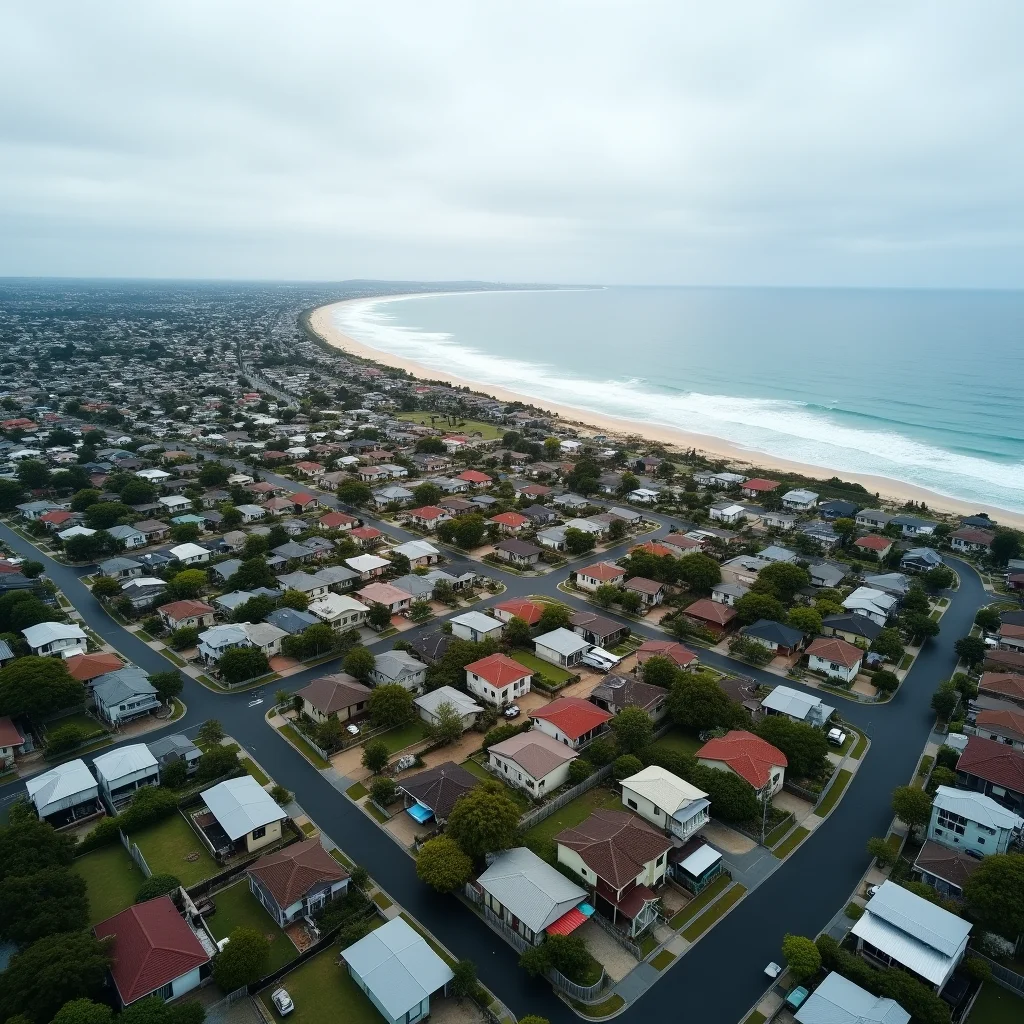
According to realestate.com.au, some of Sydney's auction suburbs are posting the city's weakest clearance rates as the broader market slump deepens through mid-2026. The data exposes a city-wide softening that is not evenly distributed — certain pockets are absorbing disproportionate pressure, leaving sellers increasingly exposed and buyers in a strengthened negotiating position.
Sydney's Auction Market in Retreat
Sydney's auction clearance rate has deteriorated materially across 2026, with realestate.com.au identifying the specific suburbs recording the sharpest declines. The slump is concentrated in areas where vendor price expectations remain elevated relative to what buyers can — or are willing to — pay at current borrowing costs. Suburbs that surged strongly during the 2021–2022 pandemic boom are among those now facing the steepest corrections as discretionary buyer pools thin out.
The mechanism driving weak clearance rates is straightforward. When a property passes in at auction, it signals that reserve prices — typically set to reflect the vendor's minimum acceptable return — are exceeding what the active buyer pool will commit to under hammer conditions. In a market where the RBA cash rate has held at 4.35%, serviceability constraints remain firmly in place for most borrowers. Buyers bidding at auction must have unconditional finance pre-arranged, and at current rates, the ceiling on that finance is lower than many Sydney vendors have priced in.
For buyers, a sustained drop in clearance rates opens genuine opportunity. Properties that pass in at auction frequently transact in post-auction negotiations at prices below the vendor's initial reserve — sometimes materially so. Buyers who are pre-approved, patient, and prepared to negotiate after a passed-in result are in a structurally stronger position than at any point since 2019. The key is targeting suburbs where the clearance rate decline is driven by vendor stubbornness rather than fundamental demand collapse — the former creates negotiating room, the latter creates ongoing price risk.
What Weak Clearance Data Tells Investors About the Broader Cycle
Auction clearance rates are one of the most real-time signals available to property investors. Unlike median price data — which lags transactions by weeks or months — clearance rates reflect market sentiment at the moment of sale. A sustained period of weak clearance rates across a city or region is widely understood to signal a buyers' market, with downward pressure on prices likely to follow if the weakness persists beyond a single seasonal quarter. Sydney's current trajectory, as reported by realestate.com.au, points to that condition being embedded rather than transient.
The divergence between Sydney and key interstate markets has sharpened considerably. Data from REAStats highlights that Perth suburbs such as Nedlands recorded 15% annual capital growth, with Mandurah at 10.5% — figures that stand in stark contrast to the price falls and clearance weakness now visible across parts of Sydney. For investors holding Sydney assets and seeking to understand how Australian property compares to global alternatives, the Australian Property Prices vs the World guide provides essential context on where Australian capital cities sit in the international cycle. For macro market context, WealthWatchPro tracks how the sustained high-rate environment is reshaping capital allocation across the Australian property market.
The investor calculus in a declining clearance environment comes down to yield versus growth expectations. Sydney's gross yields have historically lagged Perth, Brisbane, and Adelaide due to the city's high entry prices. When capital growth stalls or reverses — as the clearance data now suggests — the yield shortfall becomes harder to justify, particularly against a 4.35% cash rate that makes the opportunity cost of equity explicit. Investors holding underperforming Sydney assets should stress-test their portfolios against a scenario where price recovery is deferred by 12 to 24 months.
When auction clearance rates fall persistently, the market is no longer in equilibrium — sellers are anchored to prior peak prices while buyers are constrained by present-day borrowing costs. The gap between those two positions is what creates the conditions for drawn-out price discovery, and ultimately, a reset of expectations on the vendor side.
Background: Auction Markets and Price Discovery in Australia
Australia's auction system — particularly in Sydney and Melbourne — functions as the primary mechanism for transparent price discovery in residential property. Unlike private treaty sales, where negotiation occurs behind closed doors over days or weeks, auctions compress price discovery into a single public event. This makes clearance rate data unusually powerful as a leading indicator: it tells you, in near-real time, whether supply and demand are in balance. Investors and buyers who understand this dynamic have an informational edge over those relying solely on lagging median price data.
For buyers engaging with the auction market in the current environment — particularly those new to the process — the Capital Gains Tax on Australian Property guide is essential reading when assessing the true cost of an eventual exit, while the Australian Tax on Overseas Property — Complete Guide is relevant for investors comparing domestic and offshore allocations as Sydney's appeal as a capital growth market temporarily dims.
What Sydney's Slump Means for Buyers and Sellers Right Now
For sellers
This article was produced with AI assistance and reviewed for accuracy. Content is for informational purposes only and does not constitute financial or property investment advice.