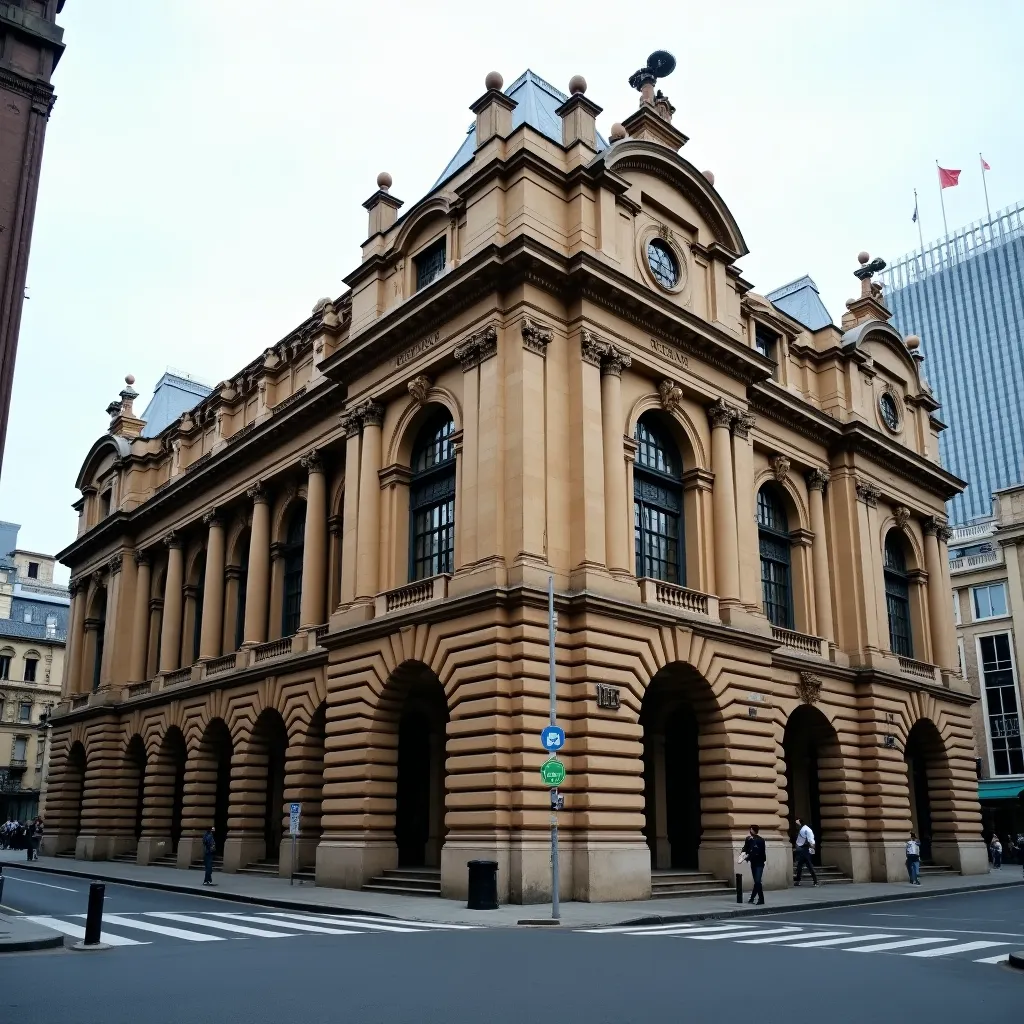
According to realestate.com.au, a four-bedroom home at 21 Holborow Street, Croydon attracted 14 registered bidders and sold under the hammer for $2.1 million on Saturday — $400,000 above its $1.7 million reserve. The same weekend, a two-bedroom Edwardian duplex at 100 Atchison Street, Crows Nest sold for $1.92 million in just five minutes. Both results landed in a market where Commonwealth Bank is projecting national property values will fall 14 per cent peak-to-trough by late 2027, which would mark Australia's deepest property crash in 45 years.
The Numbers Behind the Headline Results
The Croydon sale is notable because of how far it diverges from the citywide norm. Ray White figures cited in the realestate.com.au report show auctions last week attracted an average of only 1.5 bidders, down from 3.1 at the same time last year. Against that backdrop, 14 registered bidders at a single Inner West listing is an outlier by a wide margin — nearly ten times the current average. SQM Research data referenced in the same report shows properties are sitting on the market for longer, and Sydney home prices have now fallen for an eighth consecutive month.
Auctioneer Clarence White of Menck White Auctioneers said he had seen auctions attract large crowds recently, including an Enfield home the previous weekend with 10 registrations, but noted that overall statistics did not support calling a market shift.
Why Headline Averages Can Mislead
A national or citywide average bidder count of 1.5 tells buyers almost nothing about what they will face at an individual auction. It is an arithmetic mean across hundreds of listings, many of which attract zero or one registered bidder and pass in quietly. A handful of well-presented, well-located homes can pull disproportionate interest while the broader market remains soft — which is exactly what both the Croydon and Crows Nest results illustrate.
This matters for how CBA's 14 per cent peak-to-trough forecast should be read. It does not mean every property falls by the same amount, or that every auction clears weakly. Scarcity value, school catchments, renovation potential and genuine character — the attributes auctioneer Edward Riley pointed to when he said "properties with strong underlying fundamentals can still perform exceptionally well" — continue to command premiums even as the broader trend line points down.
Edward Riley noted that the most recent interest rate rise "added another layer of caution" but also made buyers "more selective" — meaning the buyers who do show up to auction are often more serious, pre-approved, and prepared to compete hard for the right property, even as overall auction attendance and bidder depth falls away.
Context: Reading Auction Data in a Downturn
Whether isolated strong results like Croydon and Crows Nest signal an early floor or simply reflect quality-adjusted demand for scarce, well-located stock remains an open question that only further weeks of data can answer.
What It Means for Buyers, Sellers and Investors
For buyers, the practical lesson is that citywide averages are a poor guide to what will actually happen at a specific auction. A well-located four-bedroom home in the Inner West or a character duplex near a train line on the North Shore can still draw double-digit bidder registrations regardless of what the broader clearance rate or CBA's macro forecast suggests. Buyers chasing these categories should expect genuine competition and budget accordingly, rather than assuming a soft market guarantees a bargain. Readers can review the mechanics of registering and bidding in How to Buy at Property Auction in Australia.
For sellers, the Croydon and Crows Nest results are a reminder that presentation, pricing strategy and setting a realistic reserve still matter enormously in a falling market. A $1.7 million reserve at 21 Holborow Street, Croydon attracted four active bidders and sold for $2.1 million.
For investors weighing whether Australian property still offers relative value against other assets amid rate uncertainty, broader context is available via WealthWatchPro's macro analysis, which tracks how global bond yields and rate expectations are shaping capital flows. Those assessing whether current conditions constitute a genuine bubble correction can consult Does Australia Have a Property Bubble? for further framing.
This article was produced with AI assistance and reviewed for accuracy. Content is for informational purposes only and does not constitute financial or property investment advice.