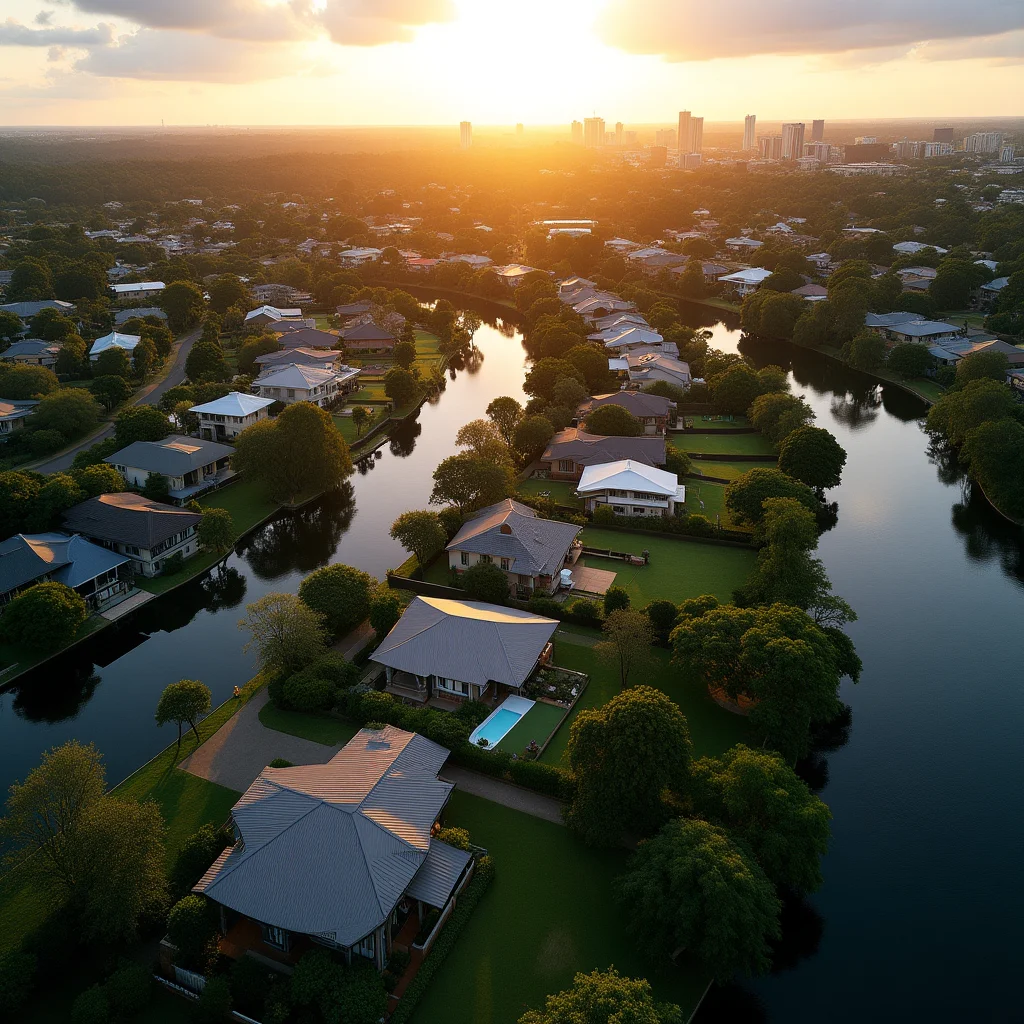
According to realestate.com.au, the sustained cost-of-living squeeze gripping Australian households is fundamentally changing the way buyers evaluate property — and sustainable design features are emerging as a decisive factor in purchasing decisions, not a premium afterthought. With the RBA holding the cash rate at 4.35% and four consecutive months of national home price declines now on record, buyers are scrutinising total ownership costs more carefully than at any point in the post-pandemic era. A home that costs less to run is now a home that is easier to hold.
Why Sustainable Design Is Reshaping Buyer Value Calculations
The shift is structural, not cyclical. Realestate.com.au reports that as cost-of-living pressures shape purchasing behaviour, homeowners and buyers are placing growing weight on energy efficiency, passive solar orientation, rainwater harvesting, and high-performance insulation. These features reduce quarterly utility bills, lower maintenance demands, and in many cases qualify properties for favourable financing arrangements under green loan products now offered by a growing number of Australian lenders. The cumulative saving across a standard mortgage term can be substantial — and in softer markets, properties with certified sustainable credentials are increasingly holding their values relative to comparable conventional stock.
The mechanism driving this trend is straightforward. When mortgage repayments are elevated by a 4.35% cash rate, discretionary spending on energy bills, water usage, and heating and cooling becomes a genuine financial burden. A home designed with cross-ventilation, rooftop solar, double-glazed windows, and efficient hot water systems directly reduces that burden. Buyers are doing the arithmetic: even modest reductions in quarterly energy costs compound into meaningful savings across a typical mortgage holding period. That figure is material relative to purchase price premiums for sustainable stock, particularly in growth corridors around Brisbane, Adelaide, and Perth where land prices are lower than Sydney and Melbourne and where the payback period is consequently shorter.
For investors, the calculus extends further. Tenants are increasingly selecting rentals on the basis of running costs, which means sustainably designed investment properties attract stronger applicant pools, lower vacancy rates, and in tight markets can command a rental premium. In the context of 5,000 investors exiting the market following recent landlord tax changes, those who remain need every competitive advantage in yield and occupancy they can secure. A well-designed, energy-efficient rental is one of the clearest paths to sustainable cash flow in the current environment.
The National Property Market Context in August 2026
Sustainable design is gaining traction against a specific market backdrop. According to REAStats, Australia's total property market is valued at $12.6 trillion as of August 2026, with CPI running at 3.8% and the RBA holding the cash rate steady at 4.35%. National home prices have declined for four consecutive months. In that environment, buyers are not chasing speculative capital growth in the near term — they are building resilience into their ownership costs. This is precisely the conditions under which sustainable design features convert from aspirational extras to financially rational decisions.
Geographic variation matters here. Perth's South Perth suburb recorded 13.8% annual growth to a $1,450,000 median according to REAStats, while softer markets such as Melbourne's Dandenong corridor delivered just 2.3% growth at a $680,000 median. In high-growth Perth and Queensland markets, buyers competing on price have fewer concessions to extract from vendors — meaning running-cost savings from sustainable design become a primary differentiator. In softer Victorian and national markets, buyers have more negotiating room on purchase price but carry the same ongoing cost burden. Either way, the financial case for sustainable homes holds across the cycle.
Adelaide presents a particularly relevant case study. The South Australian market has seen strong interest in eco-home designs — lower land and construction costs relative to Sydney and Melbourne mean that the upfront premium for sustainable building features represents a smaller share of total build cost. For owner-occupiers in Adelaide and regional SA, the payback period on solar systems, efficient insulation, and rainwater systems can be relatively short, after which the savings translate directly into household cash flow. That proposition is increasingly appealing to buyers who purchased or built during the low-rate era and are now managing higher mortgage repayments.
In a market defined by four consecutive months of national price declines and a 4.35% cash rate, the real cost of property ownership extends well beyond the purchase price — and sustainable design is emerging as one of the most measurable ways to reduce that ongoing burden across the holding period.
Understanding Sustainable Features as Investment Criteria
For those using self-managed super funds to hold property, sustainable design adds a specific layer of relevance. SMSF trustees are bound by the sole purpose test — investments must be made for the benefit of members' retirement. A property that generates lower running costs, stronger tenant demand, and more stable long-term cash flow aligns directly with that mandate. For SMSF investors evaluating new build versus established stock, a sustainably designed new build with a compliant depreciation schedule and lower operating costs can present a compelling combination. The APF guide to SMSF Property Investment Explained outlines the rules and structures investors must follow when acquiring property through super — worth reviewing before any acquisition decision in the current rate environment.
Depreciation is a related consideration. New sustainable builds typically carry higher depreciable values across structural components and fixtures — solar systems, heat pump hot water units, and energy-efficient HVAC systems all attract depreciation deductions. For tax-paying investors outside the SMSF environment, these deductions can materially improve after-tax cash flow, particularly where properties are held under standard investment structures. Investors seeking a comprehensive framework for managing these obligations should consult the Australian Property Tax Guide.
Practical Steps for Buyers and Investors Prioritising Sustainability
Buyers entering Brisbane, Perth, Adelaide, and regional markets in 2026 should treat energy efficiency ratings as a due diligence item, not a marketing point. The Nationwide House Energy Rating Scheme (NatHERS) provides a star rating for residential buildings — properties rated 7 stars or above typically deliver meaningfully lower heating and cooling costs. Buyers should request NatHERS certificates or equivalent disclosure documents at the pre-purchase stage, and factor rated performance into total cost-of-ownership modelling rather than treating running costs as a post-settlement surprise.
For those building new, the National Construction Code's minimum 7-star energy performance standard applies to new homes, but developers and builders often offer upgrades — additional insulation, double-glazed windows, solar-ready wiring — at relatively low marginal cost during construction. Locking in these features during the build phase is almost always cheaper than retrofitting after handover. Regional buyers in particular, where grid electricity costs can be higher than metropolitan areas and distances from services add to household running costs, stand to gain the most from upfront investment in passive design and on-site energy generation.
In a market where price growth is subdued, investor returns are compressed, and mortgage costs are elevated, sustainable design is one of the clearest ways to control what is controllable in property ownership. It will not replace location analysis, due diligence, or sound financing — but it is fast becoming a standard criterion for serious buyers across Australia's major non-Sydney markets. First home buyers weighing the total cost of entry should also review the First Home Buyers Complete Guide for a full picture of upfront and ongoing cost considerations.
This article was produced with AI assistance and reviewed for accuracy. Content is for informational purposes only and does not constitute financial or property investment advice.