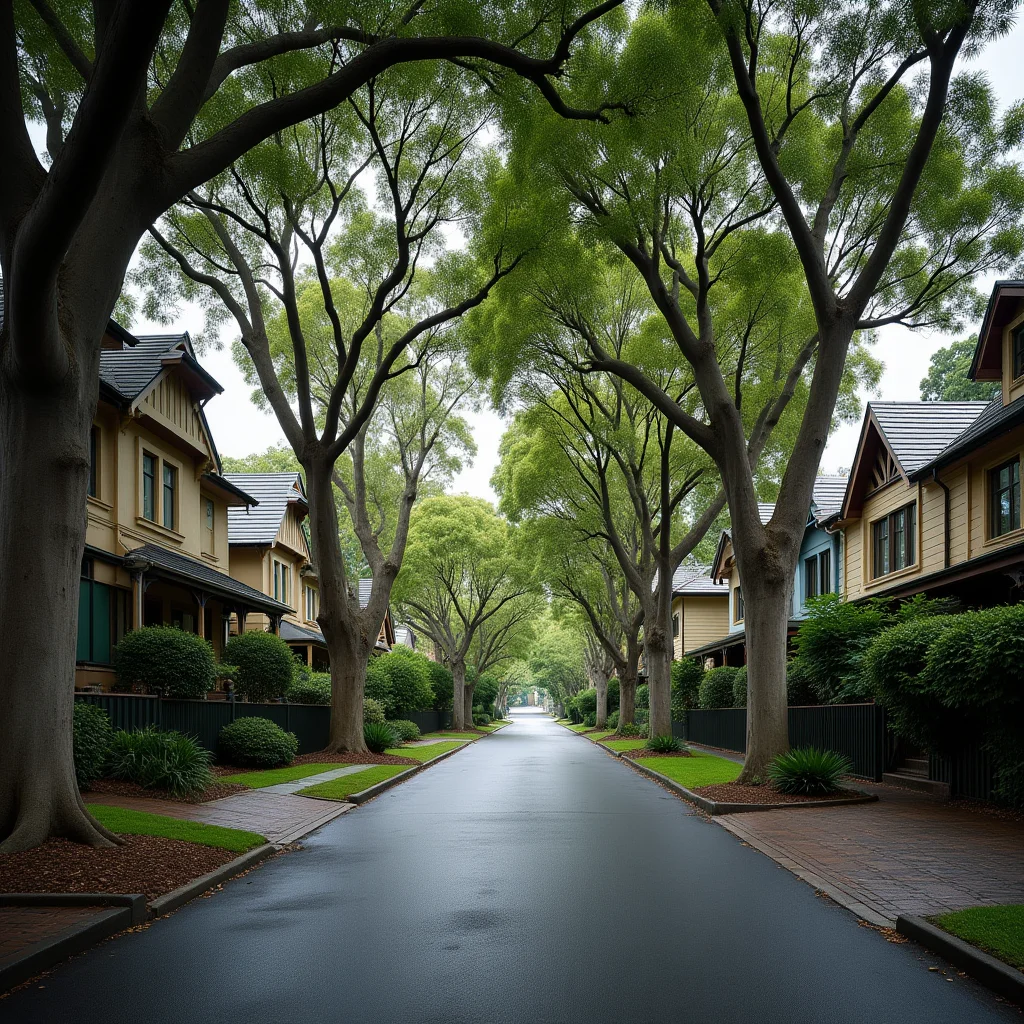
According to realestate.com.au, a Melbourne townhouse featuring a mural by internationally recognised street artist Rone is being offered to market with a price guide of $1.475 million — making it one of the most culturally distinct residential listings to hit the Victorian capital in 2026.
A Rare Artwork You Can Also Live In
The Rone mural in question is not a reproduction or a commission applied purely for marketing effect. It is a verified, site-specific work by Rone, whose large-scale portraits have appeared on buildings internationally, according to the source. His work has previously appeared on buildings and gallery walls both locally and internationally. As realestate.com.au reported, this is a piece you can do significantly more than simply look at — the artwork is integrated into the fabric of a liveable, sellable townhouse. That combination places this property at the intersection of the residential and collectible art markets, a territory with very few comparable sales in Australia.
The commercial logic here is straightforward but rarely tested at residential scale. When a recognised artist's work is permanently embedded in a property — not hanging on a wall, but part of the structure itself — the asset's value proposition bifurcates. It attracts a buyer who is weighing both the residential utility and the cultural cachet. That is a materially different pool of bidders from the standard Melbourne townhouse buyer, which typically limits competition to local owner-occupiers or yield-focused investors. A Rone-embedded property is more likely to attract interstate or international interest, collectors seeking a habitable investment, and buyers for whom the provenance of the artwork is a genuine differentiator.
For sellers and their agents, this creates both opportunity and complexity. Setting a guide of $1.475 million implies confidence that the artistic element adds a measurable premium over a comparable un-adorned townhouse in the same precinct. Whether the market confirms that premium at auction will be closely watched. It is rare to find a direct comparable sale — which is exactly the point. The scarcity of the artwork is mirrored by the scarcity of precedent, making comparable analysis difficult and auctioneer skill in the room especially important.
What This Tells Us About Melbourne's Premium Segment
This listing arrives at a complicated moment for Melbourne residential property. Data from REAStats, drawing on Cotality's July 2026 figures, confirms price falls across most capital cities, with Victorian suburbs among those stalling while Western Australia and Queensland post growth of 8–15% annually. Melbourne's clearance rates have been under pressure through the middle of 2026, and days-on-market for underperforming Victorian suburbs have stretched past 40 days. Against that backdrop, the Rone townhouse is testing a very specific thesis: that trophy or culturally differentiated assets can hold — or command — a premium even when the broader market is softening.
This dynamic is not unusual across property cycles. During periods of broad price correction, the upper tail of the market — properties with genuine scarcity characteristics, whether architectural distinction, land size, or in this case cultural provenance — tends to compress less dramatically than the median. Buyers at the premium end are typically less leveraged, less sensitive to interest rate movements, and more motivated by long-term capital preservation than short-term yield. Understanding how Melbourne is currently positioned within the broader Australian property cycle is essential context: the city appears to be in a consolidation or early correction phase, which historically is exactly the environment in which differentiated stock holds its value better than commoditised product.
For investors watching Melbourne, the Rone townhouse is a useful signal rather than a replicable strategy. Most buyers cannot acquire a Rone-embedded property because none exist for sale. But the underlying principle — that genuine scarcity characteristics provide price resilience in down markets — applies to other property types: corner blocks, heritage-listed homes, properties with unusually large land-to-dwelling ratios in gentrifying suburbs. Tracking auction clearance data across REAStats can help identify which Melbourne precincts are still clearing stock competitively, even as aggregate figures soften.
The Market Cycle Context: Where Melbourne Sits Right Now
Melbourne has underperformed Sydney, Brisbane, Perth, and Adelaide across most of the 2024–2026 period. Land tax increases, a series of state budget measures that drew investor capital interstate, and a higher proportion of unit stock relative to houses have all weighed on the city's aggregate performance. Listings featuring unique characteristics — particularly those that attract non-standard buyer pools — have consequently taken on added significance as proof points for whether premium demand remains intact. The $1.475 million guide on the Rone townhouse will function as one such data point.
In a Melbourne market where aggregate prices are under downward pressure and clearance rates have softened through mid-2026, art-embedded or culturally differentiated residential properties represent a genuine test of whether trophy demand can decouple from the broader correction — and whether scarcity alone is sufficient to drive competitive bidding above guide.
For deeper context on how Australian cities have moved through comparable periods of divergence between premium and median-segment performance, the Australian Property Cycle Explained guide provides a useful framework. Historically, Melbourne has emerged from consolidation phases with strong medium-term gains — but the timing of that recovery has consistently depended on broader macro conditions, including RBA rate settings and interstate migration flows, rather than on local supply dynamics alone.
It is also worth situating the Rone townhouse within the international context of art-embedded real estate. In New York, London, and Berlin, there are established precedents for murals and site-specific installations adding verifiable premiums to residential sales — sometimes substantially. Australia is earlier in that cultural cycle, which means the precedent-setting nature of this Melbourne sale extends beyond the local market. A result at or above guide would provide a data point referenced in future comparable analyses across the country. For a broader perspective on how Australian residential values compare globally, the Australian Property Prices vs the World guide provides context on where Melbourne sits relative to peer cities.
Practical Implications for Melbourne Buyers and Sellers
For buyers in Melbourne's current market, the Rone townhouse illustrates a principle worth applying more broadly: in a softening environment, properties with genuine differentiation — whether cultural, architectural, or locational — carry a different risk profile from standard stock. They are harder to value using conventional comparable sales methodology, which cuts both ways. On the upside, scarcity limits downside competition from near-identical listings. On the downside, resale liquidity can be constrained to a smaller buyer pool. Due diligence for a property of this type should include an independent art valuation alongside a standard building inspection, and buyers should seek specific legal advice on any encumbrances or heritage considerations attached to the mural's preservation.
For sellers considering how to differentiate their own listings in a slower Melbourne market, the Rone case demonstrates the commercial value of authentic cultural narrative — but only where that narrative is genuine. Commissioning a local mural artist to paint a feature wall in an attempt to replicate this effect is unlikely to produce a comparable premium. The value here is tied directly to Rone's documented international reputation and the rarity of permanently integrated residential works. Buyers and their agents can interrogate authenticity through provenance documentation, artist verification, and the established market for Rone's collectible works. First-home buyers unlikely to compete at this price point can find relevant guidance on entry strategies at the APF First Home Buyer Complete Guide.
The auction result, when it comes, will be one of Melbourne's more closely watched sales of the August 2026 campaign — not because $1.475 million is an exceptional sum in the context of Melbourne's upper-market townhouse segment, but because of what a result above, at, or below guide will reveal about the depth and resilience of premium demand in a city where the broader market is clearly under pressure. Watch the clearance data that follows.
For real estate agent rankings, suburb statistics and clearance rate data, see REAStats — Australia's independent property intelligence hub. Visit REAStats — Agent and Suburb Data →
This article was produced with AI assistance and reviewed for accuracy. Content is for informational purposes only and does not constitute financial or property investment advice.