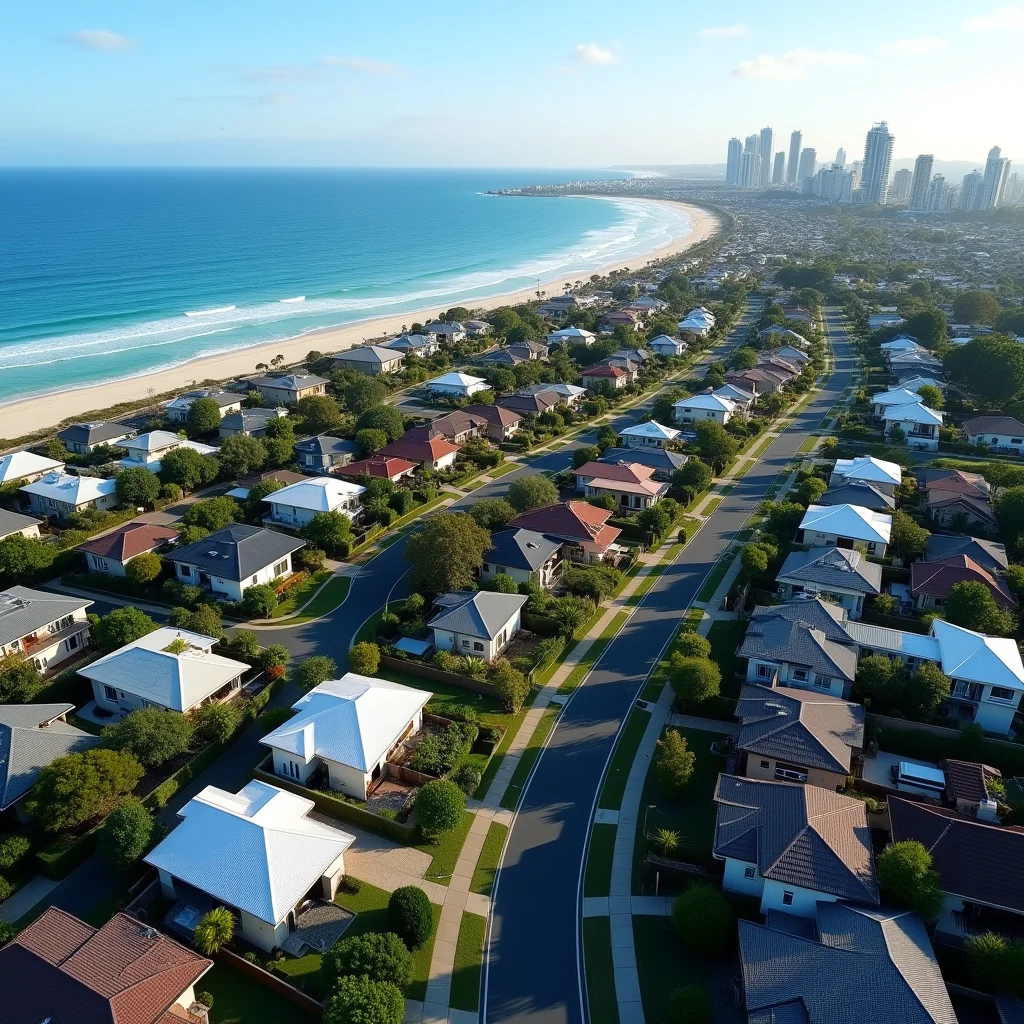
According to realestate.com.au, Realestate.com.au has revealed a list of Australia's best property regions, with working-class hubs featuring prominently among the standouts. The finding lands at a moment when capital city price ceilings — on display with Melbourne's $1.252m sale of an industrial modernist home that drew 120 inspection groups in just 10 days — are pushing more buyers to look beyond the metro fringe entirely.
The Working-Class Hub Thesis
Realestate.com.au's regional ranking points to working-class hubs as standout performers, a departure from coverage that typically centres on lifestyle coastal towns or mining boom towns.
For additional market context, see WealthWatchPro investment market analysis.
This matters because the standard regional investment story of the past five years has centred on amenity: coastal views, cafe strips, or proximity to a capital city for hybrid workers. A working-class hub thesis is different in emphasis. It suggests that employment security and local conditions, rather than lifestyle appeal alone, can be durable drivers of regional property demand — a point worth testing against local data before acting on it.
For investors, the practical takeaway is to look closely at the employment profile and infrastructure backing of any region on this list before assuming the ranking alone is a buy signal. A region with a single dominant employer carries different risk to one with a diversified base, and that distinction matters more than the headline inclusion on a "best regions" list.
Why Capital City Buyers Are Looking Further Out
The contrast with capital city conditions is stark. Melbourne's Port Melbourne sale — an industrial-style modernist home that sold for $1.252m after just 10 days on market and 120 through-door inspections — shows that even niche, architecturally distinctive stock in inner-ring suburbs is still attracting intense competition when priced right. That level of buyer density for a single property underlines how constrained capital city supply remains for anything with genuine character or scarcity value.
That scarcity premium in the capitals is a plausible part of what is pushing some buyers toward regional alternatives. When 120 groups compete for one home in an inner-Melbourne suburb, it signals a depth of demand that regional markets simply don't have to absorb — at least not yet. Buyers priced out of that competition, or unwilling to stretch into it, may increasingly treat regional hubs as a rational alternative to consider.
The gap between capital city scarcity premiums — evidenced by a modernist Melbourne home drawing 120 inspection groups — and the affordability on offer in regional working-class hubs is shaping up as a fault line worth watching in the national property market.
This dynamic isn't new in direction, but it appears to be intensifying. Buyers who might previously have stretched for an outer-suburban capital city purchase may now be weighing that stretch against a regional alternative instead, particularly first home buyers and investors prioritising affordability over proximity to a capital city.
Context: Australia's Price Position Globally
How Australia's property prices compare internationally is explored in detail in Australian Property Prices vs the World, and that broader context is useful background for understanding why affordability-driven regional interest keeps resurfacing as a theme rather than fading as a one-off pandemic-era trend.
Internationally, affordability splits are showing up elsewhere too — the UK's north-south price divide has widened as autumn sales fell 11% year-on-year in Q3 2026, with northern England continuing to outperform the south on price growth, a pattern not unlike the capital-versus-regional divide now emerging in Australia.
What It Means for Buyers and Investors
For first home buyers priced out of capital city markets, the working-class hub ranking offers a concrete alternative worth researching beyond the usual lifestyle-region shortlist, provided buyers do their own due diligence on local employment conditions rather than relying on the ranking alone.
Capital city buyers competing for scarce, distinctive stock — as seen with the Port Melbourne sale — should expect that competition to persist while supply remains tight in inner and middle-ring suburbs. Meanwhile, clearance rate data shows the picture isn't uniform across capitals either: Sydney's clearance rate has recently slipped to 52%, with one Croydon Park property in the inner west selling $150,000 below reserve, underscoring how vendor outcomes are diverging even within a single capital city market. For those comparing current clearance rate dynamics across cities, resources like REAStats provide suburb-level detail that can sharpen that comparison between capital and regional options.
The broader lesson from this ranking is that affordability and local fundamentals, rather than lifestyle marketing alone, deserve closer scrutiny when assessing regional property performance. Buyers and investors who do that groundwork — rather than chasing the next coastal hotspot on name recognition — are better placed to make an informed call.
This article was produced with AI assistance and reviewed for accuracy. Content is for informational purposes only and does not constitute financial or property investment advice.