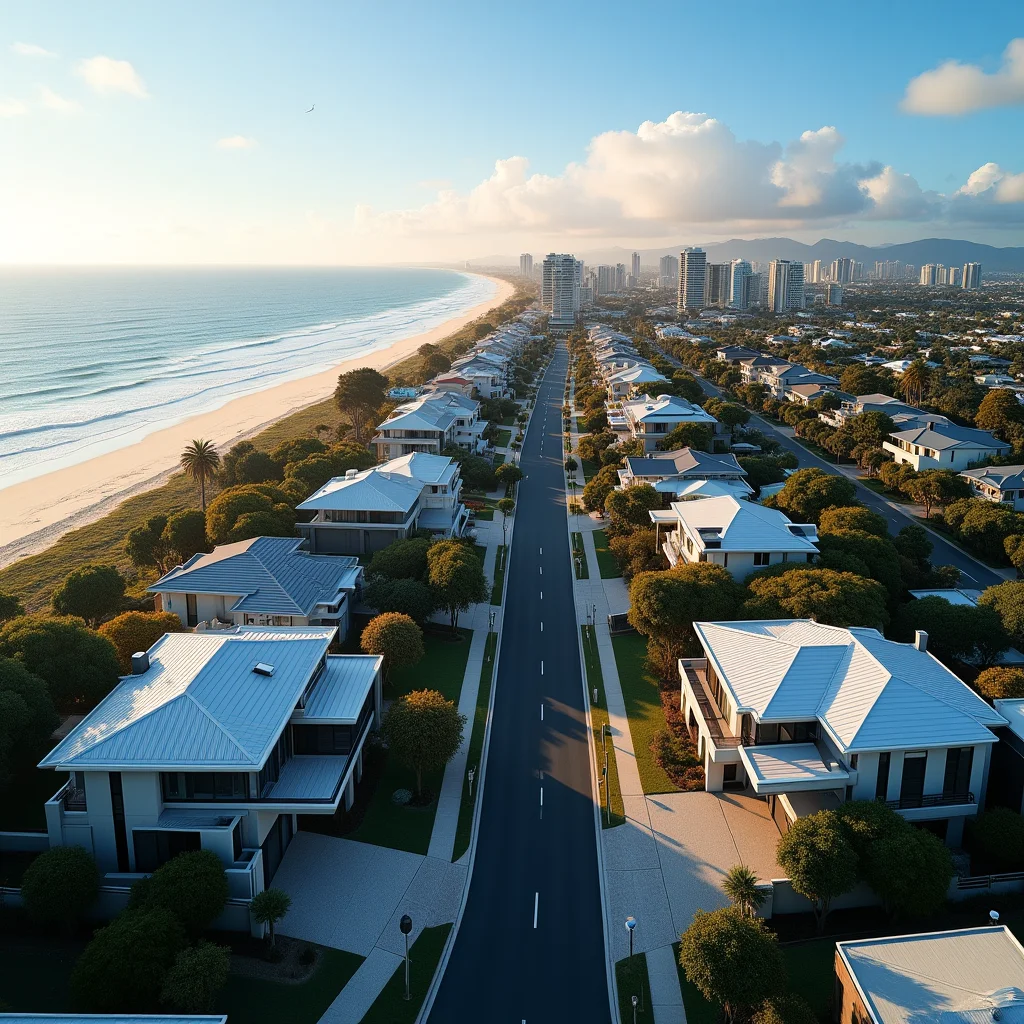
According to realestate.com.au, the NSW Government has revealed how it is choosing which suburbs receive new parks, swimming pools, and sports fields as housing growth accelerates across the state. The announcement marks a concrete step toward transparent community infrastructure planning — and it has immediate implications for buyers, investors, and developers tracking value creation in greenfield and urban-infill corridors.
What NSW Is Actually Doing — and Why It Matters Now
NSW has been under sustained pressure to co-ordinate its planning approvals pipeline with community amenity delivery. Successive housing cycles have seen land rezoned and dwellings built faster than supporting infrastructure could follow, creating liveability deficits in outer suburbs. This announcement signals a policy correction: growth areas will receive infrastructure commitments earlier in the development cycle, rather than years after residents have moved in. For buyers assessing value in emerging suburbs, the presence or absence of committed community facilities is one of the strongest forward indicators of long-term price performance.
Property investors tracking capital growth in NSW should take this policy development seriously. Suburbs confirmed for near-term infrastructure upgrades — including parks, sports fields, swim sites near waterways and foreshores, and town squares — gain a measurable liveability premium that flows through to land values. Proximity to quality public open space is widely recognised in Australian property markets as a driver of residential land prices, though the effect varies by suburb density and existing green space supply.
The Liveability Premium: How Infrastructure Drives Property Values
The relationship between community infrastructure and property prices is well-established in Australian property research. Greenfield suburbs that receive early-stage parks, sporting ovals, and community facilities consistently outperform comparable suburbs without those amenities in long-run capital growth. The effect is most pronounced in outer metropolitan areas, where residents are more car-dependent and community facilities fill a larger role in daily life than in established inner suburbs already well-served by private and public amenity. NSW's decision to formalise and publish its allocation criteria gives buyers and investors a rare forward-looking tool.
This matters beyond NSW. Other states are managing similar growth pressures in their outer metropolitan corridors, and the question of how infrastructure investment follows housing approvals is central to liveability outcomes across Australia's fastest-growing regions. NSW's published methodology could serve as a model for other states — or alternatively highlight how far comparable jurisdictions lag in transparent infrastructure planning. For macro property market context, this kind of state-level infrastructure investment signals sustained long-run confidence in residential demand across major growth corridors.
For investors building portfolios in NSW growth corridors, the practical implication is straightforward: cross-reference the state's published allocation criteria against the suburbs on your shortlist before exchanging contracts. A suburb confirmed for new community facilities within a near-term capital works horizon is materially different from one without any committed infrastructure pipeline. That infrastructure confirmation is a signal of both government confidence in population growth projections and a future liveability lift that will attract and retain owner-occupiers — the cohort that ultimately drives capital growth.
Suburbs absorbing the highest volumes of new housing in NSW will receive priority access to parks, pools, and sports fields under a needs-based allocation model — a policy framework that directly ties community infrastructure delivery to measurable residential growth data, creating a forward-looking signal for property values in high-growth corridors.
Background: Infrastructure Deficits and Australian Property Development
Australia's planning system has historically separated land-use approvals from infrastructure delivery, creating a persistent lag between when new homes are built and when supporting community facilities arrive. This disconnect has been a defining characteristic of greenfield development in every major capital city, and it is one of the core reasons why outer-suburban property markets often experience an initial period of price weakness before liveability improvements flow through. NSW's move to formalise its infrastructure allocation criteria represents a structural response to this problem — one that other states have attempted in various forms but rarely published with this level of transparency.
Understanding how community infrastructure decisions are made — and how they affect tenants, owner-occupiers, and investors — is foundational property management knowledge. Landlords in growth corridors who understand the infrastructure pipeline can make better decisions about hold periods, rental positioning, and capital improvement timing. The Property Management in Australia — A Complete Guide for Landlords covers the full framework for managing investment properties through market cycles, including how liveability changes in a suburb affect vacancy rates and achievable rents.
NSW's published allocation criteria create a practical research tool for buyers and investors who know how to use them. The first step is identifying which suburbs are flagged as high-growth priority areas under the state's housing delivery pipeline — the same suburbs that will move to the front of the infrastructure queue. Buyers prepared to enter these markets before infrastructure confirmation can capture price appreciation as facilities are announced and delivered. This is a classic infrastructure-led value-add cycle, and it plays out on a predictable timeline once government capital commitments are made public.
For investors already holding property in NSW growth corridors, the infrastructure announcement is a reason to review hold-period assumptions. A suburb receiving new community facilities within a near-term window becomes a stronger long-term hold proposition — particularly if the surrounding area is still in an early development phase with limited competing amenity. Rental demand in these suburbs is also likely to strengthen as families prioritise proximity to quality recreational facilities, which supports rental yield even as prices rise. Separately, tiny homes gaining regulatory approval in some states adds another layer of supply complexity to growth corridor analysis.
Buyers entering NSW growth corridors for the first time should approach the infrastructure allocation framework as one input in a broader due diligence process. Confirmed infrastructure is a positive signal, but it does not substitute for suburb-level analysis of transport connectivity, school quality, employment proximity,
This article was produced with AI assistance and reviewed for accuracy. Content is for informational purposes only and does not constitute financial or property investment advice.