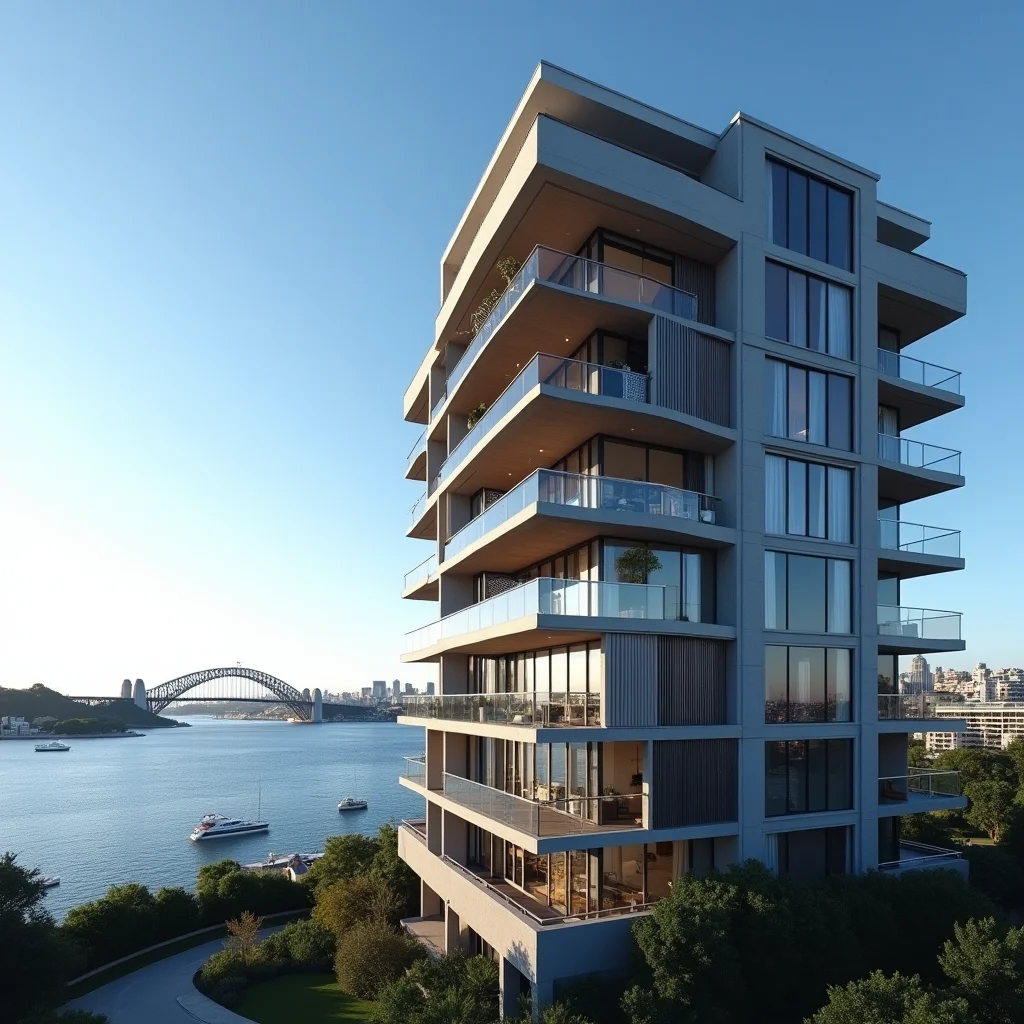
According to realestate.com.au, a couple secured the Norwood home under the hammer for $2.9 million in early August 2026, a result that stands in direct contrast to Adelaide's deteriorating auction conditions — where nearly half of all properties being auctioned are getting passed in. The sale is a sharp reminder that prestige stock and typical family homes are operating in fundamentally different markets, even within the same city.
The Norwood Result in Detail
The $2.9 million Norwood sale cuts through what has become a difficult auction environment across Adelaide. According to realestate.com.au, nearly half of all auctioned properties in the city are currently being passed in — a rate that signals serious buyer hesitation at the volume end of the market. That this Norwood home cleared at a multimillion-dollar price, under the hammer and without a vendor bid rescue, is not a sign of broad market health. It is a sign that a thin stratum of well-positioned prestige stock continues to attract competitive buyers even as the middle market stalls.
The mechanics behind this split are straightforward. Prestige buyers — typically equity-rich rather than debt-dependent — are less sensitive to the RBA's 4.35% cash rate than owner-occupiers borrowing at full capacity. A buyer writing a $2.9 million cheque with a large equity contribution from an existing property faces a materially different borrowing calculation than someone stretching to a $750,000 mortgage on a modest suburban home. When rate pressure mounts, it is the latter group that withdraws first, swelling the pass-in rate while high-conviction prestige bidders remain active and competitive.
For sellers sitting below the prestige threshold in Adelaide, the current environment demands a clear-eyed pricing strategy. With nearly half of vendors enduring the public awkwardness of an auction that fails to clear, then renegotiating under weakened conditions post-hammer, the odds are not in favour of an optimistic reserve. Agents and vendors entering spring campaigns — typically the busiest auction window — should be stress-testing reserves against genuine buyer depth, not assuming that summer momentum will return automatically.
The Norwood result also adds a data point to the national picture. REAStats reports that Australia's national median has fallen to $894,000 for the fourth consecutive month. Against that backdrop, a $2.9 million clearance in a softening Adelaide market represents a genuine outlier — the kind of result that makes headlines precisely because it runs against the trend, not because it defines it.
What a Near-50% Pass-In Rate Actually Means for Buyers
A pass-in rate approaching half of all auctioned properties fundamentally changes the power dynamic at auction. When auctioneers are regularly unable to meet vendor reserve, the negotiating leverage shifts materially toward buyers. Properties that pass in must subsequently be sold through private treaty — often at prices below the vendor's original expectation. For patient, pre-approved buyers in Adelaide, the current conditions represent one of the more favourable entry points in several years. The window to negotiate post-auction, with vendors softened by a public non-result, is open in a way it simply was not during 2021–22.
The broader implication is that the two-speed auction market now evident in Adelaide — prestige stock clearing, volume stock stalling — is not unique to South Australia. REAStats data on Chatswood shows Sydney's prestige suburbs are holding at a 65.8% clearance rate and a $2,200,000 median with a 28-day sales cycle — demonstrating the same prestige resilience in a different capital city context. The pattern is consistent: buyers with substantial equity transact; buyers dependent on maximum borrowing capacity are withdrawing or being excluded by lender serviceability assessments.
This bifurcation also affects how investors should read headline clearance data. A city or suburb reporting a 55% clearance rate may be concealing a market where prestige properties clear at 80% and mid-market homes sit at 35%. Buyers and investors who rely on blended clearance figures without segmenting by price band risk misreading underlying conditions. The Norwood $2.9 million result is a feature of the prestige segment — it tells you almost nothing about the odds of clearing a $650,000 home in the same auction room on the same Saturday.
APRA's Role in the Two-Speed Auction Market
The divergence between prestige and volume auctions cannot be fully explained without reference to the credit environment. Australia's macroprudential framework — including APRA's serviceability buffers, which require lenders to assess borrowers at 3 percentage points above the loan's interest rate — materially reduces the number of qualified bidders in the mid-market. With variable mortgage rates sitting well above 6% at most major lenders, that buffer pushes the assessment rate toward 9% or higher, pricing out a significant cohort of would-be buyers. The APF guide on APRA Lending Restrictions and Macroprudential Policy Explained details exactly how these settings translate into reduced borrowing capacity across different income brackets.
Prestige buyers are typically insulated from this mechanism. An existing homeowner upgrading from a $1.5 million property to a $2.9 million home may be borrowing as little as $1 million — a loan size that, at their income
This article was produced with AI assistance and reviewed for accuracy. Content is for informational purposes only and does not constitute financial or property investment advice.