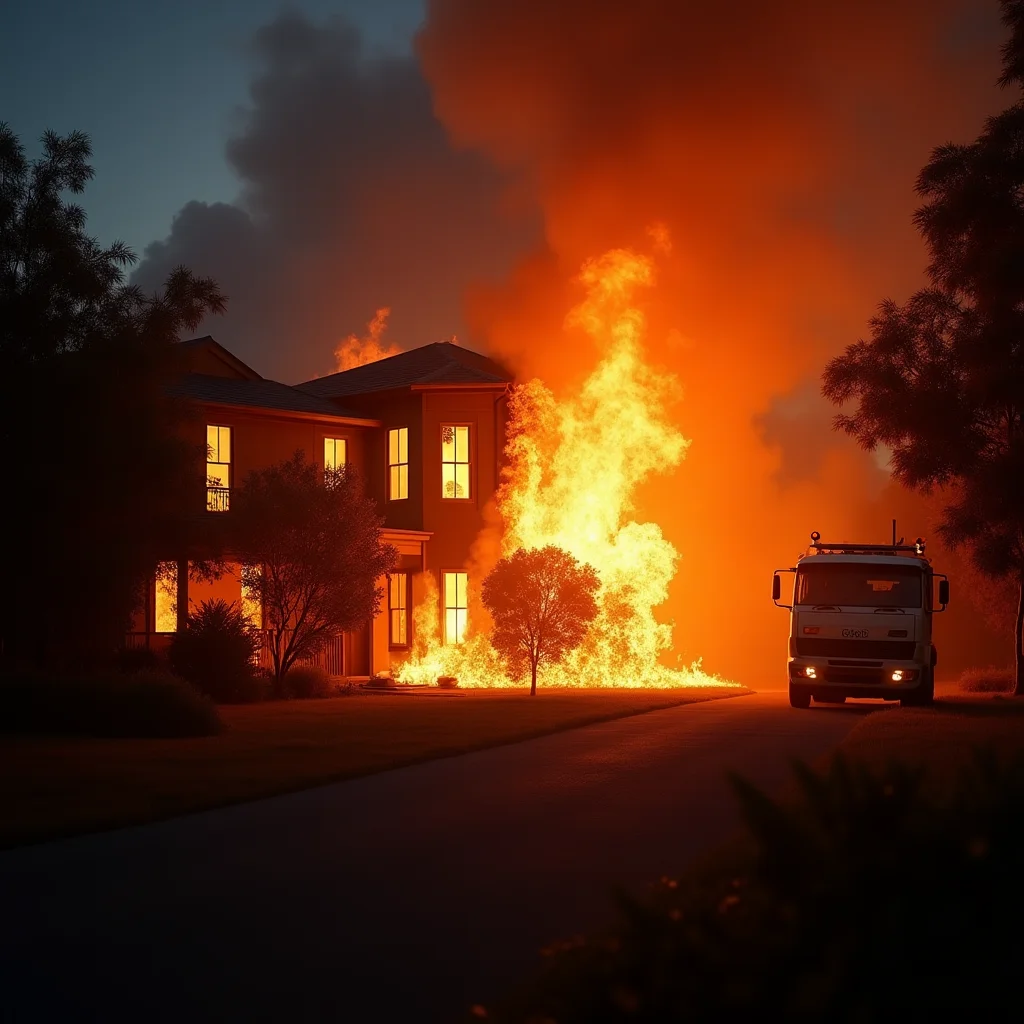
According to realestate.com.au, a forklift mechanic lost his home in a house fire and has now listed the beachside home he rebuilt from the ground up, a story that puts a human face on one of the property market's least discussed risks: what happens to an owner's finances, timeline and sense of security when a total loss hits before the right insurance cover is in place.
The Story Behind the Rebuild
The listing itself is straightforward real estate copy — a beachside home, a tree change story, a seller moving on because "life is too short." But buried in that narrative, as reported by realestate.com.au, is the fact that this home only exists because its owner rebuilt after a fire destroyed the original structure. That detail is easy to skim past, yet it is the single most consequential event in the property's history — more consequential than any renovation, any market cycle, any interest rate movement.
For additional market context, see REAStats property market data.
A total loss from fire forces an owner through a process most Australians never plan for: temporary accommodation, demolition and debris removal, council approvals for a rebuild, and months or years of construction before a family can move back in. Every one of those steps carries a cost, and every one of those costs is meant to be covered by a building insurance policy — if the sum insured was set correctly in the first place. Insurers calculate rebuild costs using a sum insured figure the policyholder nominates or an insurer-calculated estimate based on square metreage, construction type and location. Get that figure wrong and the gap between what a policy pays and what a rebuild actually costs falls entirely on the owner.
Why Underinsurance Remains Australia's Quiet Insurance Crisis
Underinsurance is not a rare event confined to catastrophic bushfire zones or flood plains. It is a structural problem across the Australian residential market, driven by owners who set their sum insured at some point in the past and never revisit it as construction costs rise. A sum insured figure that once reflected the true cost of rebuilding can fall well short of what a full rebuild costs today. Many policyholders only discover this gap at the worst possible moment — after a fire, flood or storm has already destroyed the home.
The mechanism is simple but brutal. Insurers pay out according to the sum insured nominated on the policy, not according to what it actually costs to rebuild a comparable home in the current market. A policyholder left with a shortfall must fund the difference out of pocket, through additional borrowing, or by accepting a scaled-down rebuild. For a tradesman or any owner without substantial cash reserves, that shortfall can mean real financial strain layered on top of the emotional toll of losing a home.
The gap between an outdated sum insured and the true cost of rebuilding in today's construction market is the single biggest blind spot in Australian home and landlord insurance — and it only becomes visible after a total loss has already occurred.
This is not purely a homeowner problem. Landlords face an amplified version of the same risk, because a rental property that burns down generates no income while also failing to cover its own rebuild. A landlord insurance policy should bundle building cover with landlord-specific protections — loss of rent, tenant default, and malicious damage — but only if the underlying sum insured is accurate in the first place.
Building Standards, Rebuild Quality and the Inspection Gap
When a property is rebuilt from scratch after a fire, as described in the realestate.com.au listing, buyers tend to assume the new structure is inherently safer than an older home simply because it is newer. That assumption is not always correct. Rebuilds completed under financial pressure, with an owner managing a mortgage on the original block while also funding reconstruction, can involve cost-cutting on finishes, trades, or compliance steps that a full-price new build would not need to absorb.
This is where the building and pest inspection anchor entry becomes directly relevant to any buyer considering a rebuilt property. An inspection after a fire rebuild should specifically verify that any insurance-funded works were signed off by a licensed builder, and that no shortcuts were taken on structural elements like framing, waterproofing or electrical wiring. These are exactly the defects that do not show up in a casual walkthrough but surface years later as expensive repairs.
Buyers should also request the insurance claim history and builder's warranty documentation for any rebuilt home. A clean paper trail — insurer payout confirmation, licensed builder invoices, council final inspection certificate — gives confidence the rebuild was done properly. The absence of that paperwork is a red flag worth pricing into any offer, regardless of how attractive the beachside location might be.
Practical Steps for Owners, Landlords and Buyers
For existing homeowners, the lesson from this story is to review sum insured figures regularly, not once at purchase and then never again. Most major insurers offer online rebuild calculators, but these tools are only as accurate as the inputs — square metreage, finish quality, and local labour rates all need updating as conditions change. A brief review every so often is a small price against the risk of a significant shortfall after a total loss.
For landlords specifically, the stakes are higher because a rental property underinsured against fire or flood also strips away rental income during the rebuild period. Landlord insurance policies that include loss-of-rent cover are only useful while the property is uninhabitable if the building sum insured itself is adequate to complete the rebuild in a reasonable timeframe.
Buyers eyeing any home with a rebuild history, fire-related or otherwise, should treat the building and pest inspection as non-negotiable rather than optional. It is a modest upfront cost against the risk of inheriting undisclosed structural issues. Combined with a request for full documentation of the rebuild and its insurance claim, this due diligence step turns an emotionally compelling listing story into a financially sound purchase decision.
Ultimately, the forklift mechanic's beachside home is a success story — a total loss turned into a fresh start and now a sale. But every element of that success depended on insurance working as intended. For the next owner, and for every Australian homeowner or landlord reading this, the actionable takeaway is the same: check the sum insured today, not after the fire.
This article was produced with AI assistance and reviewed for accuracy. Content is for informational purposes only and does not constitute financial or property investment advice.