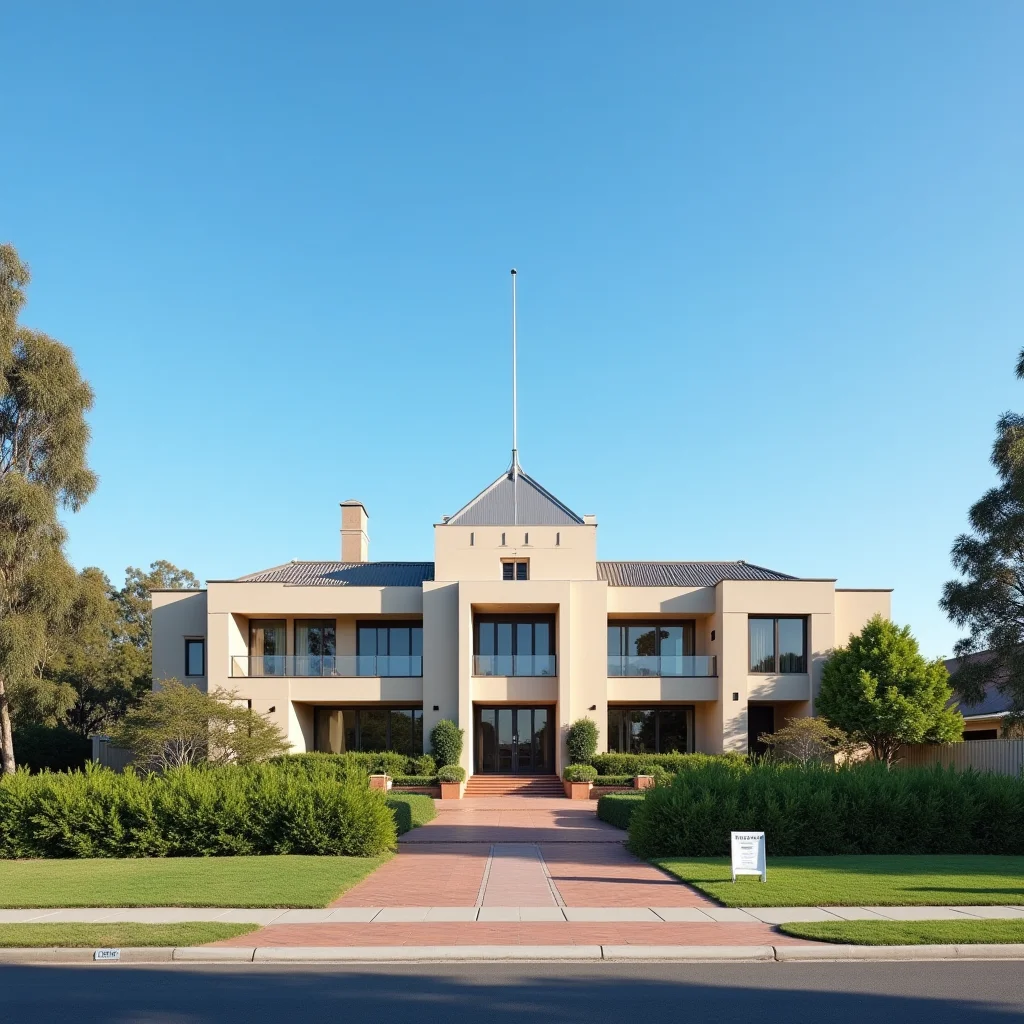
According to
realestate.com.au, a renovated Hamlyn Heights home sparked a rare bidding war among first-home buyers, even as the broader auction market shows signs of cooling under the weight of the latest interest rate rise. The result sits awkwardly against the prevailing narrative of buyer fatigue, and it tells a story about the uneven way monetary policy actually filters through to the ground level of the Australian housing market.
A Rare Bidding War in a Cooling Market
The Hamlyn Heights result, reported by realestate.com.au, stands out precisely because it bucked the trend. Auction clearance rates across many regions have softened as the cash rate has climbed, and vendors in several markets have had to recalibrate price expectations downward. Against that backdrop, a move-in ready, renovated home attracting a genuine bidding war from first-home buyers is the kind of outcome agents are increasingly flagging as the exception rather than the rule.
What makes this significant is the buyer cohort involved. First-home buyers are typically the segment most sensitive to rate rises, because they are borrowing at the margin of their serviceability limits and have the least equity buffer to absorb higher repayments. If this group is still prepared to compete aggressively for a well-presented property, it suggests the rate rise has not uniformly suppressed demand — it has simply made buyers more selective about what they will fight for.
For additional market context, see WealthWatchPro macro and interest rate market analysis.
The practical takeaway for sellers is straightforward: presentation and turnkey condition are doing more work in this cycle than at any point in the recent cycle. Renovated, move-in ready stock is attracting premiums precisely because buyers facing higher borrowing costs want to avoid additional capital outlay on top of an already stretched mortgage. For buyers, it means the easy wins of a soft market — picking up a fixer-upper below expectation — are not materialising uniformly across every listing.
Why Rate Rises Don't Cool Every Pocket Equally
The RBA cash rate currently sits at 4.35%. That setting has been enough to push many prospective buyers to the sidelines in weaker-performing markets, where auction clearance rates have slipped and vendors have had to adjust reserves. But the Hamlyn Heights result is a reminder that cash rate settings act as a blunt instrument nationally while producing sharply different outcomes suburb by suburb and even listing by listing.
A single renovated, move-in ready listing attracting a genuine bidding war in an otherwise cooling market is evidence that rate-driven demand destruction is patchy rather than uniform — concentrated in stock requiring further capital outlay, and largely absent where a home needs nothing done to it.
This patchiness matters for how commentators and policymakers read aggregate auction clearance data. A city-wide clearance rate decline can mask pockets of intense competition sitting alongside areas of genuine buyer withdrawal. For first-home buyers specifically, the calculus around a higher cash rate isn't simply "can I afford the repayment" — it's "can I afford the repayment plus the renovation costs I'd otherwise avoid by buying something already finished." At 4.35%, with borrowing costs already elevated, that extra buffer against future spending appears to be steering demand toward finished homes rather than away from the market altogether.
Historical Context: Is This a Bubble Symptom or a Rational Response?
Episodes where parts of the market defy rate-driven cooling often get read as evidence of speculative excess, but the more common explanation is simpler: genuine owner-occupier demand concentrated in finite, desirable stock. The debate over whether Australia's housing market reflects sustainable fundamentals or bubble-like conditions is explored in depth in APF's guide, Does Australia Have a Property Bubble?, which weighs high prices and elevated rates against underlying supply constraints and demographic demand.
A single bidding war is not evidence of a bubble forming or bursting. It is, however, a useful data point for anyone trying to gauge how much further a 4.35% cash rate needs to rise, or how long it needs to hold, before demand genuinely breaks across the board rather than just in pockets. Readers comparing Australian conditions against other property markets globally can find further context in Australian Property Prices vs the World.
What This Means for Buyers, Sellers and Investors
For first-home buyers, the Hamlyn Heights result is a caution against assuming a cooling headline market means easy competition at every auction. Buyers chasing renovated, turnkey properties should expect continued competition and budget accordingly, including pre-approval buffers that account for bidding above reserve. Those willing to take on a renovation project, by contrast, may find considerably less competition and more room to negotiate, given the preference shift toward finished stock under current borrowing costs.
For sellers, the lesson is that presentation genuinely moves the needle in this cycle. A renovated listing competing hard against a backdrop of cooling conditions elsewhere suggests vendors sitting on unrenovated stock may need to be more realistic about price expectations, or weigh up the cost-benefit of a pre-sale renovation against a longer selling campaign.
Investors watching the cash rate at 4.35% for signs of where to deploy capital should note that demand resilience is not evenly spread. Stock requiring capital expenditure is facing softer conditions, while finished, rentable, or immediately liveable properties are holding up better. That distinction is likely to matter more, not less, if the cash rate holds at current levels or moves again before the next RBA decision.
This article was produced with AI assistance and reviewed for accuracy. Content is for informational purposes only and does not constitute financial or property investment advice.