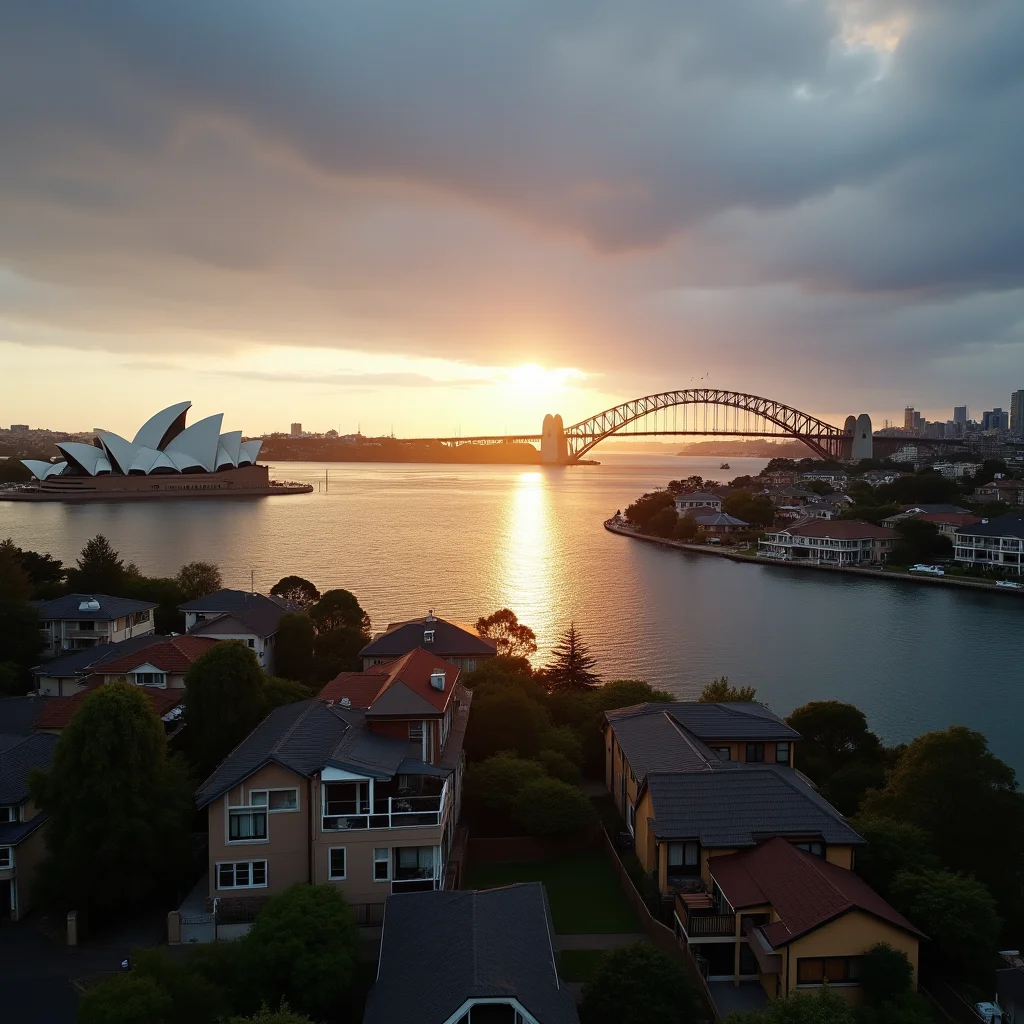
According to realestate.com.au, many properties listed for sale across key parts of Sydney are drawing near-zero attendance at open homes — a buyer retreat that agents describe as one of the worst in decades. Properties are sitting open, agents waiting, and crowds that once jostled for floor plans have simply stopped showing up. The phenomenon is concentrated enough to warrant a new descriptor: ghost open homes.
What Is Actually Happening at Sydney Open Homes
The scale of disengagement across Sydney's open home circuit is significant. Agents in suburbs that were packed with prospective buyers are now reporting single-digit or even zero attendance at inspection events. This is not confined to fringe or outer-ring suburbs — the retreat spans properties across key parts of the city, suggesting a broad-based demand withdrawal rather than isolated pockets of weakness. The timing, arriving just as the spring selling season opens, amplifies the concern for vendors who had hoped increased stock and better weather would draw more buyers back.
The mechanics behind ghost open homes are straightforward: buyers are priced out, squeezed by cost-of-living pressure, or waiting for further price falls before committing. Data from REAStats shows the RBA's cash rate is holding at 4.35%, sustaining mortgage serviceability stress for existing owners while erecting a high borrowing-cost barrier for new entrants. When purchasing power shrinks, open home traffic shrinks with it — and vendors who have priced to a market that no longer exists find their homes sitting idle.
For sellers currently listed or planning to list this spring, empty open homes carry a direct valuation risk. Extended days-on-market figures feed into agent appraisals and buyer price expectations. A property with multiple inspections and no offers signals distress — even if the vendor has no financial pressure to sell — and buyers who do attend begin lowering their offer anchors accordingly. Sellers who price aggressively from day one to generate early competition are better placed than those holding out for peak-cycle prices that the buyer pool can no longer support.
What distinguishes the current retreat is the combination of elevated rates, affordability deterioration, and rising supply entering the market simultaneously as distressed listings climb. That confluence creates conditions where buyer hesitation reinforces itself: the longer buyers wait, the more listings accumulate, the more negotiating power they perceive, and the less urgency exists to act.
Distressed Listings and the Clearance Rate Fracture
The ghost open home problem does not exist in isolation. Data from REAStats shows distressed property listings have surged more than 60% in parts of Australia heading into spring 2026, with auction clearance rates exposing a deepening divide between Sydney's inner east and the city's broader market. Randwick, for instance, is recording a clearance rate of 73.5%, while Port Macquarie has fallen to 46% — a gap that illustrates how buyer demand has concentrated into a narrow premium tier rather than supporting the market evenly. This fracturing means aggregate city-level clearance figures increasingly mask the severity of conditions in mid-ring and outer suburbs where ghost open homes are most prevalent.
Sydney's property market is splitting into two distinct realities: a liquid, competitive prestige tier where clearance rates above 70% reflect genuine buyer competition, and a broad mid-market where empty open homes and 60%-plus surges in distressed listings signal a demand vacuum that spring listings volume alone will not fill.
The distressed listings surge matters because it adds supply pressure at precisely the point when buyer demand has thinned. More homes on the market, fewer buyers attending inspections, and more vendors who need to sell — rather than want to sell — is a combination that historically produces price discovery events. Buyers who do remain active gain leverage, vendors face longer campaigns and more conditional offers, and agents must work harder to manufacture urgency in a market where urgency has organically evaporated. For REAStats tracking agent performance data across Sydney, the divergence between inner-east results and outer-ring outcomes is now one of the sharpest on record for the spring opening.
For investors currently holding mid-ring Sydney stock, the clearance rate fracture has direct implications for exit strategy. Selling into a buyer-thin market with distressed listing supply rising is a difficult proposition. Those with serviceable debt and income coverage may be better served holding through the current period rather than adding to the supply glut. Investors with high LVR exposure or interest-only loan terms expiring in the near term face more acute decisions, where the cost of holding versus the cost of a discounted sale must be weighed against further potential price softening.
Why This Spring Is Different From Previous Cycles
Spring selling seasons in Sydney typically deliver a volume surge that both buyers and sellers plan around. Vendors list with expectation of deeper buyer pools; buyers expect more choice but also more competition. That mutual dynamic — competition on both sides — is what generates clearance rates and price outcomes. The 2026 spring is disrupting this cycle because the supply side is arriving as anticipated, but the demand side is not. Ghost open homes are the visible symptom of a spring season where only one half of the traditional equation has materialised.
Understanding why buyer demand has retreated so sharply requires looking at the Australian rental market in parallel. REAStats data shows rents continuing to rise well above headline inflation across NSW, among other states, meaning many prospective buyers face a dual squeeze: high rents consuming the savings capacity needed to build deposits, while the RBA's 4.35% cash rate increases the servicing cost of
This article was produced with AI assistance and reviewed for accuracy. Content is for informational purposes only and does not constitute financial or property investment advice.