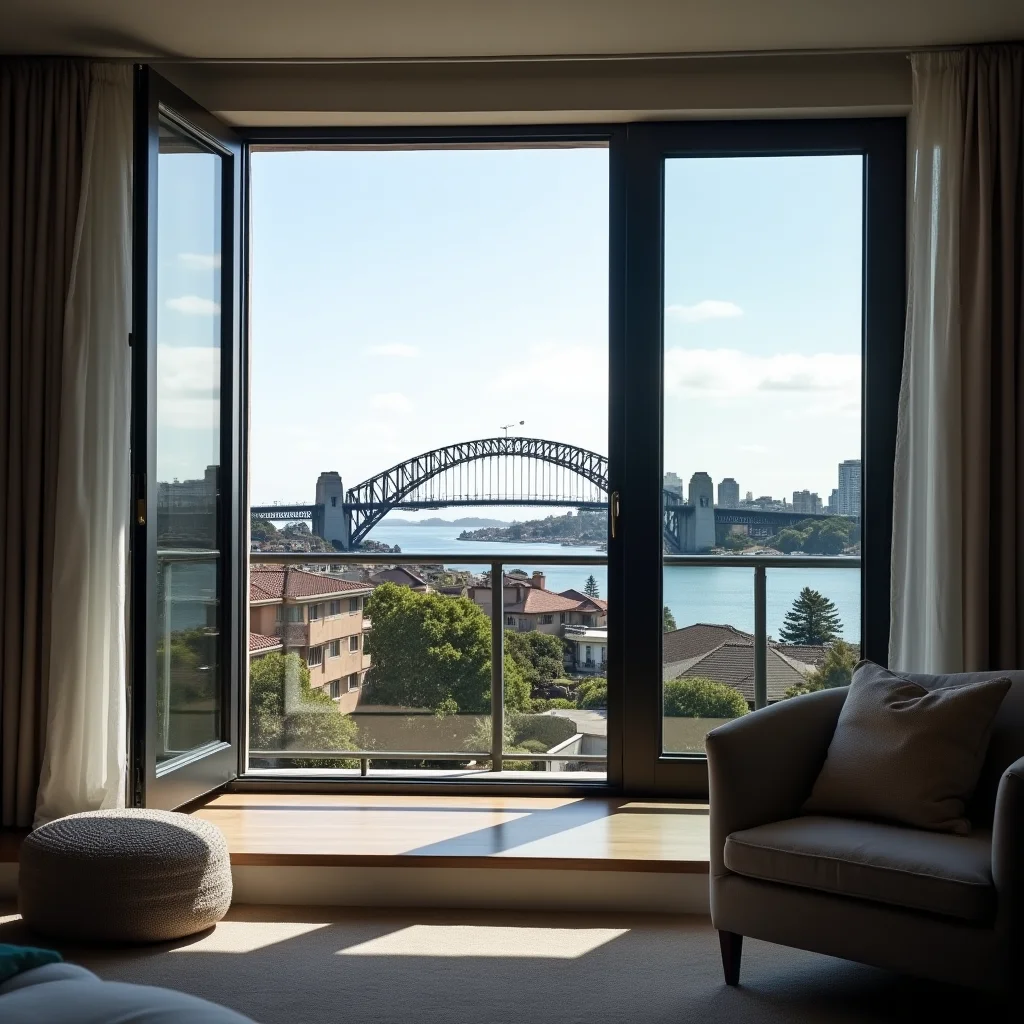
The Auction Result That Defines a Generation's Entry Point
The Roseville sale, reported by REAStats, is not a fluke or an outlier driven by a celebrity buyer or an offshore bidder. It is a first home purchase — by the very cohort that government housing policy is designed to assist. The same auction signals that $2.33 million is no longer an absurd reach for a segment of Sydney's first-timer pool; it is a competitive price point for families who want a freestanding house with a yard in an established inner-north suburb.
The mechanics of how a first home buyer funds a $2.33 million purchase deserve scrutiny. This is not a failure of individual ambition; it is a structural consequence of decades of constrained housing supply meeting persistent demand in Sydney's most sought-after corridors. Buyers at this level are self-funding their entry, typically through a combination of savings, equity gifts from family, or sale proceeds from a previous property — despite many being classified as "first home buyers."
It is also worth placing this in the context of Sydney's broader auction conditions. REAStats recorded a clearance rate of 54 per cent on the same weekend, suggesting a market that is neither running hot nor collapsing — yet still delivering multi-million-dollar results for standard three-bedroom homes in middle-ring suburbs. A balanced market, yet price outcomes at the top of the first-home-buyer cohort remain extraordinary.
What $2.33 Million Buys — and What It Says About Sydney's Affordability Divide
The Roseville result exposes a deepening divide within the first home buyer cohort itself. On one side are buyers in the top income percentiles — often dual professionals, or those with substantial family support — who can genuinely compete for freestanding houses on Sydney's north shore. On the other are the vast majority of first-timers who are priced into apartments, townhouses, outer-ring suburbs, or interstate markets. The $2.33 million result does not represent the average first home buyer experience; it represents the ceiling that a small subset can reach, and it is a ceiling that has risen sharply.
This bifurcation matters for policy. Federal and state first home buyer schemes are calibrated around price caps that bear no resemblance to what a three-bedroom house in Roseville commands, meaning the buyers who secured this home received zero government assistance by design. The schemes exist for a different, lower price tier — and that tier is being progressively squeezed into apartment stock and outer suburbs, away from the family-home profile that most first buyers actually want.
When first home buyers are competing at $2.33 million for a three-bedroom house in a middle-ring Sydney suburb, the gap between policy design and market reality has become structural — not cyclical. No first home buyer scheme currently operating in New South Wales reaches this price point.
For investors and existing owners watching from the sidelines, the signal is clear: demand for freestanding homes in established Sydney suburbs remains durable even at prices that would have seemed implausible a decade ago. Buyers are not retreating from the north shore; they are absorbing the price and competing regardless. That persistence of demand — even at $2.33 million — partly explains why Sydney's median house price has proved resistant to the rate pressure of the past two years. For broader macro context on how Australian property markets are holding up under current conditions, WealthWatchPro's macro analysis tracks the interplay between rate settings and property demand nationally.
The Financing Reality Behind a $2.33 Million First Purchase
A purchase of this magnitude sits well outside the reach of standard first home buyer financing tools. The Landlord Insurance in Australia — Complete Guide on this site addresses the cost of ownership beyond the purchase price — and those ongoing costs are equally steep at the $2.33 million tier. Council rates, insurance, maintenance, and potential costs on a freestanding house of this calibre add thousands annually to the holding cost beyond mortgage repayments. First home buyers entering at this level are committing to a cost structure that demands sustained high income over many years.
Dual income couples in professional roles — medicine, law, finance, technology — are the most likely profile able to compete at this price point. This is not the profile that federal housing policy is primarily designed to serve, yet it is the profile now setting the price floor in suburbs like Roseville. As REAStats notes, the contrast between results like Roseville and early signs of buyer recovery in markets like Adelaide exposes a deepening affordability divide shaping market entry conditions across Australian capitals.
For those researching how to enter the market below this price tier, the APF First Home Buyers Complete Guide covers the full range of schemes, deposit structures, and suburb selection frameworks relevant to buyers working with budgets below the scheme caps. The Roseville result is a data point, not a prescription — but it is a data point that resets expectations about what Sydney's established suburbs cost, regardless of buyer type.
What First Home Buyers Should Take From This Result
The practical lesson from the Roseville auction is not that all first home buyers should be targeting $2.33 million properties — it is that Sydney's market continues to segment buyers by capacity more sharply than by classification. Being a "first home buyer" says nothing about price ceiling; it says only that the buyer has not previously owned residential property in Australia. Policy, lenders, and buyers themselves need to hold both truths simultaneously: government schemes serve the median, but the median keeps shifting, and the gap between scheme eligibility and north shore entry prices now spans millions of dollars.
Buyers considering a Sydney purchase in 2026 should audit their borrowing capacity before committing to any suburb or price range. Those who cannot reach the $2.33 million tier — the overwhelming majority — retain strong options in outer-ring Sydney, in rentvesting strategies that allow investment elsewhere while renting in a preferred
This article was produced with AI assistance and reviewed for accuracy. Content is for informational purposes only and does not constitute financial or property investment advice.