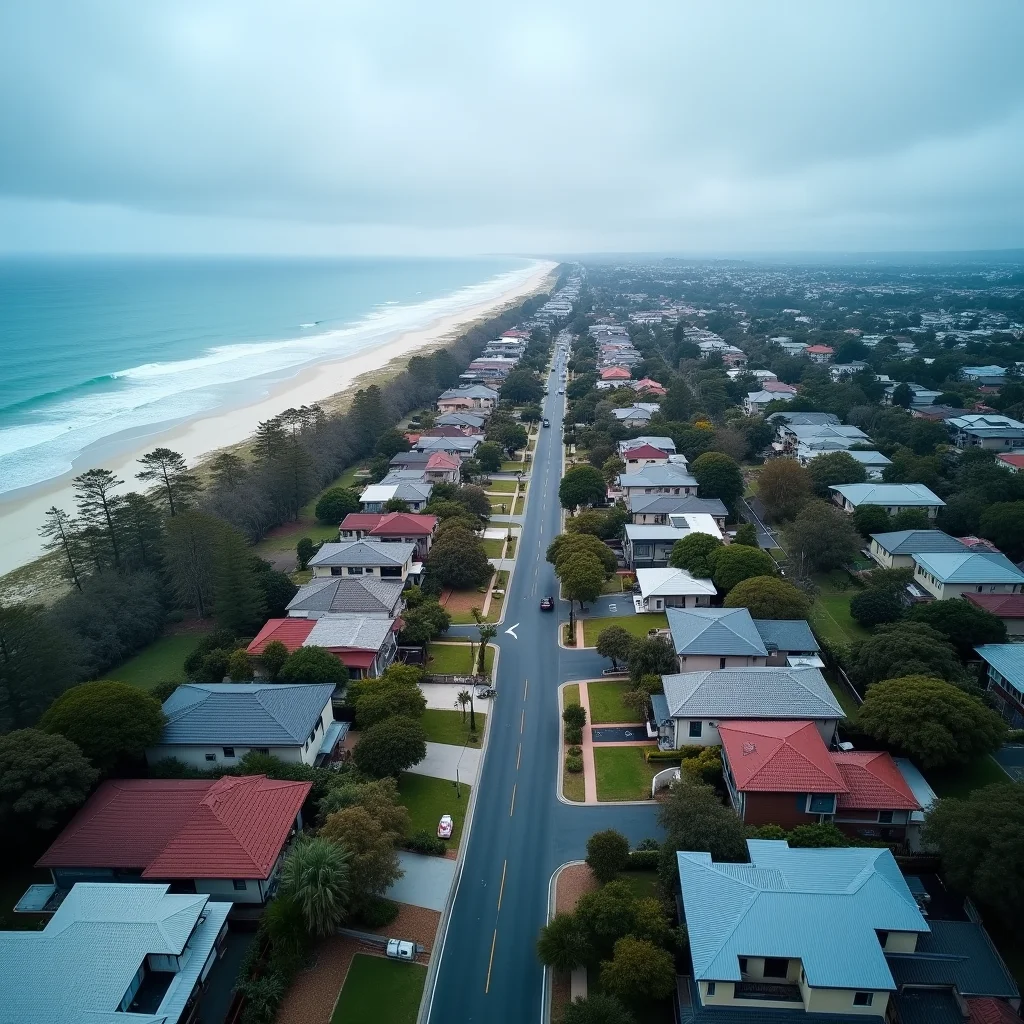
According to REAStats, home values fell across one in five Greater Brisbane suburbs in the June 2026 quarter, marking a clear inflection point for a market that spent three years as one of Australia's strongest performers. With the RBA cash rate sitting at 4.35%, investors who purchased near peak prices are now confronting a compression of capital growth at precisely the moment when holding costs remain elevated.
Brisbane's June Quarter Reversal in Detail
The June quarter data from REAStats reveals that the pullback is not isolated to one pocket of Greater Brisbane — price declines have spread across roughly 20% of the metropolitan suburb pool. The analysis flags West End and Maroochydore among the markets where the negative gearing calculus has shifted for investors who entered at peak valuations. South Australia is also showing broad softening, with price weakness spreading right across that state as well.
For additional market context, see WealthWatchPro investment market analysis.
What makes this data significant is the timing. Brisbane's infrastructure narrative and the interstate migration wave that powered the multi-year run have not reversed, but they have decelerated. When capital growth slows to flat or negative territory while mortgage rates remain at 4.35%, the arithmetic of holding an investment property changes quickly. Gross rental yields in many Brisbane suburbs were already compressed during the boom years, meaning investors cannot easily offset reduced capital gains with income returns.
For investors who purchased near the top, the practical implication is immediate. Properties that were cashflow-neutral or lightly negative at purchase — and that were pencilled in to benefit from rising values — are now carrying losses without the capital growth offset. That combination forces a genuine reassessment of hold-versus-sell strategy, particularly for those approaching the end of fixed-rate terms or refinancing into current variable rates.
What Slowing Capital Growth Means for Tax Strategy
The negative gearing equation for Brisbane investors has become materially less attractive when capital growth turns flat or negative. Negative gearing works best as a strategy when deductible losses are offset over time by rising asset values — without that appreciation, investors are simply funding ongoing losses from after-tax income. The REAStats analysis specifically calls out this shift in the negative gearing calculus for those who bought at peak prices across affected suburbs.
When capital growth stalls at the same time as borrowing costs remain elevated, the investment case for negatively geared property shifts from long-term wealth creation to short-term cash drain — and that is the position a material share of Brisbane investors now face heading into the second half of 2026.
For a detailed grounding in how rental income obligations, deductions, and negative gearing interact across property cycles, the Australian Property Tax Guide — What Every Investor Needs to Know sets out the full framework. Of particular relevance right now is the capital gains tax treatment on eventual sale: investors who hold through a price correction and sell after the 12-month threshold still access the 50% CGT discount, but their nominal gain — and therefore the tax advantage — is reduced if entry prices were elevated. Further background on Capital Gains Tax on Australian Property is available for investors modelling their exit scenarios.
The practical tax implication for Brisbane investors holding underperforming assets is to ensure depreciation schedules are current and all holding costs are being correctly claimed. A quantity surveyor's depreciation report can add meaningful deductions in years when capital growth is not compensating. Selling decisions should also account for the timing of any CGT event relative to income year — a consideration worth revisiting with a tax adviser before 30 June 2027.
Fremantle and Perth: The Divergence Story
While Brisbane suburbs soften, REAStats reports that Fremantle recorded 5.8% annual growth to reach a $950,000 median — positioning the WA suburb as a Tier 2 lifestyle market holding firm while Sydney and Melbourne face their own headwinds. Sydney home values have fallen across more than 200 suburbs by over $100,000, and Melbourne is contending with its weakest conditions since 2020. That divergence is relevant for national investors assessing where capital is still compounding at the cash rate hurdle.
Fremantle specifically benefits from its lifestyle credentials and a relatively constrained supply of character stock. At $950,000, it remains below the median of comparable inner-ring Sydney and Melbourne suburbs, which continues to attract buyers from those markets.
For investors weighing a portfolio shift away from softening Brisbane suburbs toward Perth, the key discipline is not to chase recent performance without stress-testing yield and growth assumptions at the destination market. Perth has already absorbed a significant re-rating from recent lows. Fremantle at $950,000 carries a different risk profile than it did at lower price points, and investors should model accordingly rather than extrapolating the recent run.
Practical Implications for Investors and Buyers in 2026
For existing Brisbane investors, the June quarter data is a signal to review portfolio positioning. Properties held for more than 12 months retain the CGT discount on any eventual gain, and forced selling into a softening market crystallises losses. The more productive response is to audit holding costs, maximise legitimate deductions including depreciation, and assess whether rental income can be improved through minor capital works or lease renegotiation.
National investors looking for markets still delivering above-cash-rate capital growth should note that Fremantle's 5.8% result outpaces the 4.35% cost of borrowing on an unlevered basis — a meaningful threshold when evaluating whether property still justifies
This article was produced with AI assistance and reviewed for accuracy. Content is for informational purposes only and does not constitute financial or property investment advice.