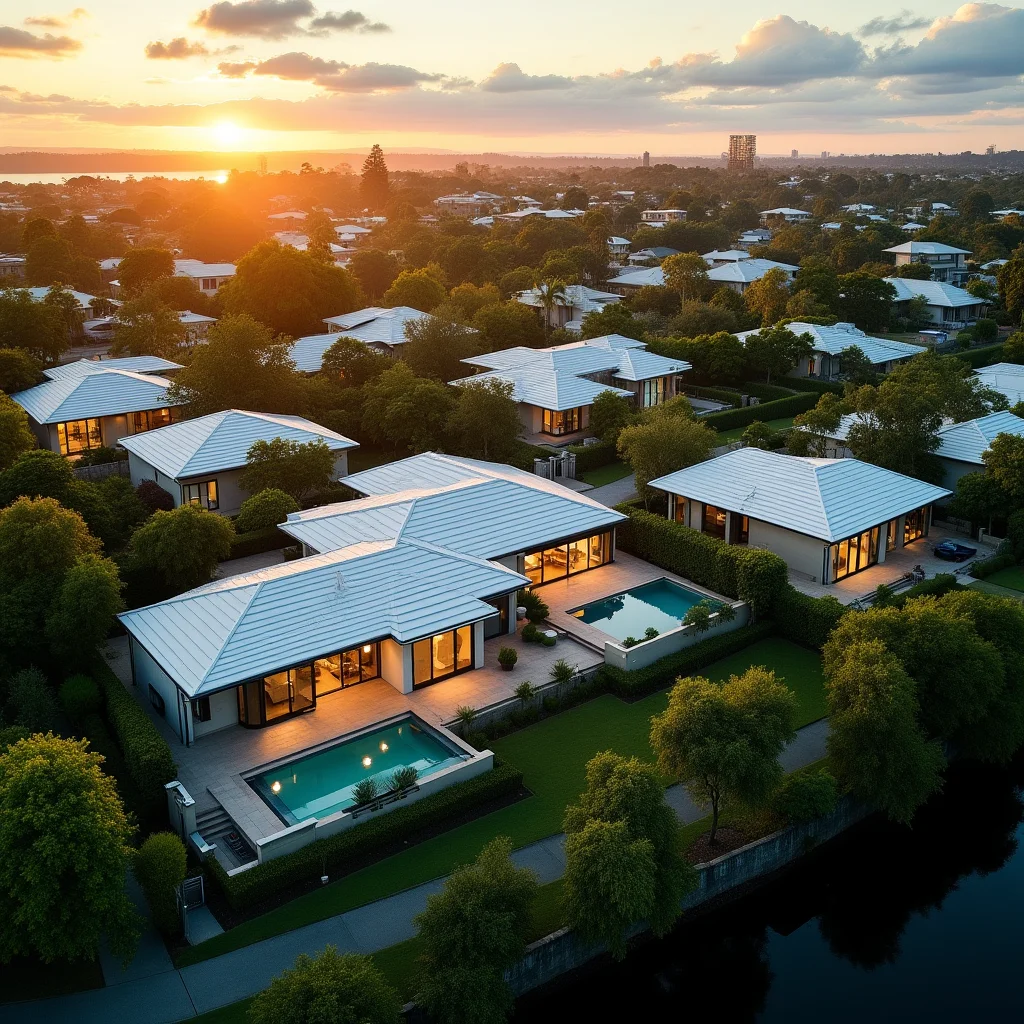
According to realestate.com.au, one of Berry's landmark homes has emerged from a six-year restoration project with a striking modern extension attached — and could become the most expensive property ever sold in central Berry. The listing positions this property as both a landmark restoration and a direct price-discovery event for a market that has commanded intense buyer interest since the pandemic-era tree-change rush.
A Six-Year Bet on Berry's Premium Property Ceiling
The home, described by realestate.com.au as an "early survivor" of the town — a reference to its status as one of Berry's original and most intact colonial-era dwellings — has undergone a meticulous six-year restoration. Rather than a simple cosmetic update, the project involved a full architectural intervention: the modern extension is designed to sit behind the original cottage and is barely visible from the street, preserving the historic streetscape while delivering contemporary liveability behind the period façade. The combination of preserved period fabric and unapologetically modern design is an increasingly common approach in premium regional markets, where buyers want character but reject compromise on liveability.
For additional market context, see WealthWatchPro investment market analysis.
The ambition to become central Berry's priciest sale is not an idle one. Berry has long attracted buyers seeking lifestyle, land, and a genuine village atmosphere. Post-2020, that appeal became mainstream, pulling the upper end of Berry's market upward. A record-breaking sale here would formally close the chapter on whether the pandemic premium in these markets is durable — or whether it has quietly evaporated as rate hikes bit into buyer capacity.
For buyers considering prestige regional purchases, this listing is a live stress-test. If the property achieves its target price, it validates the view that curated, one-of-a-kind homes in well-located tree-change towns continue to command premiums that standard comparable sales analysis struggles to capture. If it lingers or sells below expectations, it signals that the top of Berry's market has run ahead of what buyers will actually transact at under current borrowing conditions.
Heritage homes with genuine architectural provenance and high-calibre modern extensions occupy a near-unchallenged niche in tight regional markets — there is simply no pipeline of comparable stock to compete with them, which gives vendors unusual pricing power when buyer demand is present.
What Premium Regional Buyers Are Actually Paying For
The Berry listing encapsulates a specific buyer psychology that has defined the upper end of coastal and hinterland NSW markets. A fully restored colonial home with a contemporary extension in a postcard-quality village cannot be replicated — the land is there, but the heritage fabric and the six years of skilled trades are not something a developer can roll out at scale. That irreplaceability is the core argument for the property's positioning at the top of central Berry's market.
Markets where supply is structurally constrained — by heritage overlays, by limited developable land, by council controls on density — tend to protect vendor pricing power more effectively than growth corridors where new stock can be released in volume. The architectural quality and rarity of a property like this one separates it from the generic weekender market. For investors and high-net-worth buyers thinking about Australian property versus global alternatives, prestige regional homes like this one offer a different return profile to metro investment property. For a framework on what yield metrics actually mean for investor decisions, REAStats benchmarks gross yields across Australian markets including regional coastal towns, with the RBA cash rate at 4.35% remaining a key variable in that analysis.
Heritage and Renovation Risk: What the Six-Year Timeline Signals
Six years is an unusually long restoration timeframe, and it is worth understanding what that signals about both the scope of work and the risk profile of comparable projects. Heritage restoration in NSW is tightly regulated. Properties covered by heritage overlays require approval for almost every material change, from paint colours to window replacements to structural interventions. A contemporary extension on a heritage structure requires a design that satisfies the local council's heritage conservation rules — typically, the new addition must be clearly distinguishable from the original fabric while not overwhelming it. This is expensive, time-consuming, and requires architects and tradespeople with specific heritage experience.
The six-year timeline almost certainly reflects a combination of approvals, specialist trades, material sourcing, and the kind of obsessive attention to detail that separates a genuine restoration from a renovation dressed up in period aesthetics. For prospective buyers, this matters because it represents a quality signal that cannot be easily faked — and because it means the next owner inherits a property that is already through the most difficult and costly phase of its life cycle. Ongoing maintenance of a restored heritage home is not trivial, but it is categorically less burdensome than the restoration phase itself.
Buyers purchasing heritage properties should engage a specialist building and pest inspector with heritage experience, as standard inspection reports may miss issues specific to period construction — lime mortar, single-brick walls, original timber framing, and the interface between old fabric and new additions are all areas requiring expert assessment. The APF guide to property management for Australian landlords also covers maintenance obligations relevant to heritage and character properties, particularly where tenants are involved. For those considering future rental income from a prestige regional asset, understanding maintenance cost structures is as important as the purchase decision itself.
What This Listing Means for the Broader Market
Berry's potential price record sits within a broader narrative playing out across regional NSW. The tree-change towns that boomed hardest all face the same structural question in 2026: has the market found a sustainable floor above pre-pandemic levels, or is there more air to come out? The answer varies by price point. The lower and middle ends of these markets have seen genuine softening as higher mortgage rates pushed out buyers who were stretching into
This article was produced with AI assistance and reviewed for accuracy. Content is for informational purposes only and does not constitute financial or property investment advice.