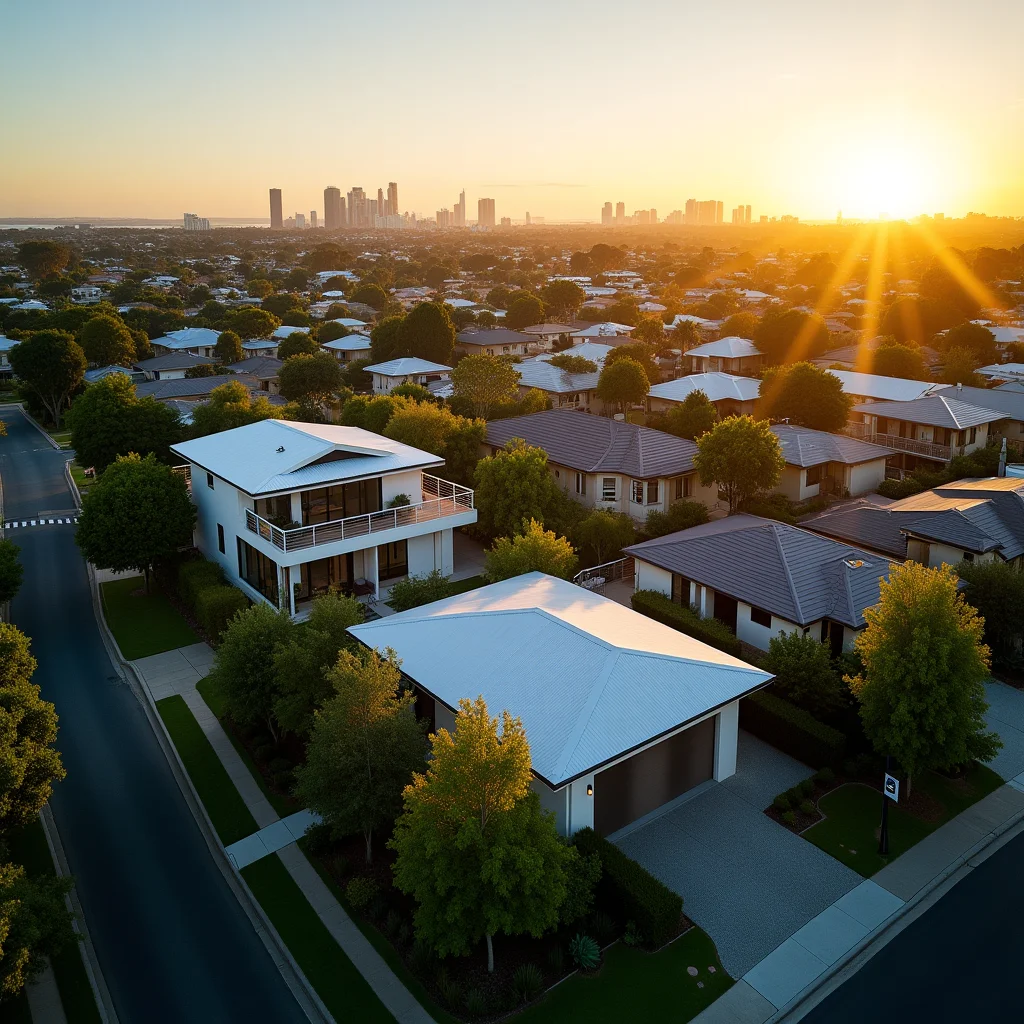
According to realestate.com.au, the owners of one of Adelaide's most recognisable CBD sites have relaunched sales of the Newmarket Hotel property with a bold new push, backed by dual tower development approval, after the site failed to sell last year. The listing is being marketed as "unrepeatable," a description that signals how thin the pipeline of large-format, approval-ready CBD sites has become in Adelaide's tightly held city core.
A Second Run at a Stalled Sale
The Newmarket Hotel site's return to market comes after its first campaign failed to produce a buyer, according to realestate.com.au. This time, the vendors are leading with dual tower development approval already secured, removing a layer of planning risk that likely deterred buyers during the first attempt. Adelaide's CBD has relatively few sites of this scale carrying pre-approved high-density consent, which is the basis for the "unrepeatable" framing used in the new sales campaign.
For additional market context, see WealthWatchPro investment market analysis.
The re-listing matters because failed campaigns on trophy sites tend to signal one of two things: an asking price disconnected from buyer appetite, or a market lacking the capital depth to absorb large-scale CBD development risk. Given the vendors have now added approved plans rather than cutting price, the strategy suggests they believe the barrier was execution uncertainty rather than valuation. Removing planning risk is a common tactic when a first campaign stalls, effectively shifting the site from a speculative play to a shovel-ready proposition for developers wanting to skip the approvals queue.
For developers assessing the opportunity, the practical implication is a shorter runway to construction and reduced holding costs tied to planning uncertainty. Buyers still need to stress-test feasibility against current construction costs and financing conditions, particularly with the RBA cash rate sitting at 4.35% and project debt correspondingly expensive. A pre-approved dual tower footprint reduces one variable, but development margins remain sensitive to build cost inflation and presales velocity in the current cycle.
Why CBD Trophy Sites Are Harder to Move
Large CBD development sites sit in a different buyer pool than standard residential or even mid-tier commercial stock. Purchasers are typically developers or capital partners requiring debt facilities scaled to project size, and at current interest rate settings that financing is materially more expensive than it was two years ago. A site failing to sell once is not unusual in this segment; what is more telling is the strategic pivot toward de-risking the offer rather than discounting it.
Adelaide's CBD has few sites of comparable scale carrying dual tower approval, and the decision to relaunch with planning risk removed rather than price reduced suggests vendors are betting on execution certainty, not affordability, as the deciding factor for developer buyers.
This dynamic echoes a broader pattern seen across Australian capital cities where high-density development sites take longer to transact when construction financing tightens. Developers weigh presale hurdles, build cost escalation, and holding costs against a site's embedded upside from approved density. A site that already has consent for two towers effectively compresses the development timeline, which can be the difference between a feasible project and one that fails to stack up at current lending rates.
Buyers considering CBD sites elsewhere in the country face similar calculus. Anyone assessing a comparable acquisition should apply the same due diligence used for suburb-level residential purchases, only scaled up: understanding zoning certainty, infrastructure capacity, and realistic absorption rates for the eventual dwellings. The suburb research framework used by residential investors — assessing vacancy, clearance rates, and demographic trends — has a direct commercial parallel in gauging whether a CBD tower's eventual units will find buyers or tenants at the volumes needed to justify the build.
Interstate Contrast: Where Capital Is Actually Flowing
While Adelaide's CBD wrestles with a stalled trophy asset, capital growth data from other capitals tells a different story about where investor appetite is concentrated. Perth's South Perth and Nedlands markets are recording annual growth of 13.8% and 15% respectively, with sales cycles as short as 15 to 17 days, according to REAStats data. Queensland's West End is posting 8.8% annual growth, a trend a local developer has cited in calls for 20-storey towers to meet demand pressure in that market.
These figures illustrate a stark interstate divergence at the same 4.35% cash rate. Western Australia and Queensland suburbs are absorbing capital and turning over stock quickly, while Victoria's Dandenong trails at just 2.3% growth. Adelaide's CBD trophy site sits somewhat apart from this residential growth story, since it is a large-format commercial and development transaction rather than a standard house or unit sale, but the broader climate of interstate capital reallocation is relevant context for anyone assessing whether Adelaide's development appetite matches that of Perth or Brisbane. For readers tracking these divergences in more depth, REAStats tracks suburb-level growth and liquidity data across the country.
The practical takeaway for investors and developers is that capital is not moving uniformly across Australian cities. A stalled CBD site in Adelaide does not necessarily reflect weak underlying demand for Adelaide property broadly, but it does suggest large-scale development capital is being more selective, gravitating toward markets with demonstrated fast absorption and clear growth trajectories such as Perth's inner suburbs.
What Buyers and Developers Should Watch Next
Anyone tracking the Newmarket Hotel site's second campaign should watch whether the removal of planning risk succeeds where price alone did not last year. A quick sale this time would validate the theory that execution certainty, not cost, was the binding constraint on developer interest. A second failed campaign, by contrast, would point to deeper concerns about feasibility at current construction and financing costs, regardless of how favourable the underlying approvals are.
For prospective purchasers of large development sites anywhere in the country, the Adelaide case is a reminder that pre-approved consent is now a meaningful differentiator in a market where financing costs have risen and presale conditions have become tougher to satisfy. Sites without that certainty face longer selling periods and greater vendor concessions, while approval-ready assets can command a premium even in otherwise soft development markets.
Investors weighing exposure to commercial and mixed-use development sites should also factor in the tax treatment that applies to large-scale property transactions, an area where the rules differ meaningfully from standard residential investment. The Australian Property Tax Guide outlines the considerations relevant to investors moving into commercial-scale assets, while those weighing Australian development sites against overseas opportunities can review how local prices compare internationally via the Australian Property Prices vs the World guide.
Ultimately, the Newmarket Hotel relaunch is a small but telling data point on how Australia's development finance environment is filtering opportunity. Sites with certainty win attention; those without it wait. For buyers and vendors alike, the lesson is that in a market shaped by a 4.35% cash rate and cautious project lenders, de-risking an asset can matter more than repricing it.
This article was produced with AI assistance and reviewed for accuracy. Content is for informational purposes only and does not constitute financial or property investment advice.