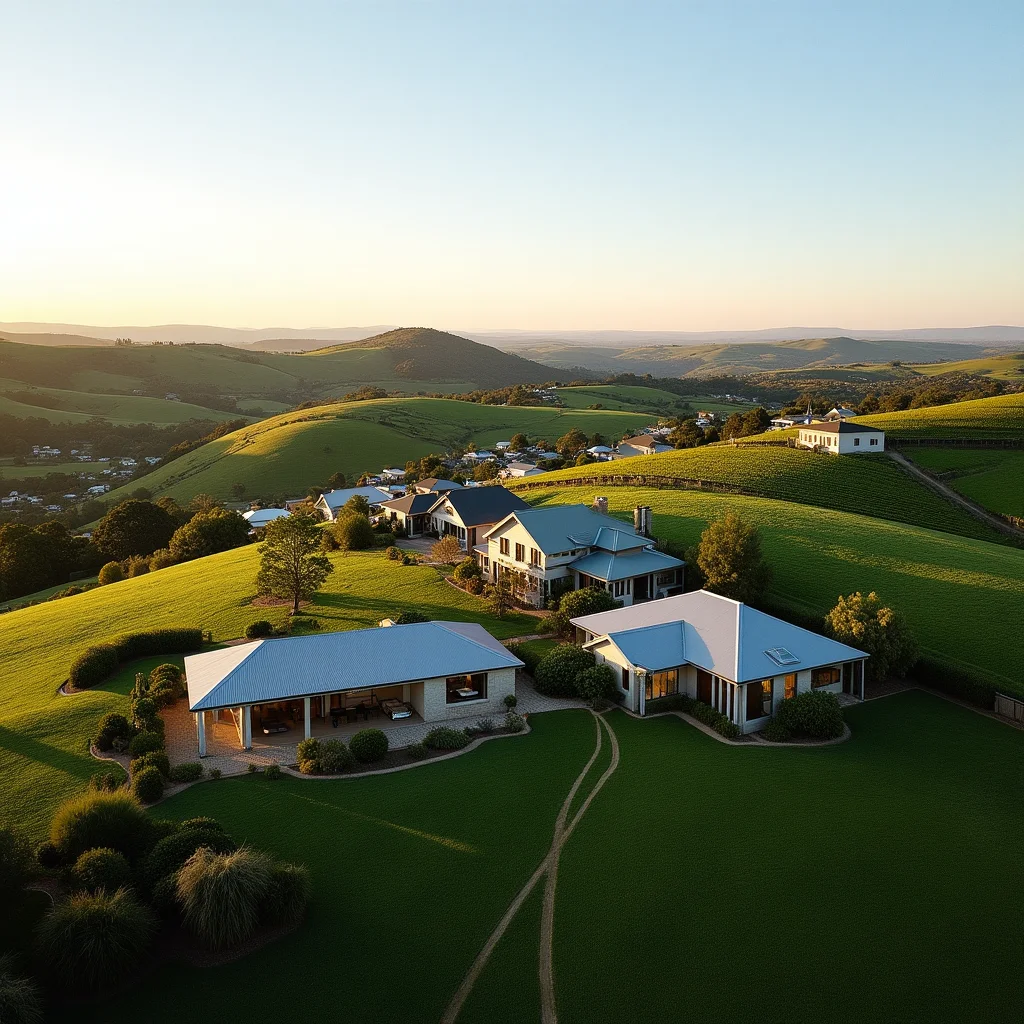
According to realestate.com.au, Adelaide's median house price has cracked the $1 million mark — yet new research shows homebuyers can still find affordable properties in suburbs close to the city with great amenities. The milestone places Adelaide firmly alongside Australia's east coast capitals as a seven-figure property market, a status that has reshaped the city's positioning among buyers and investors alike.
Adelaide Joins the Million-Dollar Club
Adelaide crossing the $1 million median house price threshold is a watershed moment for South Australia's capital. For much of the past decade, Adelaide was positioned as the last major capital where the average buyer could purchase a house well below the national median. That positioning has now fundamentally shifted. Strong population growth, interstate migration driven by relative affordability versus Sydney and Melbourne, and sustained housing supply constraints have combined to push values to levels once associated exclusively with the eastern seaboard's established markets.
For additional market context, see WealthWatchPro investment market analysis.
For the broader context of where Australian property prices sit globally, Adelaide's trajectory mirrors a worldwide trend of mid-tier cities closing the gap with established gateway markets. The milestone has real equity implications for those already in the market, while creating a genuine affordability challenge for first-home buyers and lower-income earners attempting to enter without significant family equity support.
Where the Value Still Exists: Suburbs Within Reach
Despite the city-wide median crossing $1 million, the realestate.com.au research identifies a clear cohort of suburbs where buyers can access well-located homes — within a reasonable commute of the CBD, with established infrastructure — at prices meaningfully below that headline figure. This bifurcation between the overall median and individual suburb pricing is a common feature of maturing capital city markets, and Adelaide is now exhibiting this dynamic in a pronounced way. The suburbs flagged in the research share several characteristics: they sit in the inner and middle rings, they have access to public transport and retail amenity, and they have historically been overlooked in favour of more prominent neighbouring postcodes.
For buyers actively searching in Adelaide, this research provides a practical framework. Rather than accepting that affordability and proximity to the city are mutually exclusive, the data suggests a more granular approach — targeting suburbs where the gap between current prices and the city median is widest, but where infrastructure investment and demographic trends point to convergence. Buyers who apply this lens, particularly those flexible on property type and willing to consider attached dwellings or older housing stock, are likely to find more competitive entry points than the headline $1 million median implies. For a structured approach to evaluating these options, the First Home Buyer Complete Guide provides detailed frameworks for suburb selection and purchasing strategy.
The Wealth Store Question: What Adelaide's Milestone Means for Investors
Adelaide crossing $1 million puts a sharper lens on property's role as a long-term wealth store in the current rate environment. With the RBA's cash rate at 4.35%, the cost of holding debt has remained a tangible consideration for buyers and investors alike. The APF encyclopedia entry on Property vs Gold — Which is the Better Wealth Store? provides useful benchmarking context, including comparative return data for Australian property against other asset classes.
The investor case for Adelaide has historically rested on a combination of yield and capital growth. As yields compress under the weight of rising prices, the asset's attraction for yield-focused investors shifts. However, for investors with a longer time horizon — particularly those building wealth through equity accumulation — Adelaide's population growth, underpinning sustained rental demand, and ongoing supply constraints provide structural support for the market. These factors continue to weigh on new housing delivery and provide a floor under prices even as affordability pressures bite.
For macro context on how this compares against other markets, REAStats tracks Adelaide alongside Perth and Brisbane in its state-by-state growth analysis, showing Western Australian and Queensland suburbs posting double-digit annual growth. That comparison is worth monitoring: if Perth and Brisbane begin to plateau while Adelaide's relative affordability advantage persists in its best-value suburbs, sustained demand into the second half of 2026 remains plausible.
Practical Implications for Buyers and Investors in Adelaide Today
Buyers approaching the Adelaide market in mid-2026 face a more complex decision than they would have two or three years ago. The city no longer offers the broad affordability buffer it once did, but the research finding that value still exists in well-located suburbs close to the city is actionable intelligence. It suggests buyers should spend more time on suburb-level research and less time anchoring to the city-wide median as a reference point. The gap between the best-value suburbs identified in the research and the $1 million median represents real money and real opportunity.
Adelaide has quietly undergone one of the most significant pricing transitions of any Australian capital in recent years. The $1 million median is not just a number — it marks the end of the city's era as an affordable outlier and the beginning of a period where suburb selection and entry timing will determine whether buyers capture value or pay a premium for it.
For sellers, Adelaide's new median provides strong leverage — but buyers are increasingly discriminating between well-priced stock and aspirational listings. Properties in the value suburbs identified by the realestate.com.au research are likely to attract genuine competition, particularly from first-home buyers priced out of premium inner-ring locations. Vendors who present well and price to market rather than to hope should find conditions remain favourable. The window in which Adelaide's structural growth story is intact — and before affordability erosion meaningfully dampens demand — remains open, but it is narrowing.
This article was produced with AI assistance and reviewed for accuracy. Content is for informational purposes only and does not constitute financial or property investment advice.