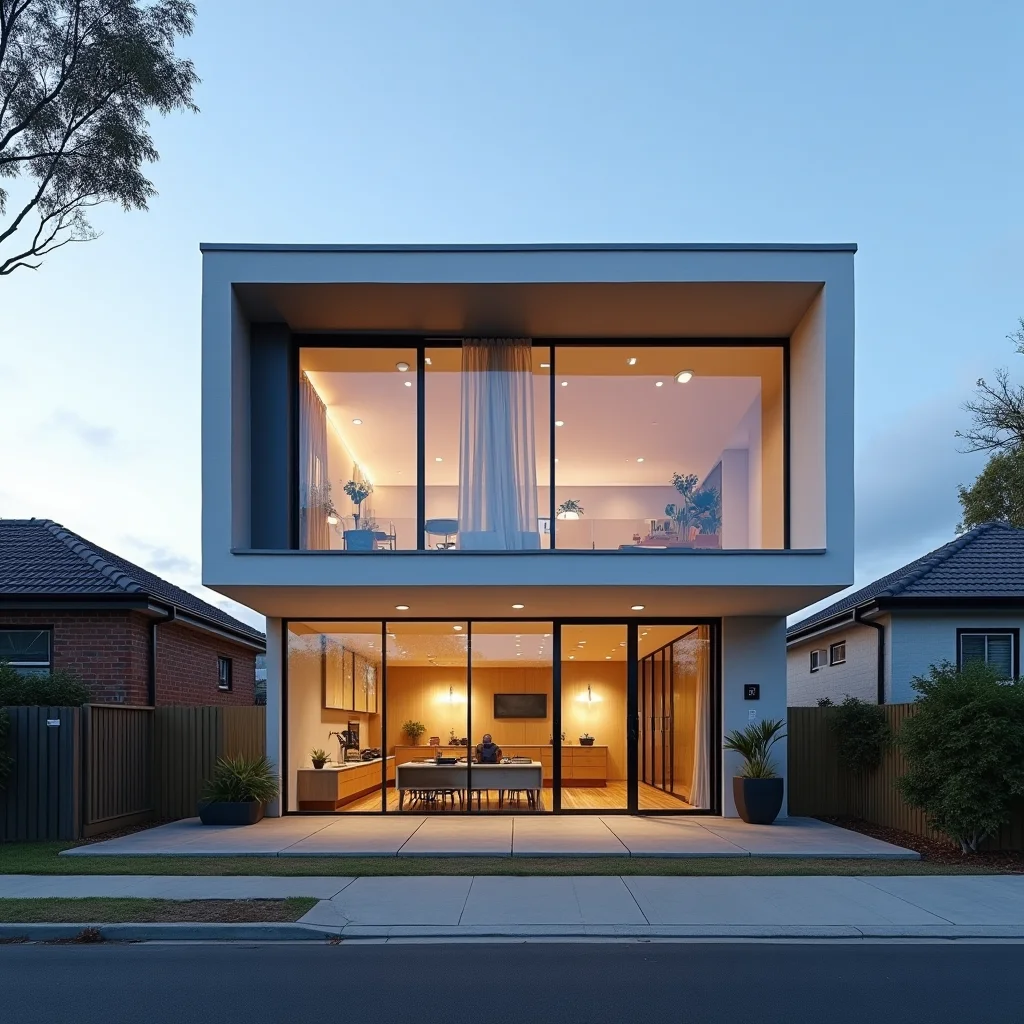
According to the Sydney Morning Herald, a first home buyer opened bidding at $190,000 on an outer-east Melbourne unit that ultimately sold for $492,000 — a gap of $302,000 below the final sale price, and $330,000 below the top of the property's guidance range. The unit sold to another first home buyer, at just over its reserve. It is a single auction result, but the gap between that opening bid and the hammer price encapsulates one of the most pressing structural problems in the Australian housing market right now: a cohort of buyers who are priced well outside the market without fully realising it.
A $330,000 Gap and What It Signals
The SMH report described the opening bid as reflecting a "skewed perception of market conditions" — a phrase that cuts to the heart of what is happening to first home buyer confidence and financial literacy in a high-rate, high-price environment. A bid $330,000 below the top of the guidance range is not a cheeky lowball anchoring tactic; it suggests a buyer whose purchasing power is so removed from market reality that their ability to compete was effectively nil from the outset. This is not an isolated quirk — it is a symptom of a market in which the gap between aspiration and affordability has become structural.
First home buyers relying on savings accrued during a period of lower prices, or budgeting against median data that lags behind actual auction results, routinely find themselves underprepared at the pointy end of a campaign. When a buyer bids $190,000 in a room where $492,000 is required, the problem is systemic, not individual.
It is also worth situating this result within Melbourne's broader spring 2026 context. Data published by REAStats shows Melbourne house prices are forecast to fall further even as Western Australia records 15% annual growth and Queensland suburbs post gains of 8.5–8.8%. Melbourne's softer conditions have not translated into the kind of price correction that brings outer-east units within reach of buyers operating with sub-$200,000 budgets.
Why First Home Buyers Are Losing Ground to Each Other
The fact that the unit ultimately sold to another first home buyer — not an investor or upgrader — adds a layer of complexity to the story. First home buyers are competing against each other at the lower end of the market, not just against cashed-up investors or downsizers. This dynamic intensifies when government schemes funnel a concentrated pool of buyers into a narrow price band. When demand is concentrated, prices in that band hold firm or rise, even in a softening broader market.
Scheme eligibility thresholds set by the federal government create price ceilings that buyers anchor to — and sellers, agents, and vendors are well aware of them. If a large proportion of first home buyers in an outer-east suburb are operating under a scheme with a price cap, properties priced just inside that cap attract disproportionate competition. A buyer who bids $190,000 may simply have a deposit and borrowing capacity that genuinely limits them to that figure — and no scheme currently in operation bridges a $330,000 gap between what a buyer can afford and what the top of the guidance range demands.
For buyers using government assistance, the First Home Buyer Schemes in Australia — Complete Guide provides a full breakdown of current eligibility thresholds, property price caps by state, and the interaction between federal and state-based assistance. Understanding the ceiling on your scheme is as critical as understanding your borrowing limit — the two figures together define the realistic market you can access.
Borrowing Capacity and the Rate Environment
Borrowing capacity is the other half of the equation. Australia's cash rate has remained elevated through 2026, and realestate.com.au has reported that surging bond yields are now delaying expected rate cuts until as late as 2028 — a scenario that compresses first home buyer borrowing capacity well beyond what buyers may have modelled when beginning their property search 12 to 18 months ago. A buyer who calculated their maximum bid based on borrowing capacity in a lower rate environment may be bidding $190,000 not out of ignorance, but out of genuine financial constraint.
For a deeper analysis of how current bond yield movements affect Australian mortgage holders and rate expectations, WealthWatchPro's macro analysis tracks the interplay between global fixed income markets and domestic lending conditions.
A $302,000 gap between a first home buyer's opening bid and the final hammer price is not a curiosity — it is a measure of how far deposit accumulation and borrowing capacity have fallen behind market pricing in Melbourne's outer-east, even as that corridor remains among the city's more affordable entry points.
The duration of rate elevation matters enormously for deposit strategy. Every additional year of high rates is another year of constrained savings growth relative to property values — even in markets like Melbourne where price momentum has slowed. Buyers who entered a property search in 2024 expecting rate relief by 2025 or 2026 have already revised their timelines once. A further delay to 2028, as flagged by realestate.
This article was produced with AI assistance and reviewed for accuracy. Content is for informational purposes only and does not constitute financial or property investment advice.