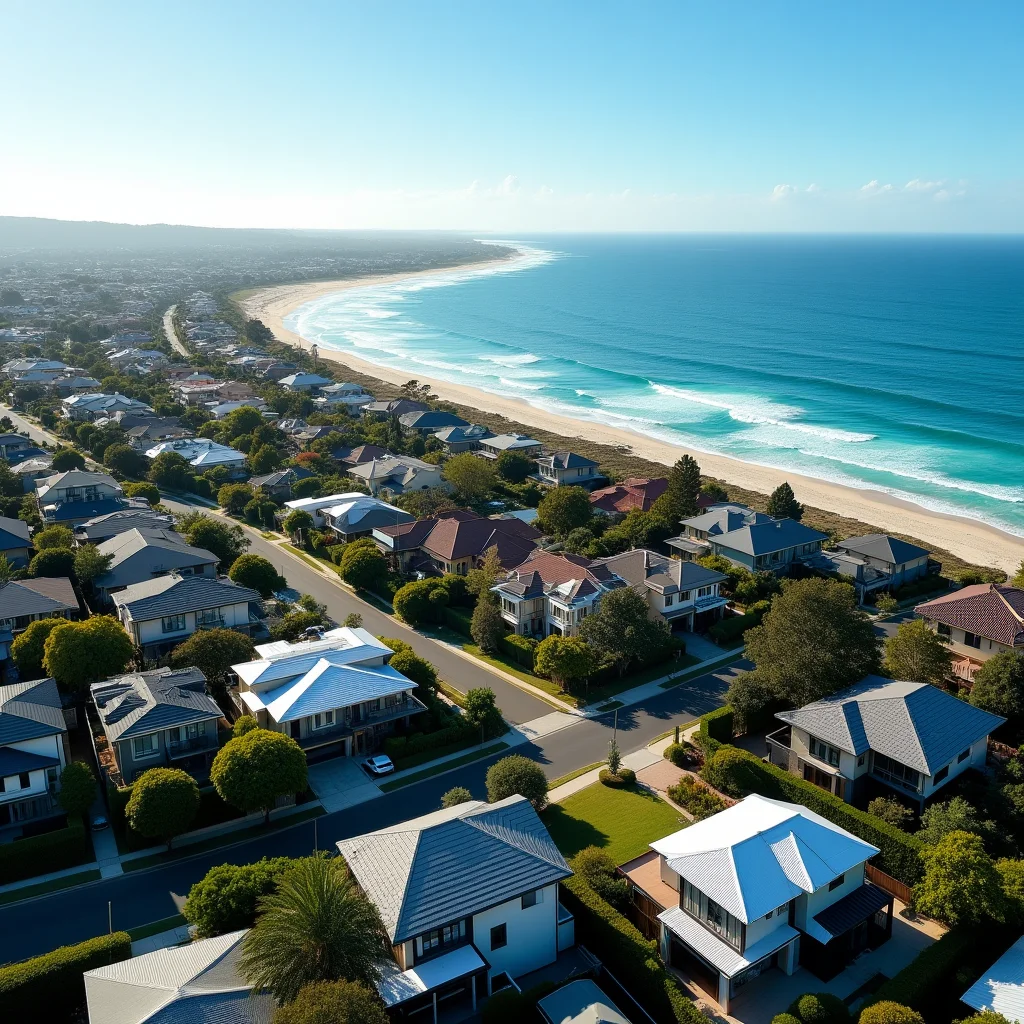
According to realestate.com.au, 151 Australian suburbs have crossed the million-dollar median house price threshold in 2026, with buyers seeking a freestanding home on a large block now being pushed well beyond established urban boundaries. The expansion of the million-dollar club reflects a price growth cycle that has spread far beyond the Sydney and Melbourne heartlands that historically defined premium property.
The Scale of the Shift: 151 Suburbs and What They Represent
The addition of 151 suburbs to the million-dollar median club in a single year is not a minor statistical footnote — it represents a structural repricing of Australian residential land. realestate.com.au reports that buyers chasing freestanding homes on generous land parcels are consistently finding themselves priced out of suburbs they would have targeted just two to three years ago. The effect is cumulative: as one ring of suburbs crosses the threshold, buyer demand cascades outward, compressing affordability in the next ring and setting up future entries into the club.
For additional market context, see WealthWatchPro investment market analysis.
What makes this cycle distinctive is the breadth of geographic coverage. Previous waves of million-dollar suburb formation were concentrated in Sydney's inner west, the eastern suburbs, and Melbourne's inner-ring bayside corridors. The 2026 cohort draws from a far wider geographic spread. This diffusion matters because it eliminates the historical argument that buyers could simply relocate interstate to find value — the spread of premium pricing has closed off that strategy for a significant portion of aspiring home owners.
For buyers, the practical implication is stark. A household targeting a freestanding home with a backyard — the classic Australian housing aspiration — now faces million-dollar entry points across a far wider swath of the country. That forces a genuine choice: stretch the budget and accept a higher debt load at the RBA's current 4.35% cash rate, accept a unit or townhouse, or relocate to a regional market not yet captured by the million-dollar wave. None of those options is without cost.
Brisbane, Perth, and Adelaide: The New Engines of Premium Pricing
The geographic composition of the 2026 entrants confirms a fundamental rebalancing of Australian property premiums away from Sydney and Melbourne. Brisbane has been a consistent contributor to million-dollar suburb growth, with infrastructure spending, interstate migration from the southern capitals, and a tight rental market all compressing yields and driving capital growth. REAStats notes that declining housing affordability in Queensland is now redirecting significant buyer demand toward units — a sign that even Brisbane's growth story is pushing households down the property ladder.
Perth's inclusion reflects a different dynamic. Western Australia's property market lagged the east coast for much of the previous decade, leaving a structural affordability gap that closed rapidly once interstate migration accelerated and the resources sector entered a fresh hiring cycle. Adelaide's entrants are perhaps the most significant symbolically — the South Australian capital long served as the benchmark for affordable capital city living, and its progression into the million-dollar club signals that the nation's affordability safety valve has now closed.
For investors assessing Brisbane, Perth, and Adelaide, the million-dollar crossover point carries a specific implication for depreciation claims. As established properties in these markets now trade at higher price points, the split between land value and depreciable building and fixture value becomes more consequential for tax planning. Understanding how property depreciation schedules apply to both newly constructed and recently renovated homes in these markets can materially affect after-tax cash flow, particularly at the yield levels now typical in Perth and Adelaide. Investors should also review the Australian Property Tax Guide to ensure their structures keep pace with rising asset values.
Affordability Context: What the Million-Dollar Line Actually Means
A suburb median crossing $1 million does not mean every home in that suburb sells for seven figures — it means that the midpoint sale price has reached that level, implying roughly half of transactions are occurring above it. But the psychological and practical significance is real. Lenders, brokers, and buyers all recalibrate their expectations around round-number milestones, and the million-dollar threshold in particular has historically triggered a shift in buyer profiles: owner-occupiers with equity begin to dominate over first-home buyers, and the deposit required to avoid Lenders Mortgage Insurance increases substantially. At an 80% LVR, a $1 million purchase requires a $200,000 deposit — a figure that is out of reach for most first-home buyers without family assistance or existing property equity.
The affordability squeeze is also reshaping what buyers will accept. Sustained price growth against a backdrop of the RBA's 4.35% cash rate has forced households to choose between geography and property type in ways that would have seemed extreme a decade ago. REAStats reports that rising unit demand is a direct consequence of declining housing affordability, with buyers increasingly redirected toward attached dwellings as detached housing moves beyond reach. That demand shift is itself contributing to price growth in the unit segment, compressing the last remaining affordable entry points in major capitals.
As median house prices cross $1 million in 151 new suburbs, the gap between the freestanding-home aspiration and the financial reality for median-income households has widened to its most acute point in the current cycle.
For a broader perspective on how Australian property values compare internationally, the
This article was produced with AI assistance and reviewed for accuracy. Content is for informational purposes only and does not constitute financial or property investment advice.