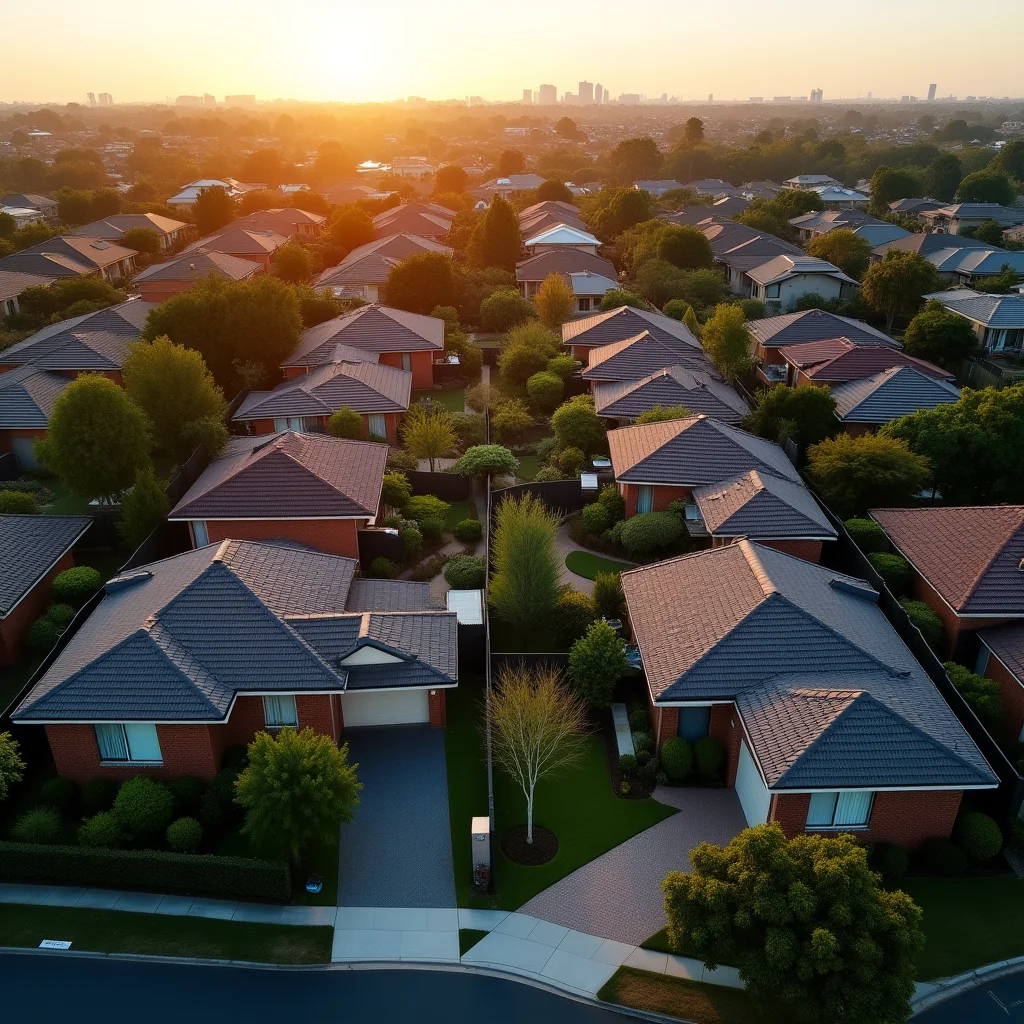
Planning authorities have approved a $320 million development in Frankston South specifically designed to address housing needs for Vietnam war veterans.
The project represents a significant investment in purpose-built accommodation for ageing veterans who have struggled to secure appropriate housing in Melbourne's outer suburbs. Frankston South's approval comes as housing affordability pressures mount across Victoria.
Housing cost stress has reached critical levels for many Victorians, with residents now skipping essential medical care including GP visits and prescription medications to meet mortgage and rental payments. This alarming trend highlights the broader housing crisis affecting Melbourne's residential market.
Meanwhile, established property owners continue to capitalise on strong market conditions. A local builder in an award-winning waterfront location has listed their luxury marina home after 26 years of ownership, having originally developed the surrounding neighbourhood.
The Frankston South veterans housing initiative signals government recognition that targeted development solutions are essential for vulnerable demographics facing Melbourne's housing pressures.
Suburb-Level Housing Data and Regional Investment Patterns
Frankston South's $320 million veterans housing approval occurs against a backdrop of significant demographic shifts in Melbourne's outer suburbs. According to recent Australian Bureau of Statistics data, the Frankston region has experienced 12% population growth over the past decade, outpacing inner-Melbourne growth rates of 8%. However, median house prices in Frankston South currently sit at $645,000—approximately 35% below inner-suburbs like Toorak ($2.1 million) yet 18% above comparable outer-suburbs in Western Sydney.
This pricing sweet spot has made outer-Melbourne suburbs increasingly attractive for purpose-built housing developments. The Frankston South project aligns with broader state-level initiatives; Victoria's planning system has streamlined approvals for aged care and veteran-specific accommodation, responding to projections showing over 2.3 million Victorians aged 65 and over by 2040. Similar developments have gained traction in suburbs like Dandenong North and Werribee, where land availability and affordability intersect with infrastructure capacity.
Property investment data reveals growing institutional interest in purpose-built rental accommodation across Melbourne's second and third rings. Between 2019 and 2024, private developers and institutional investors committed approximately $1.8 billion to purpose-built rentals in outer-Melbourne suburbs—a 240% increase compared to the 2014–2019 period. This trend reflects RBA interest rate settings; during periods of lower rates, investors typically seek stable returns through specialised housing rather than traditional residential investment.
The Frankston South approval also signals Victoria's competitive positioning against New South Wales and Queensland. NSW has allocated $2.1 billion towards veterans housing over five years, prompting Victoria to strengthen its offerings. This inter-state competition for both veteran populations and development capital underscores how targeted housing policy can attract significant private investment to regional areas, whilst addressing demographic demand.
Broader State-by-State Veterans Housing Gap
The Frankston South approval exposes significant disparities in veterans' housing provision across Australian states. Victoria's $320 million commitment stands in sharp contrast to funding allocations in other jurisdictions, where purpose-built veteran accommodation remains scarce. New South Wales, despite having the largest veteran population of any state, has not announced comparable large-scale developments, relying instead on scattered subsidised housing through existing social providers.
Data from the Department of Veterans' Affairs indicates approximately 168,000 war veterans and their dependants require housing assistance nationally, yet dedicated accommodation projects remain concentrated in limited pockets. Queensland has developed several smaller veteran villages in regional areas, whilst Western Australia's veteran housing programs focus primarily on financial assistance rather than construction. Tasmania and South Australia have virtually no dedicated veteran housing infrastructure beyond standard aged care facilities.
The Frankston South project's approval may prompt similar initiatives in other high-cost Victorian suburbs where veteran populations cluster. Areas including Dandenong, Springvale, and Morwell—where post-war migration patterns established significant veteran communities—face comparable affordability pressures. These suburbs typically record median house prices between $550,000 and $750,000, placing them beyond reach for pensioner-age veterans on fixed incomes.
Interstate comparisons reveal that purpose-built veteran housing delivers measurable benefits beyond accommodation provision. Residents in established veteran villages report improved health outcomes, reduced hospitalisation rates, and stronger social connection compared to isolated housing arrangements. This evidence suggests the model's expansion across state borders could address both housing shortages and broader aged-care pressures affecting public health systems.
The Frankston South approval therefore represents not merely a local solution but a potential template for interstate replication. State governments facing comparable housing affordability challenges and ageing veteran populations may find cost-benefit analysis supports similar dedicated developments, particularly in outer metropolitan regions where land acquisition remains more economically viable than inner-city alternatives.
This article was produced with AI assistance and reviewed for accuracy. Content is for informational purposes only and does not constitute financial or property investment advice.